




Report From the Editor
The State of California has come up with a new fleet replacement program that has me puzzled.
The State of California has come up with a new fleet replacement program that has me puzzled.
According to Robert L. Harkness, director of the California Department of General Services, the new program involves a "more flexible policy on automotive equipment aimed at reducing maintenance costs." Basically, California will now take a look at replacing vehicles at 70,000 miles rather than 100,000 miles as has been the case in the past. The thing that has me puzzled is that it is going to cost California $400,000 to implement the program. Maybe I'm old fashion, but I think that a program cannot be classified as a cost-saving program if it takes additional money to put into effect.
The new program is an outgrowth of a study by the Commission on California State Government Organization and Economy. The commission, after an intensive study, reported that California is driving its fleet of cars too long and called for a policy of selling vehicles after not more than three years of use. The study also urged that "careful consideration" be given to annual replacement. By replacing vehicles annually, the state could save $125 to $175 a vehicle per year in maintenance costs.
"This is a judgment question for mechanical experts, which we have, and at this 'critical period' inspection time the issue should be left in their hands," Harkness said. "For the state to make major repairs costing hundreds of dollars on some car in order to get another 30,000 miles from it does not pay off. Earlier replacement of some cars will require an increase in capital appropriation for the next few years, but we believe it is justified because major repairs and lost use time will be avoided."
It seems to me that the new "more flexible" policy represents a compromise between the commission report and the old 100,000 mile policy. While I am in favor of any policy that gives the fleet administrator more authority, I don't think that the California program really means much. While I have no specific knowledge, I would hazard a guess that California had many vehicles that were replaced before the speedometer hit 100,000 miles, I don't believe that any state can strictly adhere to a 100,000 mile replacement program.
If we agree that California has been replacing vehicles before the 100,000 mile limit, what does the new policy mean? I think it will result in a general acceptance of the belief that vehicles will be eligible for replacement when they reach 70,000 miles. In effect, it will lead the individual operators to conclude that maintenance and care of the equipment need only be sufficient to reach 70,000 miles. It could, in fact, result in the condition of cars with 70,000 miles to approximate the condition of vehicles with 100,000 miles. Where is the savings?
A better policy for California, I believe, would allow the various state fleet administrators to determine when vehicles should be replaced, ignoring any rigid mileage requirements. I personally know several California fleet men and I know that they have the ability to determine proper replacement procedures. Rigid rules only tend to tamper efficient operations. A program of 70,000 or 100,000 mile replacement should be a goal, not a mandate.
I also feel that the additional $400,000 expenditure will become a permanent thing. Rarely do state officials give up money once they have their hands on it. So, California citizens might just as well condition themselves to the fact that the state's fleet program is going to cost $400,000 more per year.
More Operations
What Fleet Managers Really Want From Vendors
From customer service frustrations and technology breakdowns to RFQs, change management, and the growing impact of turnover across the industry, this conversation pulls back the curtain on the real operational challenges fleet managers are navigating every day.
Read More →
Fleet Safety Masterclass: Industry Leaders on Storytelling, Strategy & Innovation
In this special masterclass episode, industry leaders break down what it really takes to build safer fleets in today’s increasingly distracted and data-driven world.
Read More →
Integrating Legacy Fleet Systems and Historical Data
In this episode, we bring together fleet and technology leaders to unpack the realities of data integration, system migrations, and the evolving role of AI in fleet management.
Read More →


From Resistance to Results: Change Management Strategies for Fleets
From new technologies and safety programs to evolving regulations, fleets are under constant pressure to adapt. But as Dr. Betz explains, success isn’t about the system you implement—it’s about whether your people actually use it.
Read More →
Where We're Headed: A Practical Look at AI in Fleet
Discover how AI is actually being deployed in fleets, not just marketed, including practical use cases and emerging risks.
Read More →
How Coca-Cola United Protects Its Fleet from Growing Legal Risk
Growing legal exposure can put fleets at risk. Here's one company's approach.
Read More →
Fleet Managers Think They Understand Their Costs. The Data Says Otherwise.
Most fleet managers say they have a strong handle on their costs, but new research from Bobit Business Media tells a different story. A 2026 survey of 190 fleet professionals reveals a widespread "confidence gap" where fragmented systems, disconnected data, and delayed reporting are leaving major blind spots hidden beneath the surface. Find out what the data actually shows.
Read More →
Cameras, Safety and Insurance: From Reactive Claims to Real-Time Prevention (Part 2 of 2)
Part Two: Commercial auto remains one of the most challenging and costly lines of coverage for fleet operators and insurers alike. Continue learning more about how to effectively address these issues from Onur Aksan, Enterprise Business Development Executive, Geotab
Read More →
New Trucks, AI & Summer Downtime | AF News Recap
From new truck updates to AI-powered driver coaching and summer maintenance tips, this week's fleet headlines are all about keeping things moving.
Read More →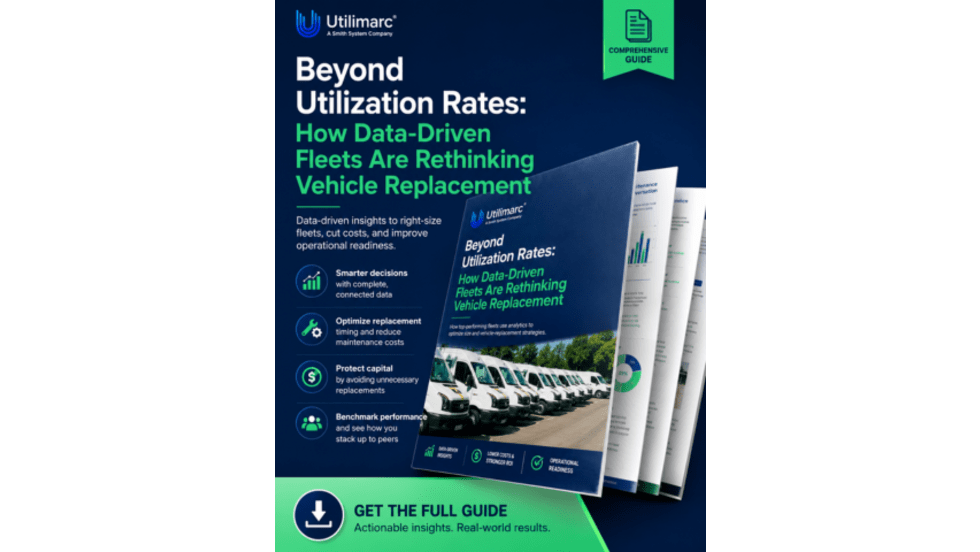
Beyond Utilization Rates: Smarter Fleet Replacement Decisions
Vehicle replacement decisions affect every aspect of fleet performance, from operating costs to asset availability. This guide explores how fleet leaders use integrated data, benchmarking, and lifecycle analytics to determine the right fleet size and optimize replacement timing with greater confidence.
Read More →