





Related: The Middle East Fleet Market: A Tale of Three Regions
Record Fleet Sales in New Zealand for the Fourth Consecutive Year
Commercial vehicle registrations in calendar-year 2017 were up 16.9% over 2016. Similarly, total retail sales in CY-2017 were the strongest in the history of auto sales in New Zealand, driven by strong demand for SUVs and pickups.
February 8, 2018
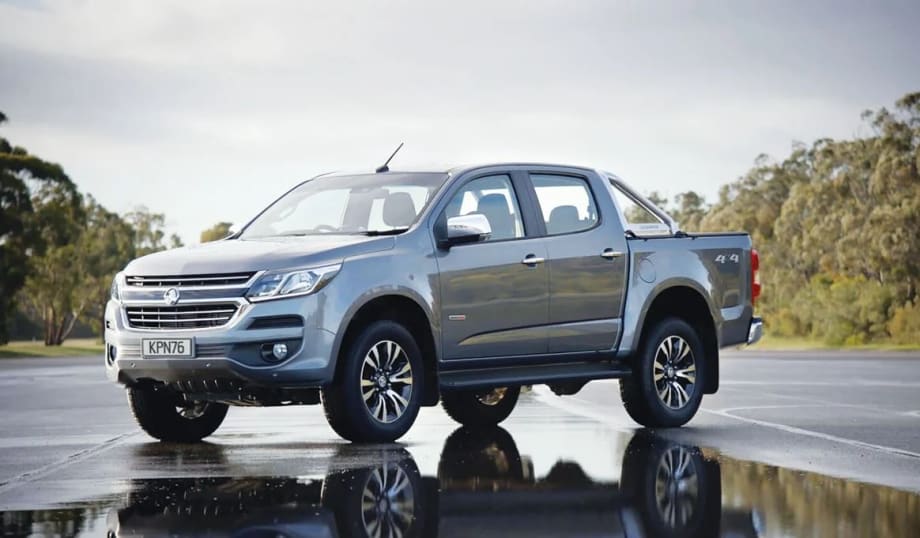
Sales of the Holden Colorado in New Zealand were way above its 2016 sales. Photo via Holden.
6 min to read

Photo of Auckland New Zealand courtesy of Paul Moss via Wikimedia Commons.
The retail and fleet markets in New Zealand are on fire. Calendar-year 2017 marked the third consecutive year of record retail and fleet vehicle registrations. Retail and fleet registration for the month of November 2017 were the strongest on record and were sufficient, on a year-to-date basis, to surpass total vehicle sales in 2016, which itself was a record year.
Total registrations of new vehicles for the 2017 year to date were 148,335 and this exceeds the 2016 full-year total of 146,753 vehicles by 1,582 units, according to the Motor Industry Association in New Zealand.
Registrations for January through November 2017 were up 9.5% compared to the same time in 2016.
Year to date, sales of passenger and SUVs were up by 6.2% (5,888 units) and commercial vehicles by 16.9% (6,952 units) compared to this time in 2016.
In the commercial sector, Ford was the market leader with 22% (943 units) followed by Toyota with 20% (869 units) and Holden third with 8% market share (340 units). The Ford Ranger retained the top spot as the best selling commercial model with 20% share (874 units) followed by the Toyota Hilux with 14% share (620 units). Year to date, the Ford Ranger remains both the top commercial vehicle model and the top model overall with 8,824 registrations compared to 7,664 for the Toyota Hilux.
Vehicle segmentation for the month of November returns to more normal patterns of recent times with the top four spots taken up by SUVs and light commercial vehicles. The top segments were SUV medium vehicles with 19% share, followed by the pickup/chassis cab 4x4 segment with 13% and SUV Large with 12% market share.
Utes are leading the way in new vehicle sales at the mid-way point of the year, taking four of the top five spots in new vehicle registrations for 2017.
A ute is a vehicle term used in Australia and New Zealand that is an abbreviation for “utility.” The term ute traditionally describes a vehicle built on a passenger car platform with a cargo bed in the rear that is integrated with the passenger body. An ute differs from a pickup whose cargo bed is not integrated with the passenger cab.
For the month of November, Toyota remains the overall market leader with 22% market share (3,227 units), followed by Ford with 11% (1,546 units) and Holden with 10% market share (1,489 units).
Toyota was also the market leader for passenger and SUV registrations with 23% market share (2,358 units) followed by Holden with 11% (1,149 units) and Mazda with 9% market share (904 units). The top selling passenger and SUV models for the month were the Toyota Corolla (814 units) followed by the Toyota RAV4 (648 units) and the Toyota Highlander (445 units).
Holden enjoyed a solid year in 2017, driven by the Colorado ute, which is imported from Thailand. Sales of the Colorado in New Zealand were way above its 2016 sales. Contributing to the popularity of the Holden Colorado was its updated look following a comprehensive facelift in 2016. The best-selling Colorado model in New Zealand is the 4WD LTZ double-cab.
The Motor Industry Association reveals that in 2017 the Ford Ranger retained its 2016 end-of-year ranking as the top-selling new model in New Zealand. Likewise, the Toyota Hilux has experienced similar growth and is still the country’s second most popular new vehicle.
New Zealand Fleet Market
Following a record sales year in 2015 and 2016, vehicle sales in New Zealand continue to be strong for both the retail and commercial markets during calendar-year 2017. The key factors stimulating this demand were:
Steady growth in the national economy.
A strong car rental market driven by a vibrant tourism industry.
An ongoing influx of immigrants into the country who require transportation.
Low interest rates creating relatively inexpensive finance programs.
Resurgent rural confidence that spurred farmers to buy commercial vehicles.
New Zealand’s new-car market has been a pillar of strength in the economy over the past three years as sales records have regularly been beaten in an environment where employers have been able to cater to the expanding population, low interest rates have made it easier to finance new vehicles, and a strong New Zealand dollar has lowered the price for imports.
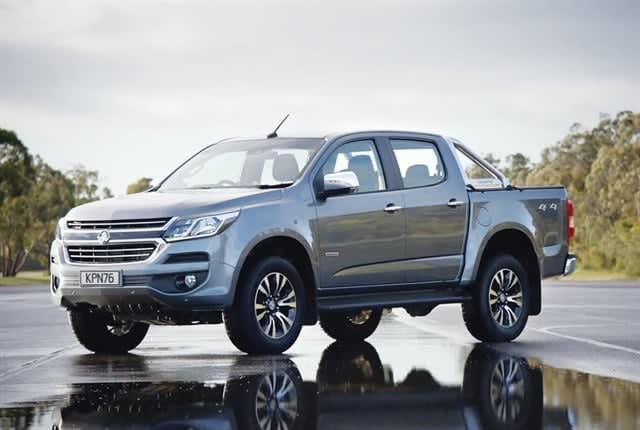
Sales of the Holden Colorado in New Zealand were way above its 2016 sales. Photo via Holden.
According to the Motor Industry Association of New Zealand (Inc.), the SUV medium segment, along with the pickup/chassis cab 4x4 segments, had the largest market share, followed by small passenger cars.
In addition, new-vehicle registrations in New Zealand are supplemented by large numbers of used-vehicle imports, predominantly from Japan. According to the 2016 Manheim Used Vehicle Report, annual used-vehicle sales in New Zealand are estimated to be 110,000 units.
Fleet Market Profile
In comparison to neighboring Australia, the fleet market in New Zealand is relatively small due to a population of only 4.5 million people.
Regardless of size, New Zealand is a mature fleet market with more than 90% of businesses classified as small and medium enterprises. The average fleet size in New Zealand ranges from 20 to 30 vehicles, with vehicles operated on both the North and South islands. The majority of units are on the more populous North Island.
The key vocational markets (fit for purpose) in New Zealand are construction (trucks and LCVs), forestry industries, and dairy. Other key fleet buyers in New Zealand are multinationals and the government.
Company ownership is prominent in the traditionally conservative New Zealand market; however, leasing is becoming increasingly popular with businesses with an international ownership model.
Current vehicle depreciation trends in New Zealand see the large car segment continuing to contract.
As with Australia, sales in the SUV segment in New Zealand are strong. There is a buying trend to downsize to smaller displacement engines, going from six- to four-cylinders, and a segment shift to more compact SUVs.
Fleet order-to-delivery times for new-vehicle orders range from one to three months, depending on the model.
Macroeconomic Trends
New Zealand is an export-driven economy with exports accounting for about 30% of its gross domestic product (GDP).
Similar to Australia, the economic fortunes of New Zealand are intertwined with China, which is the country’s biggest export market. One economic segment in New Zealand currently being challenged by the economic slowdown in China is the dairy industry. The New Zealand dairy industry is huge, exporting 95% of its product and it accounts for 30% of the total dairy market globally. Dairy product exports to China are more than US$4 billion annually.
The largest segment of the New Zealand daily industry is comprised of a large co-operative called Fonterra, representing approximately 13,000 farmers, which annually acquires a substantial quantity of fleet vehicles. Fonterra is New Zealand’s biggest company — by revenue — and its largest exporter.
Other major New Zealand exports to China are US$1.8 billion annually in wood products and nearly US$900 million in meat products.
Click here to view the digital edition of the Global Fleet Market Condition Q4 2017 special report, where this, along with other global fleet market reports, is featured.
To view Automotive Fleet's global news channel, click here.
Subscribe to Our Newsletter
More Global Fleet
GeoFencing Adds to Your Truck Security Arsenal
Geofencing is a familiar fleet tool today, but its early adoption marked a major shift in vehicle tracking, route monitoring, and the debate over employee privacy.
Read More →
Holman Takes Full Ownership of ARIZA in Mexico
Holman is bringing its Mexican fleet management operation fully under its own brand after more than 30 years as a joint venture. The change gives multinational fleet customers a single Holman operation across the U.S., Canada, and Mexico.
Read More →
5 Tire Maintenance Tips to Help Prevent Work Truck Downtime
Regular tire checks can do more than extend tread life. These five maintenance practices can help work truck fleets catch problems early, reduce costs, and prevent downtime.
Read More →

Proven Ways to Reduce Work Truck Downtime
The age-old problem of downtime will always be a reality, but with new strategies at hand, fleets have more ways to keep trucks on the road longer.
Read More →


Cameras, Safety and Insurance: From Reactive Claims to Real-Time Prevention (Part 2 of 2)
Part Two: Commercial auto remains one of the most challenging and costly lines of coverage for fleet operators and insurers alike. Continue learning more about how to effectively address these issues from Onur Aksan, Enterprise Business Development Executive, Geotab
Read More →
Cameras, Safety and Insurance: From Reactive Claims to Real-time Prevention
Commercial auto remains one of the most challenging and costly lines of coverage for fleet operators and insurers alike. Learn more about how to effectively address these issues from Onur Aksan, Enterprise Business Development Executive, Geotab.
Read More →
Fleet Costs Are Rising: Here’s How Leaders Are Responding
Fleet leaders are under pressure to reduce costs, adapt to economic uncertainty, and make smarter decisions. See how peers across North America are responding with real data, proven strategies, and forward-looking insights. Download the 2026 Market Pulse Report to benchmark your strategy and uncover where you can gain an edge.
Read More →
Enterprise Fleet Management Surpasses 900,000 Vehicles in U.S. & Canada
Enterprise Mobility connects with mobility solutions around the globe
Read More →