




Public Sector Fleets:Why Fleet Resale Proceeds Should Not be Returned to the General Fund
A fleet with a vehicle replacement fund to which resale proceeds are returned makes the fleet manager more accountable for the disposal of surplus vehicles and equipment. It is in the fleet manager’s best interest to maximize resale proceeds to offset the cost of new vehicles.


However, when resale dollars are returned to the general fund, it can make the fleet manager ambivalent to the resale process. Here are five reasons why it is not a good idea to return resale proceeds to the general fund.
1. User Departments are Not Incentivized to Properly Maintain Vehicles
When resale funds are returned to the general fund, there is no incentive to maximize resale since the monies are out of sight, out of mind. “There is no incentive to anyone to make a good sale. It is just a get-rid-of-it mentality,” said Craig Davis, Fleet Services supervisor for the city of Midwest City, Okla.
Maintaining control of resale proceeds encourages internal customers to better maintain vehicles. “Good resale values incentivize customers to keep the vehicle operating properly and to adhere to preventive maintenance, which help resale values and help keep rates low,” adds Doug Weichman, CAFM, director, Fleet Management Division for Palm Beach County, Fla.
2. ‘Pride of Ownership’ Maximizes Resale
User departments benefit when resale proceeds are returned to fleet operations because the income is used to offset new-vehicle acquisition costs. “This, in turn, places a premium on maintaining vehicles in the most cost-conscious, but best possible condition to maximize resale value,” said Terry Barton, Jr., fleet administrator for the state of Delaware.
George Torres, director, Transportation & Public Works for Milwaukee County in Wisconsin, echoes this sentiment.
“Not returning resale monies to the equipment fund works as a disincentive to users. This is especially true when trying to get departments to assess their equipment utilization,” said Torres. “Knowing a vehicle will be sold at its optimal time, while there is still value to the unit, will bring decent money on the resale.”
Returning resale monies to the general fund accomplishes the opposite effect.
“The only positive to putting resale proceeds in the general fund is that it is less work since the fleet manager is inclined to dispose of vehicles in a manner that requires the least amount of effort,” said Bill Roberts, associate director of Parking & Transportation Services – Fleet Services for the University of Minnesota in Minneapolis.
3. It Discourages Experimenting with Alternative Resale Channels
Fleet managers are more compelled to push for higher resale if the proceeds are returned to their operating budget. This encourages experimentation with non-traditional remarketing channels.
“I sell vehicles on eBay,” said Roberts. “Last November, two medium-duty trucks were sold. The first we had hoped to receive $10,000, but sold for $18,000. On the second, we had hoped to receive $8,000, but received $22,000. After our auction, two 15-passenger vans that did not receive the minimum bid of $10,000 were later sold on eBay for $10,500 and $10,800. Why would I try this if I did not receive the proceeds?”
4. Lower Resale Keeps Monthly Rates Higher
General funds are notorious for being raided by politicians in times of budgetary shortfalls. In theory, if the fleet department needs to replace a higher-than-normal amount of vehicles, the general fund may have more money than a vehicle replacement fund.
Fleet managers say otherwise. “If the dollars went to the general fund, my monthly rates would be higher,” said Steve Hennessey, Fleet Division manager, city of Tacoma, Wash. “In addition, I have several internal customers that are not general fund, so not receiving salvage dollars would be inequitable for them.”
5. It Encourages Cannibalization
When there is no incentive to maximize resale, it encourages cannibalization of parts from out-of-service vehicles for use as spares. It is not uncommon for vehicles to be cannibalized to the point where they need to be hauled on wreckers to auction. If you add the wrecker fees and lost resale from selling non-operable equipment, cannibalization far outstrips any parts cost savings.
A Best Practice?
In my mind, returning resale dollars to a general fund is not a best practice in public sector fleet management.
Let me know what you think.
mike.antich@bobit.com
More Remarketing

Ford Pro Launches Certified Pre-Owned Program for Commercial Vehicles
Ford Pro Advantage will offer certified pre-owned Class 1-7 commercial vehicles through more than 700 Ford Pro Commercial Vehicle Centers.
Read More →
Copart to Acquire ACV in $1.9 Billion Deal
The acquisition would expand Copart beyond its traditional salvage business into dealer-to-dealer wholesale remarketing while adding ACV’s vehicle data, inspection, and valuation technology.
Read More →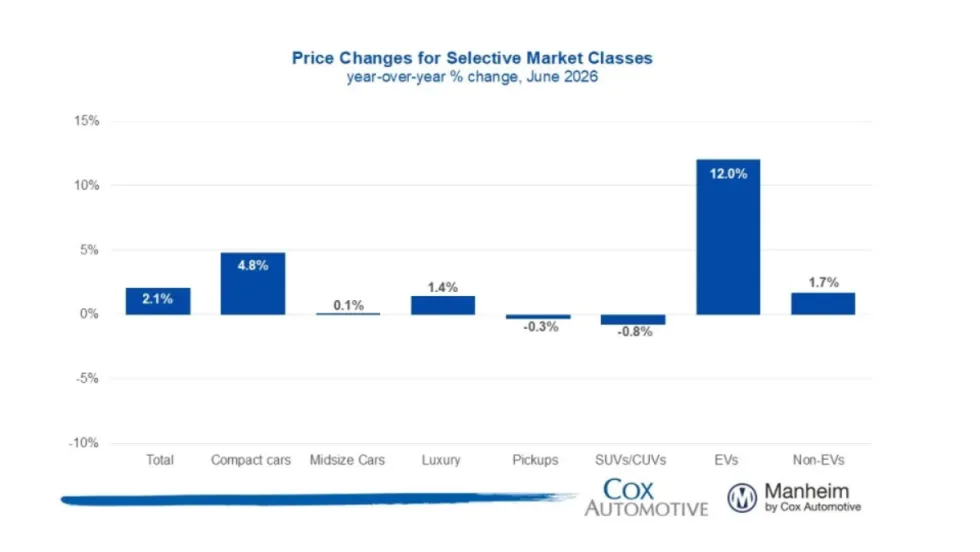
Manheim Index Shows Used-Vehicle Wholesale Prices Up 2.1% in June
The market is seeing stronger appreciation in older used vehicles this year, and the most affordable segments have been among the year’s best performers.
Read More →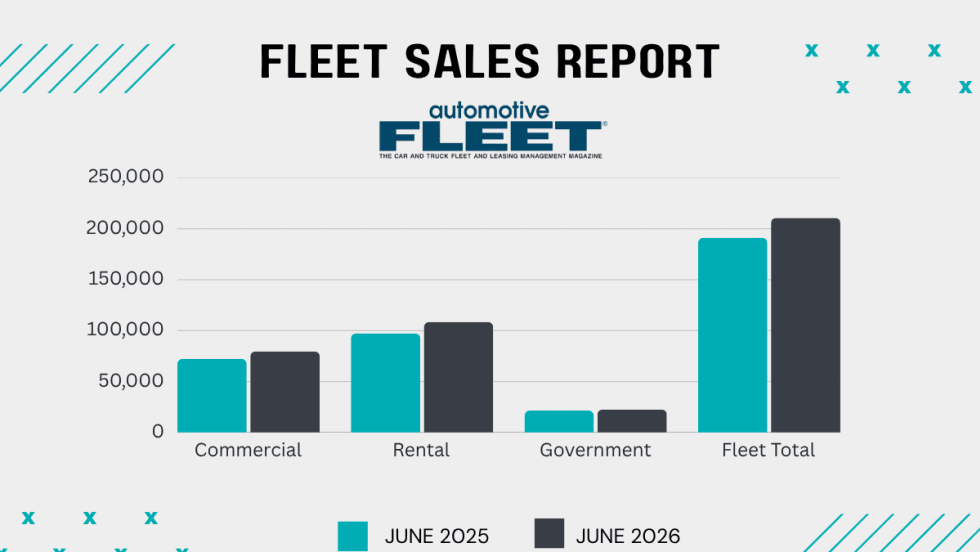
Commercial Fleet Sales Contribute To June, YTD Gains
The fleet sector has boosted its vehicle purchases at a reliable pace in the first half of this year compared with 1H 2025.
Read More →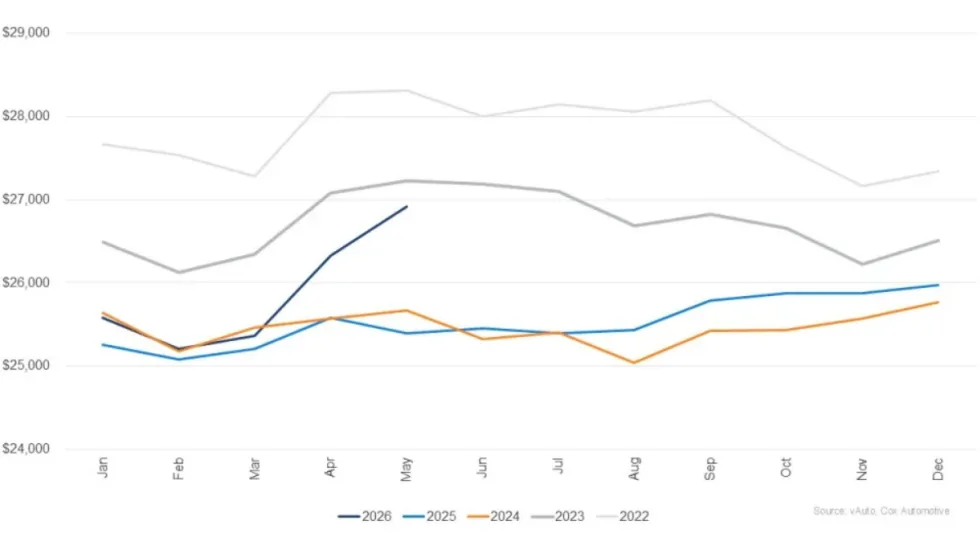
Used Vehicle Prices Climb Higher As Sales Pace Slows
The higher prices at used retail reflect strong wholesale values earlier in the spring, particularly for older, more affordable vehicles.
Read More →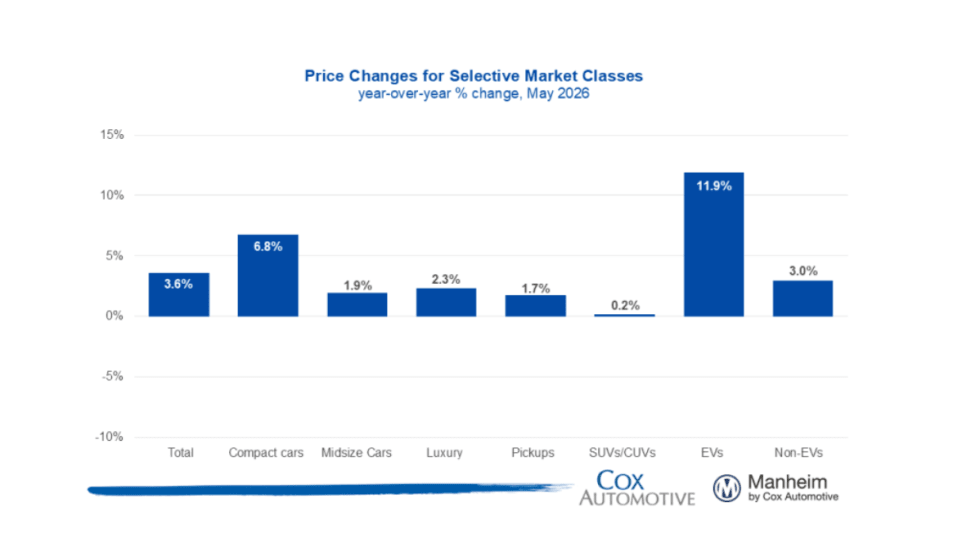
Wholesale Used Vehicle Market Sustains Moderate Rise In Values, Prices
Trends continue to normalize after a strong start to the year, as consumers contend with higher gas prices in the coming summer months.
Read More →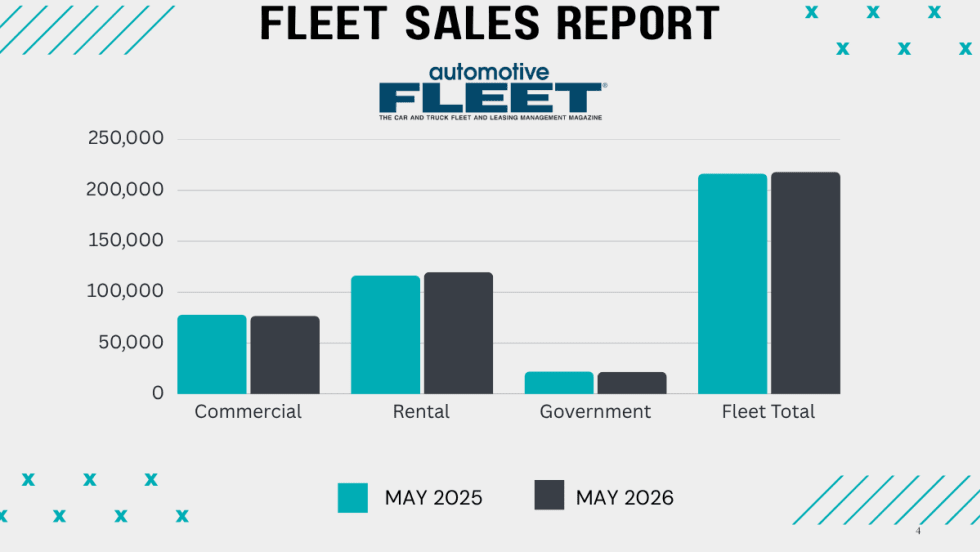
Commercial Fleet Sales Still Lead Sectors Despite May Mini Dip
The U.S. economy's continued growth and positive business investment are creating a favorable environment for fleet vehicle demand.
Read More →
How Connected Vehicle Data Is Lifting Fleet Resale Values
A vehicle health score could improve the value of fleet vehicles at remarketing. The path to a universal standard is forming, and fleets that understand the process early will be better positioned when it arrives.
Read More →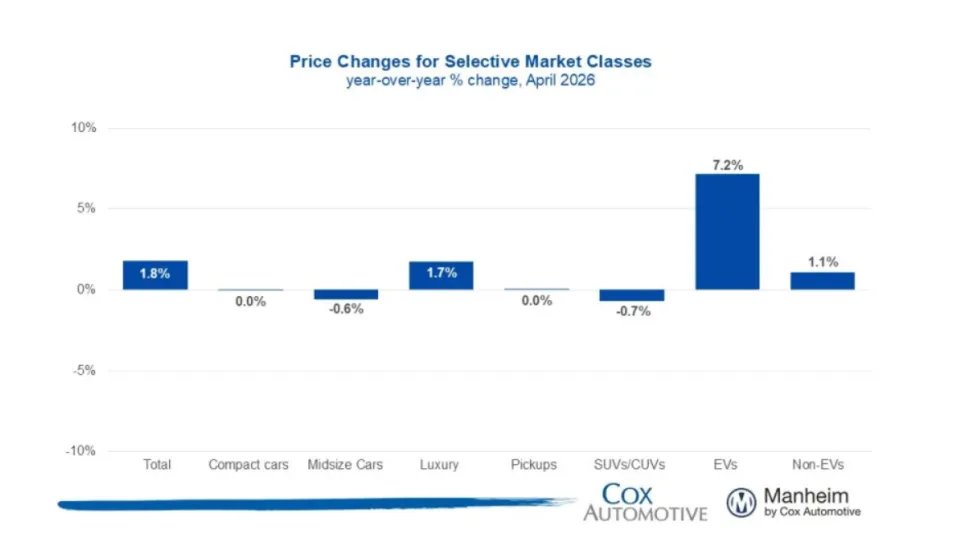
Wholesale Used Vehicle Prices Slightly Up In April
The Iranian conflict and rising gas prices inject much uncertainty into the future wholesale used vehicle markets, as higher gas prices soak up spendable income from vehicle buyers.
Read More →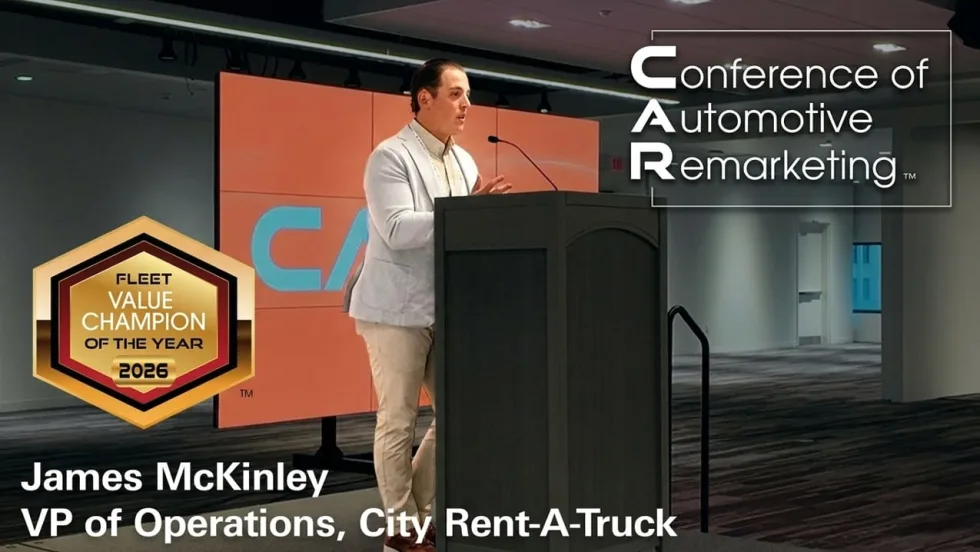
CAR2026: James McKinley Wins Value Champion of the Year
James McKinley of City Rent a Truck was named the inaugural Fleet Value Champion at the CAR Conference for his data-driven approach to fleet lifecycle management and vehicle remarketing.
Read More →