




Policy Change May Affect Courtesy Delivery System
Switch in 1981 GM program sends service card to delivering dealer.
With the beginning of the 1981 model year, a change in policy at General Motors promises to affect the courtesy delivery system in place today and will result in major re-negotiations of agreements between large fleet dealers and lessors with their dealer networks.
According to a large fleet dealer located in a major metro area, GM's policy change will, this fall, send the vehicle's service card to the delivering dealer as opposed to the selling dealer. The upshot is that the delivering dealer will collect money directly from GM for prepping the car at his prevailing labor rate.
When asked what this means to the large fleet dealers across the country, the fleet dealer said, "It means that they are going to have to renegotiate their total dealer network. They're going to pass increases along to their accounts in the mark-up over invoice or under invoice, as the case may be. The labor rate for most of the large selling fleet dealers is fairly high in most areas because they are in major metropolitan areas where they have a large chunk of the service that will come.
"The dealers that will be getting the service card, in most cases, or in many cases, are in smaller areas," the dealer said. "Therefore their service rates are going to be considerable lower. So the selling dealer has to go to the delivering dealer and say, 'Hey, I was paying you $80 in the past (to handle a courtesy delivery) - now you're going to get the money from General Motors.' The delivering dealer's labor rate may be $25 an hour, which in essence would give him a little over $50 or $55 (flat rate books list car prep at 2.5 hours), whereas in the past he was getting $80 from the selling dealer." The selling dealer in turn was getting service money from GM at a higher rate if located in a major metro area, and hence could afford to pay that higher amount. "The question is, now will he (the delivering dealer) deliver the car for the service card at an additional $25 or will he say, 'No, the service card is mine, it was meant for me and I still want $80.'" The selling dealer, in turn, loses twice, the service card at his rates and whatever he was paying the delivering dealer to begin with.
The result, according to the fleet dealer, is "the dealer is going to have to hunt other dealers in other areas. It will be either finding a new dealer network, in total, which will be very, very tough, or living with the dealers you've got and fighting with them and working and renegotiating. I would guess that we will end up with the average delivering dealer's labor rate being in the area of $55 to $60 per car. That's what I feel will be the average. The big dealers are not going to let you cut out (of the price) what you want to cut out." In other words, the large dealers still have a high labor rate, making it tougher to cut the price of a deal to a fleet in order to be competitive with other fleet dealers basing their bids on lower service in locations outside major metro areas.
"I have a very high labor rate," the fleet dealer said of his particular location. "We get almost $90 per car. It's going to devastate a dealer like me far more than it would a nearby dealer (who technically is out of the metro area and charges a lower labor rate). They may be getting $70 per car and I'm getting $90. It will make them more competitive with me now. So we're going to have to sit down and push the pencil and work the hell out of the dealer network" to cut a better deal.
While it may be tough for some of the large fleet dealerships to re-negotiate, the fleet dealer predicted even tougher times for large leasing companies. "I do think that the dealer situation will be a lot easier to renegotiate than a lessor's situation with the dealers because there is a rapport dealer to dealer. This does not exist in lease company to dealer relationships. They (some delivering dealers) want to get in the lease company's pants where they can, and they told us that. We've had dealers tell us, 'Hey, you're a dealer selling a car - we work better with you than these guys that are pretending they are dealers and telling us they're dealers when we know they are not.' They will call up and say, 'This is (a paper dealer's name), and we want to renegotiate this car.' The delivering dealer knows they're a paper dealer and they're going to try harder to get into that leasing company's pants than they will ours. We think it will put us in a better position in that respect with the paper deals that are quoted."
The fleet dealer feels that as a result of this trend, many major leasing companies may come back to large fleet dealers to handle their orders and deliveries. "Those leasing companies are going to have a bear of a time renegotiating, and I think some of those will swing back to a dealer that will give them full service that negotiated a better deal. Because their costs are rising so quickly, they cannot do as good a job as a dealer can - and some of the companies are feeling that."
When asked if the new policy combined with the three-percent holdback on new car sales announced by GM would encourage more dealers on a local level to get involved in fleet sales, the fleet dealer conceded that it was a possibility. "You've got to feel that if a guy has got three-percent holdback and a $60 service card, he may want to work at invoice where he wouldn't before. You know, most of them (regional dealers selling fleet cars) were almost $75 or more over invoice. That's a good point and that's going to make it tough. It's probably one of the key reasons," the fleet dealer alleged, "that the NADA has gone in and pushed this thing."
When pressed on the issue of NADA involvement, the dealer said, "Absolutely, they've admitted it. They (GM) have submitted to NADA pressure."
While the program will affect metro dealers primarily, the fleet dealer felt metro dealer pressure on NADA did not have anything to do with the end result. "It (NADA) may be run by the metro dealers, but they're still representing the total dealer network, and I think that is how they (NADA leaders) think."
When asked to estimate the average net loss per car, the fleet dealer said the three-percent holdback per unit will help reduce the loss a little. "Now many of us have renegotiated the three-percent holdback and that's gone back to the buyer, or at least a portion of it. But with the increase of the holdback and with cars going up $700 or $800, we will probably have an extra $10 holdback. We're going to lose about $50-$60 per car in this service card mess, so it should be about a net $50 loss to us which in most cases will be put back to the buyer. I don't know any volume fleet dealer that can afford a $50-per-car loss. So you're going to have to put most of that gross back to the buyer. Now, the buyer may look at buying locally again, and he may do that in smaller fleet operations. But I don't think the big fleets will change. There's no way, because they're too used to buying through one dealer. They don't have the staff or the people or anything else that goes to change it. A lot of those guys have kicked dealers in the rear for years, and now they are dependent on dealers and they couldn't get a delivery now."
While viewed by the large fleet dealers as a setback, the smaller fleet dealers who handle courtesy deliveries feel the change in policy will improve service and that they now stand the prospect of getting what they feel is due to them.
"This means that the car will get more than just a wash," one West Coast fleet dealer said. The margin on courtesy deliveries is so small, the dealer noted, that often a fleet vehicle would just be washed instead of getting a complete prep job.
Confirming the fears of the large fleet dealers, the smaller fleet dealer said that in addition to the service card, he feels most delivering dealers will stand firm on the $75 that they are currently receiving. This means these dealers will continue to ask for that amount in addition to the service card in 1981. "That money (the $75) will be needed to cover the administrative expenses of the paperwork," the dealer said. Under the current system, according to the dealer, the fee really only covers administrative work. He added that when the service card is shifted to the delivering dealer, the money from the card will cover actual car prep. Until the change, "the money just isn't there," the dealer said, to do a proper job. He feels it will make the fleet business more competitive and will give a needed shot in the arm for delivering dealers.
As a result of the new GM service card policy, it appears that some changes are in store in the composition of the fleet market and the traditional courtesy delivery network during 1981, especially if Ford and Chrysler follow suit.
Financial Impact of Decision May Run Into Millions
In the '79 model run, GM Divisions sold about 750,000 fleet cars. While the service card prepping varies per each model, it is more than fair to use 2.3 hours average. With labor rates fluctuating over the country, the larger metro areas consistently fall in the $40-$50-per-hour range, and the medium to smaller size cities in the $18-$25-per-hour range. On the assumption that all GM fleet cars sold average 2.3 hours of prepping at an average of $40/hour, the total cost of GM was about $66 million.
With the '81 model policy of passing the service card to the delivering dealer, we can estimate that there will be a heavy shift toward service card payments in the smaller and medium size cities. Given the 2.3 hours for new car preparation at a new average (for '81) of $25/hour, the total cost to GM would be about $43 million, meaning a net savings of approximately $23 million. Depending upon possible shifts in sourcing for selling dealers, negotiations between selling dealers and delivering dealers, and negotiations between selling dealers and the buyers, someone will be retaining fewer dollars at the dealer level, and the buyer is surely going to foot most of that bill.
More Operations

The Top 300 Commercial Fleets
The Top 300 Commercial Fleets: See the List
Read More →
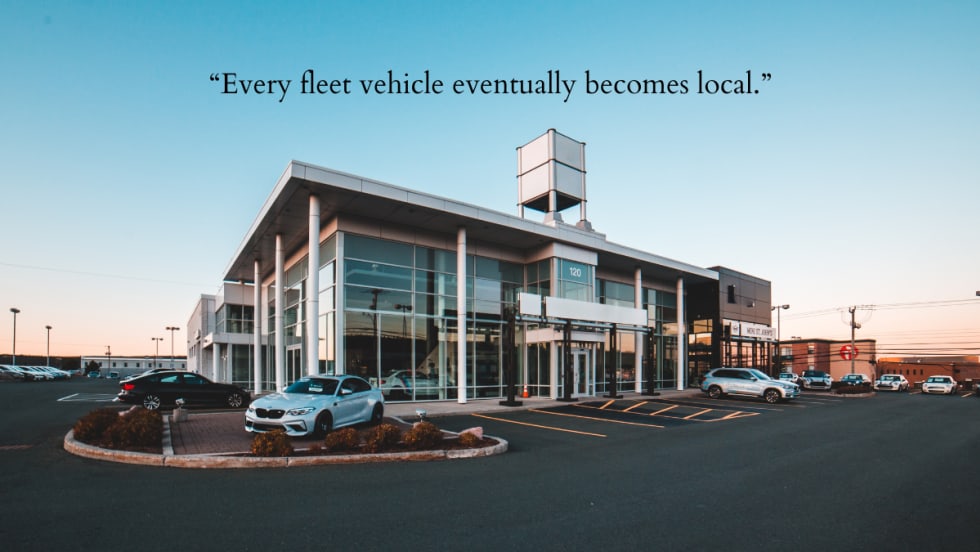
Your Local Dealer Knows More Than You Think
Your local dealer can provide an information advantage that extends well beyond courtesy deliveries.
Read More →

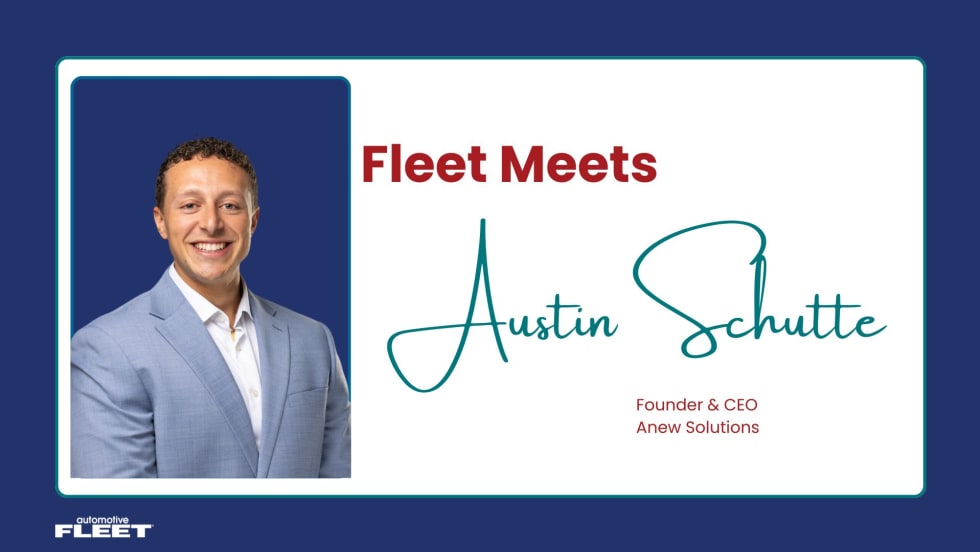
Fleet Meets: Austin Schutte
Here are some industry insights, personal touches, and words of advice from the CEO and Founder of Anew Solutions.
Read More →
Soap Box Derby Challenge: What’s Powering Team Brown
The car is coming together, the students are solving real build problems, and the fleet industry is helping push Team Brown toward the starting line.
Read More →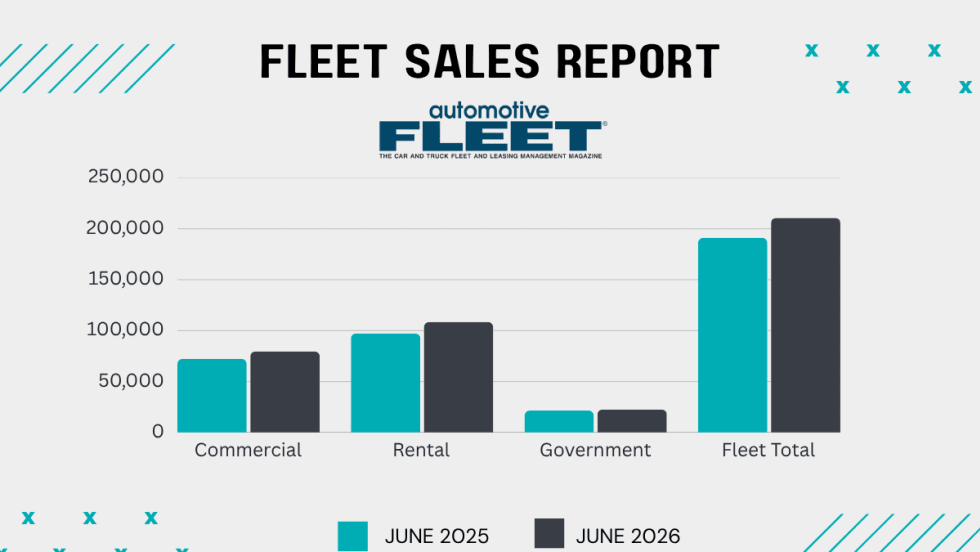
Commercial Fleet Sales Contribute To June, YTD Gains
The fleet sector has boosted its vehicle purchases at a reliable pace in the first half of this year compared with 1H 2025.
Read More →
What Fleet Managers Really Want From Vendors
From customer service frustrations and technology breakdowns to RFQs, change management, and the growing impact of turnover across the industry, this conversation pulls back the curtain on the real operational challenges fleet managers are navigating every day.
Read More →
Fleet Safety Masterclass: Industry Leaders on Storytelling, Strategy & Innovation
In this special masterclass episode, industry leaders break down what it really takes to build safer fleets in today’s increasingly distracted and data-driven world.
Read More →
Integrating Legacy Fleet Systems and Historical Data
In this episode, we bring together fleet and technology leaders to unpack the realities of data integration, system migrations, and the evolving role of AI in fleet management.
Read More →
From Resistance to Results: Change Management Strategies for Fleets
From new technologies and safety programs to evolving regulations, fleets are under constant pressure to adapt. But as Dr. Betz explains, success isn’t about the system you implement—it’s about whether your people actually use it.
Read More →