




Related: Peloton Announces Level 4 Driverless Platooning System
Peloton Scores a Platooning Point
In Josh Switkes’ view, it's way too premature to write truck platooning off as a dead end technology. And HDT Senior Editor Jack Roberts agrees with that point.
by Jack Roberts
July 29, 2019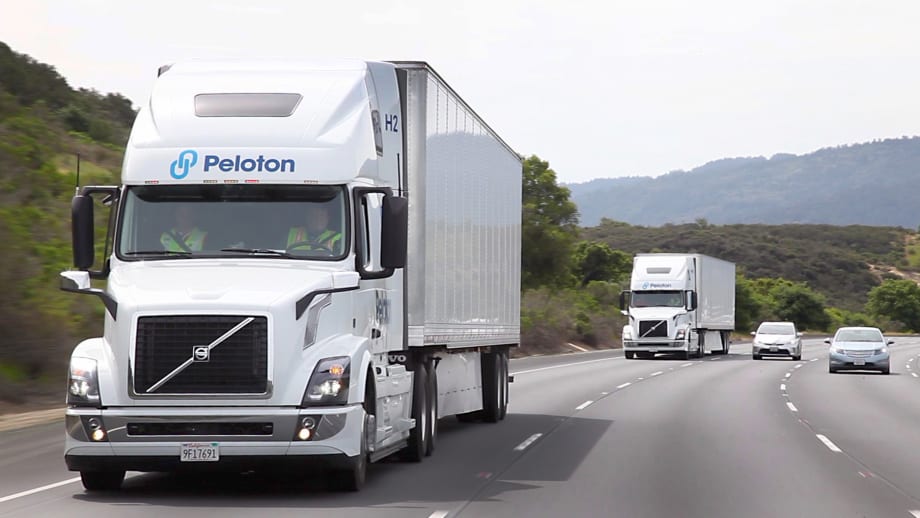
Even if fuel economy benefits are negligible or a wash, it is still possible that truck platooning could offer fleets tremendous boosts in both safety and productivity.
Photo via Peloton Technologies.
4 min to read
Late last year, at the IAA Show in Hannover, Germany, Daimler Truck and Bus head Martin Daum sent shockwaves through the trucking industry when he announced that Daimler wasn’t seeing good fuel economy results in platooning trials with new trucks and highly advanced aerodynamic systems. Daum doubled-down on his comments at the CES Show in Las Vegas, earlier this year, formally announcing that Daimler would forgo any future work on truck platooning and instead focus on autonomous vehicle systems.
Like many industry observers, my first thought when I heard these announcements was of Peloton Technology, the Mountain View, California tech company that has staked out a position as one of the premier developers of truck platooning systems. Based on reports of their work – as well as Daimler’s own initial assessments, it should be noted -- truck platooning sounded highly promising as both a fuel economy and a safety technology. I’d even gone so far as to suggest it was for many Americans their first real-world exposure to autonomous trucks.
So, were all of those early results simply wrong? Was truck platooning an initially promising, yet ultimately a disappointing technological dead end?
I wasn’t sure what to think. But I suspected that Peloton Technologies, and it’s CEO Josh Switkes, weren’t going to be quick to wave the white flag when it came to truck platooning.
And I was right.
In late July, Peloton announced its first major tech advancement since Martin Daum’s comments – unveiling its Automated Following platooning system, a Level 4 autonomous system that does not require a driver in a following truck.
But Switkes was also prepared to hit back against Daimler’s anti-platooning announcements. In an interview with me a few days before the Automated Following announcement was made, Switkes reasserted his view that truck platooning can deliver big for fleets on three important fronts: Fuel economy, safety, and freight efficiency.
All three are important. But to me, the efficiency angle platooning promises fleets has been downplayed somewhat over the past couple of years. So, it was nice to hear Switkes reassert that point in our interview. And it’s not a hard point to grasp: In an age where truck drivers are hard to find and projections show ballooning freight volumes coming straight at trucking, using technology to place two (or more) trucks under the control of a single driver would be an unbelievable boost in freight efficiency for fleets. I’m no statistician, so I can’t say with authority that such technology would actually double the productivity of a single driver – but it would definitely bring a dramatic increase.
Why deal with drop-and-hook situations when a couple of drivers coming from different origin points with platoons in tow can simply pull into a yard, electronically “swap” their following tractor-trailers, and start on the return leg back to their base, for example? I doubt the drivers would have to even climb down out of their cabs to complete an operation like that.
Moreover, Switkes pointed out something that I’ve said for quite a while now – that drivers who obtain an endorsement as a qualified single operator in a multi-truck platoon will certainly make more money than drivers without that skill, and be able to pick and choose the routes and schedules that best meet their family and lifestyle choices.
Additionally, if you add the safety and MPG advantages Switkes is also talking about, then platooning as a potential fleet productivity enabler becomes even more promising as an emerging technology.
In the long run, it may turn out that highly aerodynamic trucks simply don’t net the fuel economy boosts that conventional tractor-trailers today do in a platoon situation, as Martin Daum said Daimler engineers have observed.
But, in my opinion, even if fuel savings are negligible or even non-existent, it is still way too early to write platooning off as a dead end technology. There is still a lot of promise inherent in this technology. And, as Josh Switkes made clear last month, Peloton intends to keep pursuing platooning to determine exactly what those benefits are.
Subscribe to Our Newsletter
More Fleet Forward

Chad Edmondson Named 2026 Fleet Safety Award Winner
The VSC Fire & Security fleet director oversees more than 1,100 assets nationwide. His approach to improving driver safety emphasizes collaboration, employee engagement, and building trust with the people behind the wheel.
Read More →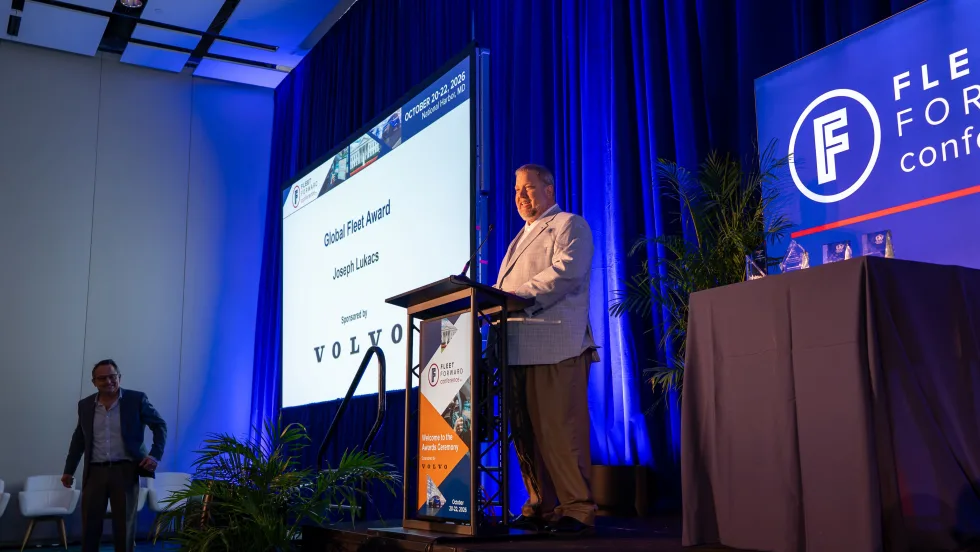
Joseph Lukacs Wins 2026 Global Fleet Manager of the Year
The Sherwin-Williams fleet leader adds another industry honor to his career after being named the 2025 Edward J. Bobit Professional Fleet Manager of the Year.
Read More →
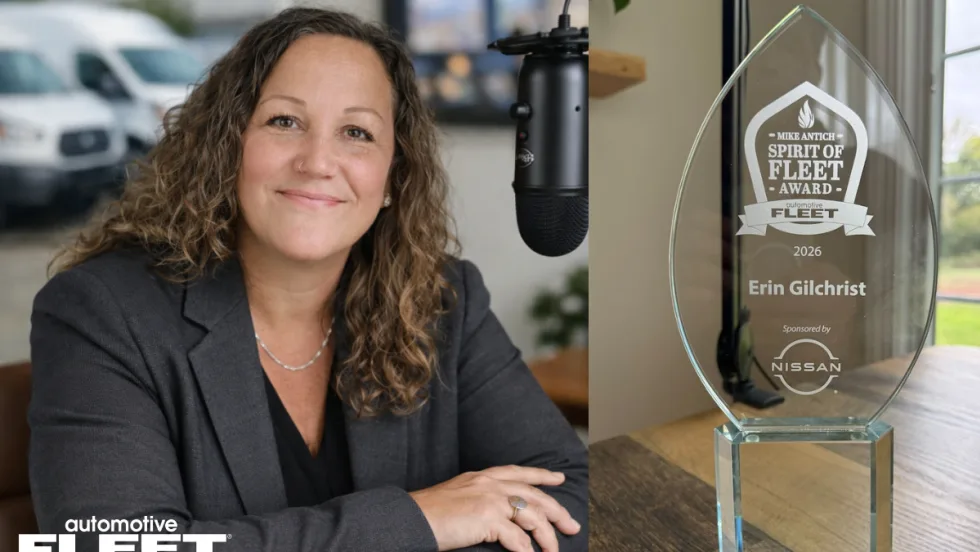
Erin Gilchrist Receives Mike Antich Spirit of Fleet Award
Last week at AFLA in Vegas, Erin Gilchrist received the inaugural, brand-new Spirit of Fleet Award.
Read More →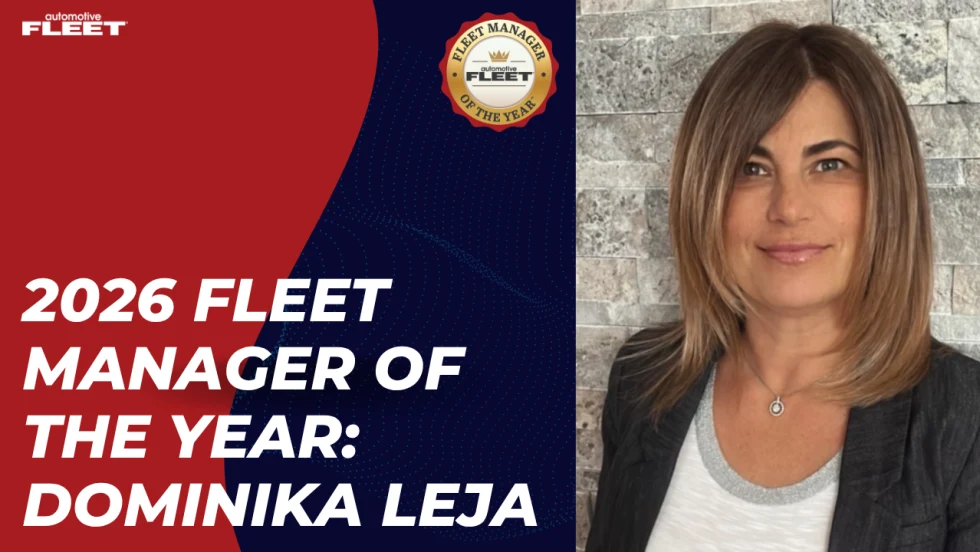
Dominika Leja Named the 2026 Fleet Manager of the Year
The AstraZeneca associate director of fleet was recognized for her leadership in fleet electrification, cost savings, and operational transformation.
Read More →
Jamie McKay Named the 2026 Fleet Visionary Award Winner
The Aptive Pest Control fleet manager was recognized for her approach to operations, data, lifecycle management, and driver needs.
Read More →
Fleet Forward Conference Introduces One-Day Passes for 2026
New one-day registration gives fleet professionals the flexibility to attend Tuesday, Wednesday, or Thursday, with passes available for $199 through Sept. 18.
Read More →
Vibe Coding: When Fleet Managers Become Software Builders
Five fleet professionals — none with programming skills — discuss how they’re using AI to build fleet solutions in-house and in a fraction of the time.
Read More →
Fleet Forward Conference Tackles Fleet Industry’s Growing Leadership Gap
This session will examine succession planning, knowledge transfer, and the skills the next generation of fleet leaders will need as veteran professionals leave the industry.
Read More →
2026 Fleet Manager of the Year Finalists Announced
Who are the 2026 Fleet Manager of the Year finalists?
Read More →