




Onboard Technology: To Have or Have Not
Advancements in technology are on the rise — and so is the number of new-vehicle models available with the “latest and greatest” OEMs have to offer. With more “bells and whistles” than can be counted on one hand, several fleet managers shared which features catch their eye when selecting a vehicle.

At a Glance
Technology cited as “must-haves” by several fleets include:
Tire pressure monitor systems.
Crash-avoidance technology.
Navigation systems.
When it comes to the basics, price, safety, and fuel economy are of utmost importance for several top commercial fleets, including American Family Mutual Insurance Co., Forest Pharmaceuticals, and LKQ Corp.
With a 4,300-unit fleet comprised primarily of Class 1-6 trucks, LKQ Corp. needs all the space it can get for its aftermarket replacement products. Cargo capacity, vehicle technology, vehicle size, and safety are at the forefront of its decision making.
Mike Lahr, director of logistics for LKQ Corp., said must-have technology featured in LKQ’s existing fleet vehicles includes a tire pressure monitor system (TPMS), parking aid/backup camera, and speed-limiting technology.
Theresa Belding, senior manager of fleet services for Forest Pharmaceuticals, is also a fan of tire pressure monitor systems in her approximately 2,900-vehicle fleet, as well as safety-focused features. Additional air bags, stability control, blindspot monitoring, adaptive cruise control, and lane departure warnings are all technologies Belding said should be standard on all vehicles.
Similarly, American Family Mutual Insurance Co.’s fleet services administrator, Brett Switzky, views crash-avoidance technology as a must-have for the 1,300-plus fleet. At the same time, he also emphasizes that even the most advanced technology should not be a substitute for safe driving.
“[Vehicle technology] depends on the driver. Most drivers can get away without using any [technology] and get home safe every night. I’m not against the technology, but it’s very expensive and, I think, some of it gets drivers out of practicing good habits and relying too much on a system that could fail at any moment,” Switzky said.
In keeping with the safety preferences, Bud Reuter, director Fleet & Procurement for Comcast, strongly favors daytime running lamps as standard on all vehicles. His fleet is currently comprised of 36,500 vehicles.
“Headlights should always be ‘on’ while the vehicle is running/in operation; if for surveillance or specific needs exist, it could be an option to remove, but should be a standard item for day or night,” Reuter said. “It should not be something that is a choice for the driver once in the vehicle. There is a reason they are offered; they provide better visibility and provide a safer environment. This is at a minimal cost increase and actually could be a cost reduction when simplifying the lighting selector — on, off, parking, etc. — options through manufacturing.”
Another fleet manager with 6,000 vehicles in her fleet said she would like to see OnStar, which is built into more than 30 General Motors models, offered on more vehicles. “I would like to see OnStar made available to all OEMs. It’s a great safety product that should be shared,” she said. OnStar features include automatic crash response, navigation, roadside assistance, and hands-free calling, and vehicle diagnostics.
One East Coast pharmaceutical fleet that reviews vehicles based on safety and fuel economy only allows four-cylinder engine models.
“Once we have the list of possible choices, our fleet management company creates a total cost of ownership (TCO) model,” said the pharmaceutical company’s fleet manager who asked to remain anonymous. “We also take into consideration global incentive programs with the auto manufacturers. For example, we added Volkswagen to our program last year because we buy many Volkswagen and Audi products overseas.”
For a large Southwestern-based fleet, vehicle technology is considered on a case-by-case basis. The company operates 8,015 vehicles.
Work That Body
Some of the latest vehicle technology function using methods that are, to say the least, unconventional.
Hands-free one foot at a time. Moving beyond hands-free calling and voice-activated-type features, Ford recently introduced its all-new Escape featuring a segment-first, hands-free power liftgate that opens with a simple kicking gesture under the rear bumper and without the need to fumble for a key. The gesture-based technology safeguards against accidental opening by being programmed to open with leg motions.
Butt-out, burglars. A new car seat developed by the Advanced Institute of Industrial Technology in Tokyo keeps thieves from “butting” into your business — literally. According to PSFK.com (an online source for new ideas and inspiration), the passenger-recognition technology in the car seat uses 360 pressure sensors to determine if the rightful owner is sitting in the seat. If not, the car won’t start.
Other Wish List Items
A few other "wish list" items for fleets include Black Box speed-by-street, in-cab mentoring, seat-belt compliance, and cars that can’t go through red lights or speed.
More Telematics
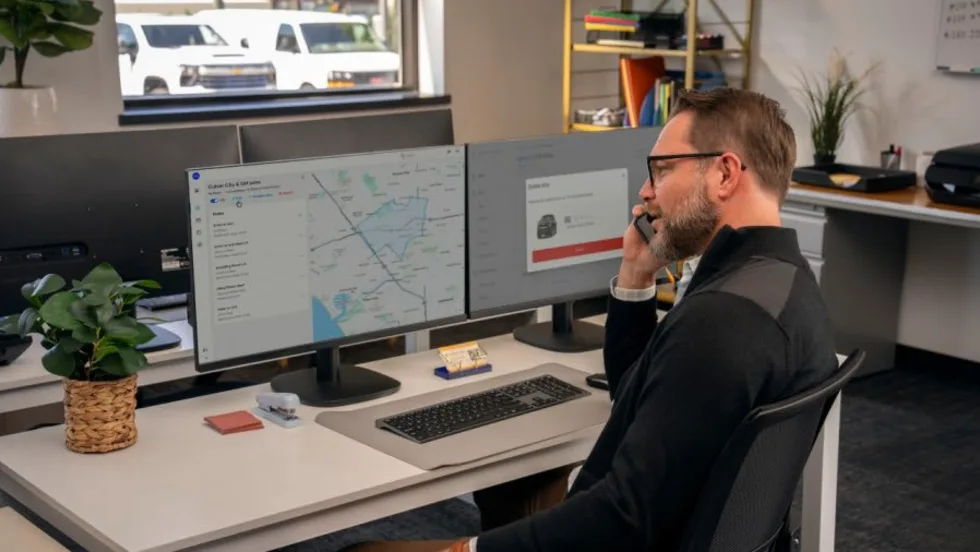
GM Launches OnStar Fleet Intelligence Platform With AI Assistant
The new platform brings vehicle data, order tracking, connected services and fleet analytics into one system, with an AI assistant that can answer fleet questions using natural-language prompts.
Read More →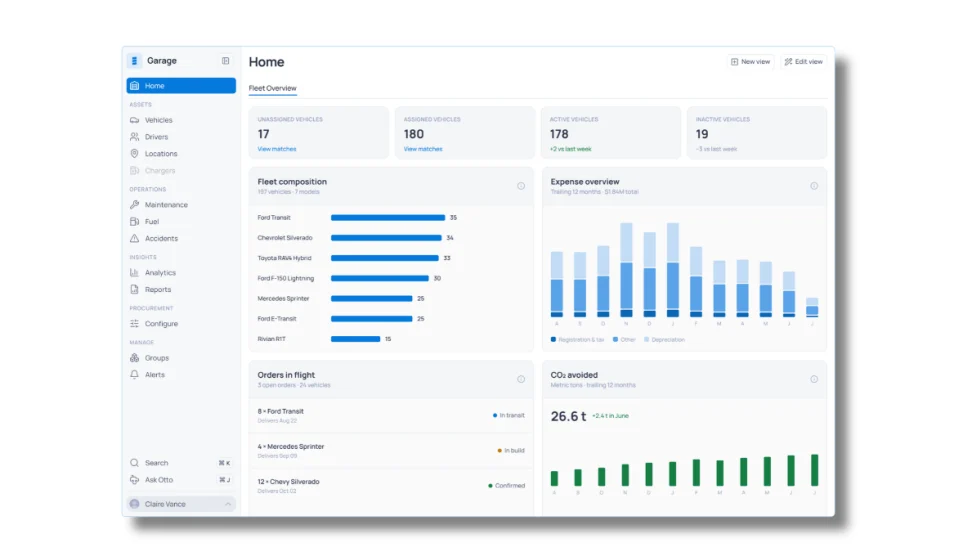
Inspiration Fleet Introduces Garage 2.0 Fleet Intelligence Platform
Fleet managers increasingly have access to data from vehicles, telematics, fuel, charging, and other systems, but those sources don't always communicate with one another. Inspiration Fleet's Garage 2.0 platform brings that information together while letting fleets keep working with different technology and service providers.
Read More →
Inside Inspiration Fleet’s New Platform for Connecting Fleet Data
Inspiration Fleet CTO Chris Getner explains how the new Garage 2.0 platform is designed to connect disparate fleet data and what that could mean for fleet managers in practice.
Read More →
Fleet Manager’s Ultimate Playbook: Navigating the New Standard in OEM Connectivity
Rising operating costs, driver safety concerns, and unplanned downtime are putting unprecedented pressure on modern fleets. Discover how fleet managers use embedded OEM connectivity and real-time vehicle data to cut TCO, prevent downtime, and protect drivers without aftermarket telematics hardware.
Read More →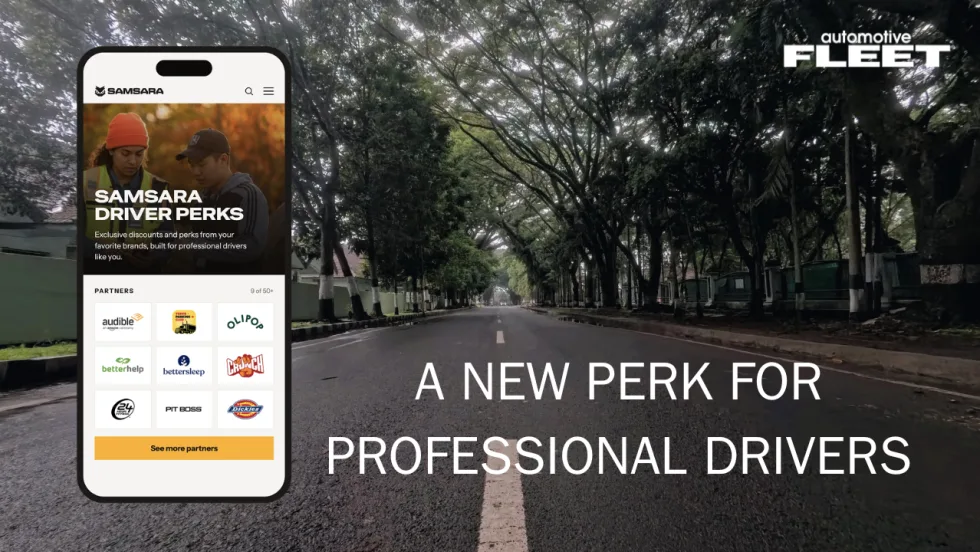
Samsara Driver Perks Adds New Benefit for Corporate Fleet Drivers
The rewards program gives eligible professional drivers access to discounts from more than 50 brands while giving fleets another way to support recruitment, retention, and the driver experience.
Read More →
Inside the Church of Jesus Christ of Latter-day Saints’ Two-Track Telematics Strategy
With 20,000 vehicles and two fundamentally different driver populations, the Church faced a fleet management problem that a single telematics program couldn't solve. How it responded offers a replicable framework for any fleet where one size doesn't fit every driver.
Read More →
How Conversational AI Can Make Fleet Tasks Easier for Drivers
While most generative AI tools help fleet managers interpret data at their desks, Connex2X is applying voice interaction to tasks behind the wheel.
Read More →
Why Fleets Are Creating Dedicated Fleet Analyst Positions
Are fleet analyst positions the new norm? Listen here to find out.
Read More →
Teletrac Navman Begins Next Chapter as Standalone Private Company
What's new with Teletrac Navman and its new owner?
Read More →
Why Fleets Are Creating Dedicated Fleet Analyst Positions
Telematics, AI, EVs, and connected technologies are generating more fleet data than traditional teams can effectively manage. Reed Jackson explains why dedicated fleet analytics roles are emerging to turn that information into better operational decisions.
Read More →