




OEMs Improve Truck Brake Safety and Control
Nearly all this year’s medium-duty Class 3-6 commercial vehicles provide upgraded braking systems and/or new brake-related features and options.

Find out what's new with safety and brake control on the 2008-MY new trucks.
Photo: Work Truck/Canva
Safety sells. That’s apparent from manufacturers' efforts to improve truck-braking systems. Nearly all the 2008-MY medium-duty Class 3-6 commercial vehicles provide upgraded braking systems and/or new brake-related features and options that promise more driver safety and control than ever before.
FORD F-450/550 ABS SYSTEM PROVIDES MORE ROBUSTNESS
Ford’s new 2008-model F-450 pickups and F-550 Chassis Cabs, which began arriving in dealerships in February and March, provide several brake-related enhancements.
The Class 4-5 trucks’ standard power-assisted four-wheel disc, four-wheel anti-lock braking system (ABS) provides more robustness in off-road operations, with additional shielding on all models equipped with a skid plate.
For its diesel-engine-equipped models, Ford also offers a new optional traction control (TC) system, which provides more precise control and reduced maintenance/cost, according to company officials.
A new 6.4L (350-hp, 650 lb.-ft. torque) Powerstroke diesel is standard on F-450 and optional on F-550.
The Ford-patented TC system with this engine — unlike those of competitors —uses only engine torque management to control wheel spin.
“Engine torque traction control is much more precise than brake-controlled traction control because it drives you to the best friction point for tires to surface,” said Dan Gompper, Ford vehicle dynamics supervisor.
Added Hal Felch, F-Series Super Duty platform supervisor, “When you use brake-control systems interacting with engine controls, you also add cost and complexity and the brakes wear out faster.”
Ford’s new system computes wheel speed from the differential and modulates torque to create optimum traction for a particular terrain. It determines the speed of the front versus rear wheels, for example, and based on the differential speed (and whether it senses slip-out of the rear wheels), it reduces rear torque to match the front. The system works in two-wheel-drive only and offers drivers the option of shutting it down.
The new Super Duties also offer adjustable brake and accelerator pedals on both diesel and gasoline engine models. They allow an operator to customize pedal reach for greater driver safety and convenience, and include a memory feature that ties into the seat memory module. It recalls the position of pedals for a particular driver. A button allows switching preference. Super Duties also offer a new, integrated trailer brake controller. An array of sensors and data inputs precisely coordinates vehicle and trailer braking.
As a factory-engineered and tested system, it provides much smoother, more controlled, and coordinated trailer braking than aftermarket systems.
DODGE SPRINTER BRAKE FEATURES OFFER MORE CONTROL
Sprinter is an up-and-comer in commercial segments, with Daimler-Chrysler’s current U.S. capacity producing more than 40,000 yearly.
The 2007 model is brand new. Components of its foundation brakes have been upgraded, and a combination of standard features provides more control than most passenger trucks.
Foundation brakes (along with the suspension system) are major determinants in how effectively any vehicle stability enhancement system (VSES) can control stability.
Sprinter has a standard power-assisted four-wheel-disc/four-wheel ABS system, and uses one of two different sized basic brake systems, depending on the payload. Both system sizes have been upgraded with larger discs, calipers, higher-volume pads, and a larger master cylinder for shorter stopping distance and increased brake life, according to company officials.
Also standard on all models is an upgrade of Mercedes-Benz’s electronic stability program (ESP), now called Adaptive ESP, in which the functions of ABS — acceleration skid control (ASR), electronic brake force distribution (EBD), and hydraulic brake assist (BAS) — are already integrated.
Adaptive ESP now also includes systems such as vehicle roll and understeering control and a self-learning algorithm, which calculates the vehicle weight and center of gravity based on parameters such as acceleration, speed, pedal position, and brake pressure.
The load-adaptive control mode, allowing the vehicle to more precisely respond to such maneuvers as highspeed cornering, is an industry first, said Andreas Zentarra, Mercedes-Benz manager for Drive Dynamic Systems.
The system also offers other features, including:
Upgraded roll-over mitigation (ROM), which detects critical lateral acceleration when cornering and reacts by reducing engine torque and increasing braking pressure at the relevant wheels.
Roll movement intervention improves the effectiveness of Adaptive ESP by engine and braking intervention in dynamic situations, such as sudden evasive maneuvers.
Understeering control, providing more stability under heavy understeer as might occur when driving quickly through tight bends.
Adaptive ESP also provides more precisely controlled braking and setting off on surfaces where the friction varies on different sides of the vehicle.
Electronic brake force distribution (EBD) is a carryover feature, though new on some Sprinter competitors. It redistributes pressure between the front and rear brakes, based on vehicle load, to provide more effective, shorter stops and help prevent premature rear brake lockup.
For example, if a vehicle is lightly loaded or almost empty, it typically results in too much pressure on the rear brakes. EBD distributes the excessive pressure to the front, using a Bosch brake controller to monitor individual wheel slippage through wheel-speed sensors, and adjusts the brake pressure as needed.
CHEVROLET AND GMC TRUCKS OFFER ELECTRONIC BRAKE DISTRIBUTION
Chevrolet and GMC’s recently introduced models, are the 2008-model W-Series low-cab forward, including the Class 3-5 W3500, W4500, W5500, and W5500 HD.
Among their enhancements, the trucks provide improved braking with electronic brake distribution (EBD), according to Mark Karney, GM Fleet and Commercial Operations marketing director for vans and medium-duty trucks.
The system recognizes changes in wheel speed and load variation to adjust the amount of pressure applied to the rear brakes. At any given time and with any given load, the trucks help optimize the power of the rear braking system, keeping it in proper balance with the front brakes.
By making better use of the rear brakes, EBD reduces front brake wear. It provides better braking performance and consistently higher brake life at all four corners.
Overall, the system includes dual-circuit hydraulic service brakes with EBD. The front includes disc; the rear, self-adjusting drum brakes with an outboard-mounted brake drum in the rear.
The parking brake is a mechanical, cable-actuated, transmission-mounted, internal-expanding drum type.
A four-channel ABS system is standard. W3500/W4500 models have vacuum brakes. W5500/W5500HD have hydraulic boosted assist. Like Chevrolet and GMC C-Series conventional and T-Series tilt cab models, the W-Series front disc and rear drum sizes are geared to their different GVW load-carrying requirements.
The power-assisted four-wheel disc/four-wheel ABS brake systems on C- and T-series models are carryover. An optional traction control system, which uses brake controls, is optional. “We initially designed the truck for optimum braking performance, and their performance is well established,” said Mike Eaves, GM medium-duty product manager.
SENSOR IN STERLING 360 ALERTS DRIVER OF BRAKE WEAR
Class 4-5 versions of Sterling’s new 360-model low-cab-over-engine trucks are available in spring, with a Class 3 added in mid-2007. Equipped with a new 4.9L turbodiesel engine (175 hp, 391 lb.-ft. of torque), the Sterling 360 provides standard engine braking among its many new features.
The standard exhaust brake is always engaged and comes with an electronic pad wear sensor that alerts the driver when the brakes are worn, according to John Merrifield, senior vice president of distribution, Freightliner Group.
The 360 also provides standard ABS with its power-assisted disc brake system. A sight window at the end of the instrument panel inside the cab allows drivers to keep tabs on the brake fluid reservoir.
Cab-over-engine (also known as tilt cab trucks), are available from virtually every light/medium-duty manufacturer. The most popular commercial type truck in Europe and Asia, the cab-over-engine truck is particularly well suited to congested traffic, narrow streets, and cluttered delivery sites. They offer a tight turning radius, enhanced driver safety/visibility, outstanding fuel economy, and easy serviceability.
ENGINE POWER IN DODGE RAM 3500 HD PROVIDES EXHAUST BRAKING
Cummins’ new 6.7L B-series inline six-cylinder diesel in Dodge Ram 3500 HD Chassis Cabs, redesigned to meet this year’s more stringent emissions standards, also provides an unexpected new braking feature.
As part of its redesign, the engine has a new variable nozzle turbocharger. Engineers discovered that, by closing off that turbocharger, the engine could effectively provide exhaust braking, said Chris Borczon, Daimler- Chrysler vehicle development engineer on the commercial vehicle team.
Its operation is similar to the “Jake Brake” option available on larger trucks, which use engine power to decelerate the vehicle.
As a standard feature, the Ram HD Cummins trucks provide a dashboard switch to turn the exhaust brake feature on and off. When on, the exhaust brake functions whenever drivers take their foot off the brake, slowing the vehicle, before the service brake is used to actually stop it.
“You can feel its effects driving an unloaded truck, but the biggest benefit is when you’re heavily loaded or pulling a large trailer,” said Borczon.
As an OEM factory-engineered system, its operation benefits from considerable development and testing. “Customers who use that (exhaust brake) are very happy with it. They’ve given us good feedback,” Borczon said.
New for 2007, the Ram 3500 HD has one standard-size four-wheel-disc/four-wheel ABS power-actuated HydroBoost brake system, designed for the most severe truck use.
“We wanted one system that works well for everyone,” Borczon said.
An adjustable brake pedal, carried over from Dodge full-size pickups, is the only brake-related option. Traction control is not available on the new chassis cabs.
SILVERADO AND SIERRA STOPPING POWER ENHANCED
The 2006-model Chevrolet Silverado and GMC Sierra, including 3500 HD pickups and chassis cabs, have a larger power-assisted Bosch four-wheel-disc brake system with four channel ABS for improved braking performance.
The system includes larger, vented front and rear rotors with an overall increase in swept surface for enhanced (approximately 10 percent more) stopping power versus previous-generation models. The rotors also provide a larger cooling area for longer-lasting performance, according to GM brake development engineers.
Improvements to the brake apply system, including a larger master cylinder and active brake booster system, also improve pedal feel, reduce brake noise, and provide a more predictable linear feel.
The trucks’ new Bosch 8.0 ABS system is lighter-weight and provides more precise valve control (less fluid cycling from the master cylinder), which provides quieter operation and better braking feel during the ABS operation. The brake’s castiron front calipers (dual piston) are 50-percent stiffer than the previous generation system and contribute to a better pedal feel.
New non-asbestos brake linings, under normal operation, are expected to deliver a minimum of 40,000-miles.
This spring, the trucks will also offer a new integrated brake controller for the trailer brakes.
Originally posted on Work Truck Online
More Vehicle Research
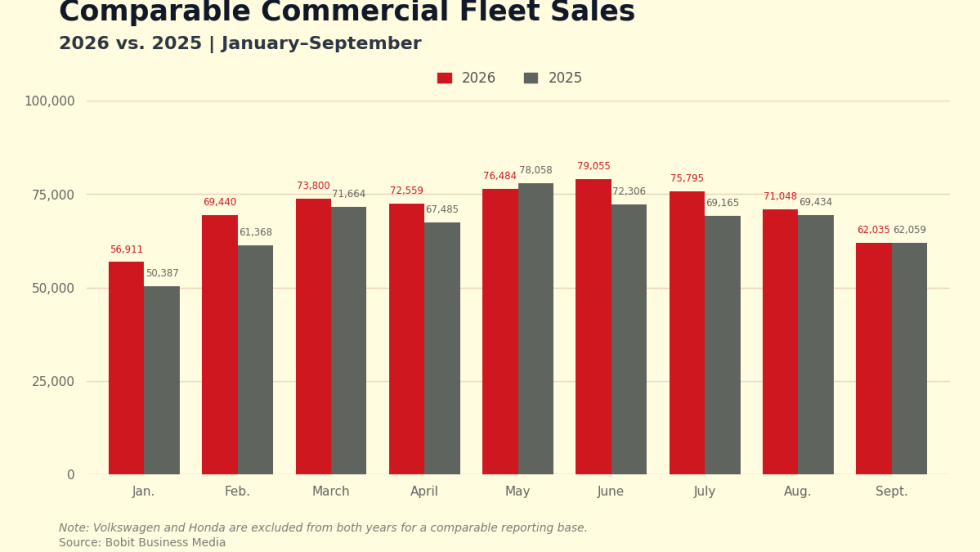
Commercial Fleet Sales Rise 5.8% Through September 2026
September commercial fleet sales were essentially unchanged from a year earlier, slowing year-to-date growth while keeping volume ahead of 2025.
Read More →
Hall of Fame Inductee: John Dmochowsky
The longtime Mondelēz International fleet executive joins the Automotive Fleet Hall of Fame.
Read More →
Hall of Fame Inductee: Lee Miller
After more than four decades at Boehringer Ingelheim, Lee Miller leaves a legacy built on fleet expertise.
Read More →
Hall of Fame Inductee: Mark F. Petersen
From managing fleets of thousands of vehicles to advancing safety and mentoring fellow professionals, Mark F. Petersen made his mark across both the corporate and supplier sides of fleet.
Read More →
When Charger Downtime Becomes a Fleet Availability Problem
As EV deployments move beyond pilot programs, charger reliability can directly affect vehicle readiness, driver productivity and route scheduling.
Read More →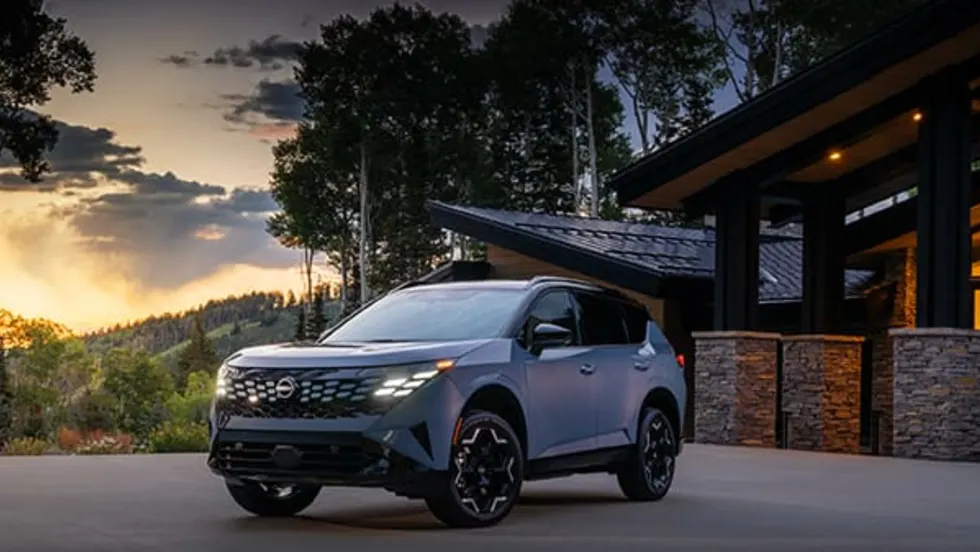
2027 Nissan Rogue Hybrid Adds e-POWER, Standard AWD
The new Rogue Hybrid uses Nissan’s e-POWER system with dual electric motors, offers an estimated 40 mpg and starts at $35,490.
Read More →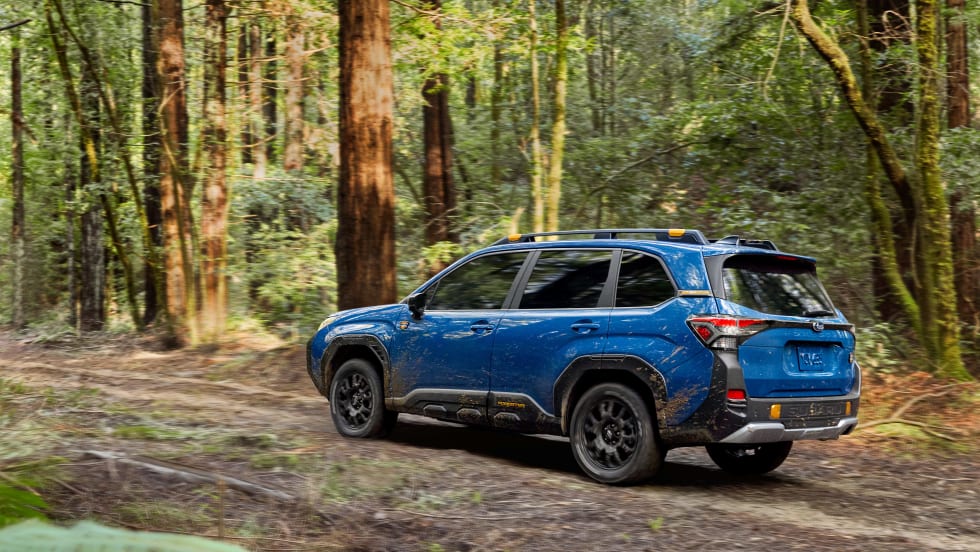
2027 Subaru Forester Adds First Wilderness Hybrid
The 2027 Forester lineup starts at $29,995 and adds a Wilderness Hybrid with 194 combined horsepower and 9.3 inches of ground clearance.
Read More →
EV Realty Names Henrik Holland President as Charging Platform Expands
The former Prologis Mobility and Shell executive will help expand EV Realty’s truck charging business and move its power-first infrastructure model into autonomous vehicle depots and other fleet sectors.
Read More →
Mercedes-Benz Introduces Electric GLC With Up to 350 Miles of Range
The GLC 400 4MATIC Electric features an 800-volt architecture, 330-kW DC fast charging and a 94-kWh battery, along with Mercedes-Benz's new MB.OS operating system.
Read More →
Fleet Has a Talent Pipeline Problem, not a Talent Problem
Where will the next generation of fleet leaders come from, and what does the industry need to do differently to find them?
Read More →