




Number of Questionable Auto Accident Claims Rises in Florida
According to a study by the National Insurance Crime Bureau (NICB), the number of questionable insurance claims resulting from staged or deliberate auto accidents rose substantially between 2008 and 2010.

According to a study by the National Insurance Crime Bureau (NICB), the number of questionable insurance claims resulting from staged or deliberate auto accidents rose 58 percent in Florida from 2008 to 2009.
In 2008, Florida experienced 1,268 suspicious auto accident-related claims, which rose to 1,999 in 2009. The number of questionable claims resulting from all insurance fraud increased 15 percent in the same time frame, going from 6,500 in 2008 to 7,447 in 2009. Through the third quarter of 2010, the overall number of questionable claims rose another 12 percent.
The 58-percent jump in fraudulent auto insurance claims from 2008 to 2009 indicates that criminals are taking advantage of Florida’s no-fault auto accident coverage.
“Previous industry studies have shown that among the12 states that have no-fault coverage, Florida had the highest rates of fraud and buildup in both bodily injury (BI) and personal injury protection (PIP),” said NICB President and CEO Joe Wehrle. “The criminals who are staging and deliberately causing these accidents have been doing so because they can file claims for alleged injuries and collect big payments with little risk of getting caught.”
BI-related staged accidents in Florida increased by 73 percent while those that were PIP-related increased by 52 percent. PIP-related claims continue to be the most frequent type of questionable claim at 39 percent of the 1,999 claims referred in 2009.
Although South Florida used to be the hub of auto accident scams, this activity has now migrated to Tampa. Between 2008 and 2009, Tampa has experienced the largest increase in staged accidents in the state. To combat this shift, NICB has recently begun a public awareness campaign in Tampa. Through NICB-funded billboards, bus shelter ads, and radio announcements, citizens who suspect that an accident might be staged are being urged to call 1 (800) TEL-NICB or text their information to TIP411 using the keyword “fraud.”
“Working with our insurance company and law enforcement partners, we created a Major Medical Fraud Task Force in South Florida in 2002 to focus on this type of insurance fraud. That cooperative effort has resulted in numerous successes and the criminals are feeling the heat. That’s one of the reasons they are moving up the state to the Tampa and Orlando areas. So we will soon be opening another Major Medical Fraud Task Force in Tampa to combat the issue there,” explained Wehrle.
The number of questionable claims related to auto accidents in Tampa has risen from 125 in 2008 to 487 in 2009, a 290-percent increase over the previ-ous year. The rest of the top five cities with the most questionable claims are West Palm Beach, which experienced a 92 percent increase from 50 claims to 96; Hialeah from 69 to 98, a 42 percent increase; Orlando from 193 to 240, a 24 percent increase and Miami from 232 to 258, an 11-percent increase.
More Safety

Fleet Manager’s Ultimate Playbook: Navigating the New Standard in OEM Connectivity
Rising operating costs, driver safety concerns, and unplanned downtime are putting unprecedented pressure on modern fleets. Discover how fleet managers use embedded OEM connectivity and real-time vehicle data to cut TCO, prevent downtime, and protect drivers without aftermarket telematics hardware.
Read More →
From Driver Well-Being to EV Charging | AF News Recap
Mental health belongs in the fleet safety conversation. This week, we’re looking at five ways fleets can support employee well-being before a crisis, plus Holman’s expansion in Mexico, new one-day Fleet Forward passes, and why EV charging demand is outpacing infrastructure growth.
Read More →
Nexar-Nauto Merger Aims to Give Fleets Better Safety Intelligence Through Larger Driving Dataset
Stefan Heck tells Automotive Fleet that combining more than 10 billion miles of driving history with Nexar's AI models will give fleets deeper insights into driver risk and roadway conditions than either company could provide independently.
Read More →
Don't Wait for a Crisis: 5 Ways to Build Mental Health Into Your Fleet Safety Program
For Suicide Prevention Month, fleet and safety leaders have an opportunity to put mental health where it belongs: at the center of workplace safety.
Read More →
How Camera Data Can Strengthen a Fleet’s Insurance Renewal
Insights from a commercial insurance carrier and a broker show how fleets can turn video telematic data, driver coaching, and improved claims results into a stronger case at insurance renewal.
Read More →
The Safest Fleets Aren’t the Ones with the Most Technology
You’ve made the telematics investment. Here’s how to capture the other half of its value and build the safest fleet on the road.
Read More →
Hidden in Plain Sight: Fleet Compliance Risks
Fleet compliance isn't just about having policies — it's about consistently enforcing them. This practical guide reveals six hidden compliance risks common in public sector and shared fleet operations and outlines proven strategies to improve visibility, accountability, and audit readiness
Read More →
NETS Sets 2026 Fleet Safety Benchmark Conference for Indianapolis
The Sept. 15–17 program will feature fleet benchmarking data, case studies, emerging technologies, and implementation strategies while running alongside the NSC Safety Congress & Expo.
Read More →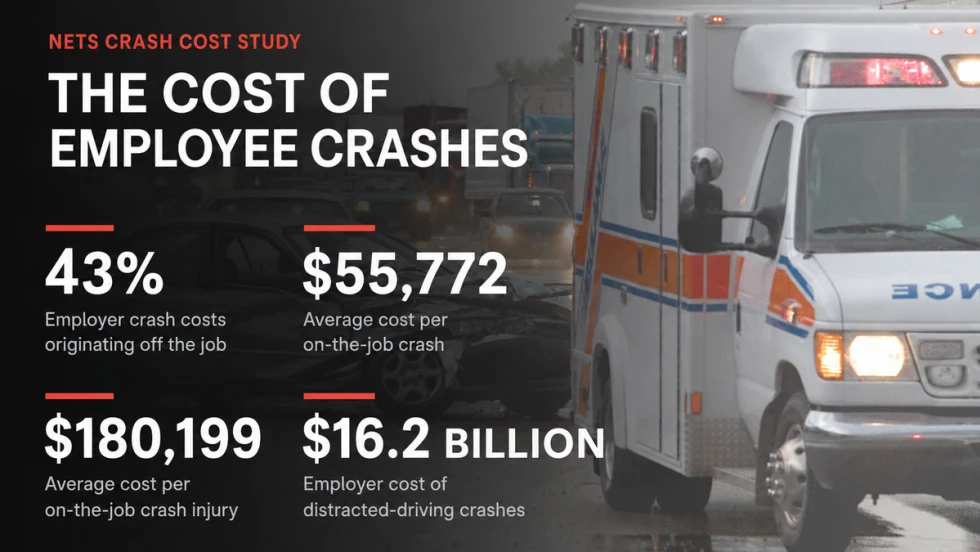
Off-the-Job Crashes Account for 43% of Employers’ $61.7 Billion Crash Burden
NETS quantifies costs dispersed across fleet, risk, HR, and other departments while providing new per-crash benchmarks for employers.
Read More →
Ram Recalls More Than 1.27 Million 1500 Pickups for Seat Belt Anchor Issue
The recall affects certain 2019-2026 Ram 1500 pickups that may have improperly attached second-row seat belt buckle anchors.
Read More →