




New Goals Cited by NAFA's New Leaders
A team of new players is expected to bring new energy-and reach new goals as the National Association of Fleet Administrators (NAFA) approaches its fourth decade. The changing of the guard was signaled by the retirement of Robert Berke in August.
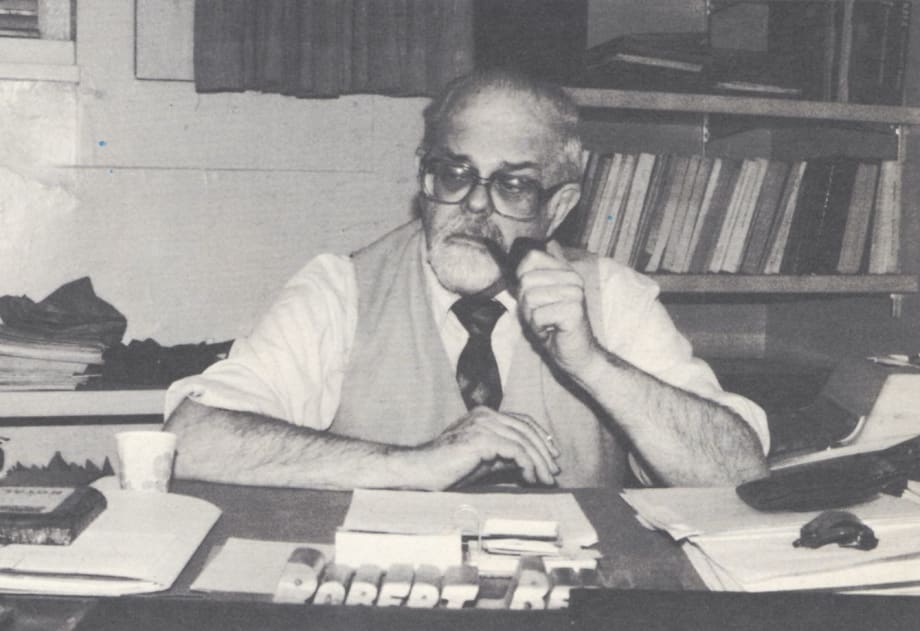
Berke: "I think that the time has come for NAFA to be more active."
A team of new players is expected to bring new energy-and reach new goals as the National Association of Fleet Administrators (NAFA) approaches its fourth decade. The changing of the guard was signaled by the retirement of Robert Berke in August.
After serving as executive director for 20 years, Berke is handing over his responsibilities to David Lefever. Lefever, who joined NAFA in April as associate executive director, has spent the last few months working side-by-side with Berke, learning from Berke's years of fleet experience. In addition, Helen Bland was recently installed as NAFA's new president. The new players are all dedicated to furthering the association's aims.
Berke:
When Robert Berke came to NAFA in 1965, the membership consisted of only 184 fleet managers and two active chapters. The young organization had a $25,000 budget and only one other administrative post. Since then, Berke has worked to help NAFA to grow into a full-service association with over 2,500 members and Affiliates.
For ten years, Berke worked for the Hotel Association of New York City, Inc., and he brought his background in association management to NAFA. His first priority was to overhaul and improve the NAFA Bulletin, the association's newsletter. "I felt that with my editorial experience," says Berke, "that I could turn it into a 'topflight' professional magazine."
Berke's other objective was to increase NAFA's membership. The development of the Affiliate category in 1969, a project that received instrumental help from Berke, added new numbers to the roster. "I felt that it was important for the association to officially recognize the role the Affiliates played," says Berke.
Berke believes that NAFA's goals in the future should be the same as they were when he began his work with the association -to establish a stronger presence and make the association known in Washington. "I think that the time has come to be more active," says Berke. "Our members are demanding it."
Berke admits that much work lies ahead in improving the fleet manager's status and recognition within corporations. "I think that there are some fleet mangers who have earned the respect of their companies, but there are many others who do not have the responsibility from management to make key decisions." This need to improve the professionalism provides the impetus for NAFA's education programs. The programs, Berke says, are NAFA's best way to do "everything possible to provide these people with the tools they deem necessary to make intelligent decisions." It is this attitude that has encouraged Berke to work closely with the Wharton School in Pennsylvania to develop the Certified Fleet Manager Program.
"NAFA should find out what members' needs are and whether or not we are fulfilling them," says Berke.
This has been his main advice to David Lefever. The man who will assume the duties of executive director echoes Berke's concerns. "I think it is important to let the members and Affiliates know that you are sincerely trying to serve them," Lefever says. With ten years of employment on the New Jersey State Bar Association, and five years of teaching experience, Lefever has acquired the tools an association executive needs. "Association management, like fleet management, is one of the wonderful professions that is unsung, unrecognized, and unknown," Lefevr says. "For me it is the most exciting profession I can imagine."
Lefever's background includes a BA degree from Rutgers University in 1965, and an MA from Glassboro State College in 1970. He supplemented his formal study with seminars and workshops conducted by the American Society of Association Executives and the American Management Association. His own experience with certification programs, he says, will make him a strong supporter of NAFA's seminars and the Wharton CFM program
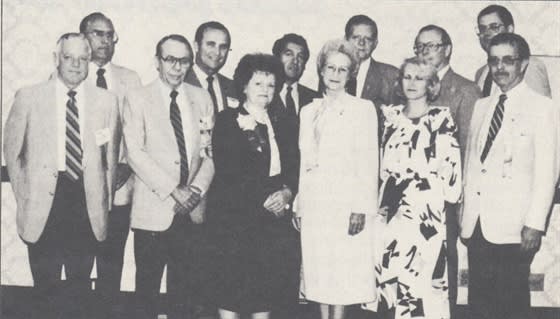
New NAFA officers, back row (left to right): Bob Davis (past president), Ken Austin (trustee, CAN-NAFA Foundation), George Arqueta (3rd VP), Frank Kraus (1st VP), Pat Sheehan (trustee), J. Paul Hubbard (2nd VP). Front row: W. Eugene McCook (treasurer), Don Allen (trustee), Doris Doyle (trustee), Helen Bland, Patsy Brownson (secretary), Don Stevens VP/Canada.
But Lefever's qualifications go beyond the academic level. He taught high school before starting his association management career with the New Jersey Education Association. There, he edited the NJEA newsletter, participated in leadership training, and assisted the local chapters.
Leferver's wealth of association management will serve him well at NAFA, and he has in mind several first year goals. The top priority, as Lefever sees it, will be to concentrate on the association's growth in membership. He plans to utilize several different membership approaches to increase the roster. To attract new members and Affiliates, NAFA must "have effective local chapters," Lefever says. "The chapters are critical to a membership promotion. The chapter has to function well and run good programs."
In addition, Lefever believe that NAFA should increase the services offered to its members. "NAFA's purpose is to help fleet managers perform their job more efficiently," he says. "So, the more we can serve, the better we are as an association." To accomplish this, Lefever notes that NAFA must speed pertinent information to its members. Lefever also supports the Wharton CFM program.
Lefever intends to spend his first year as executive director strengthening communications between members, Affiliates, and the NAFA staff. By outlining and publicizing NAFA's services, Lefever hopes that all members will be aware of the variety of programs available.
In order to achieve these goals, Lefever emphasizes teamwork. "In an association, no matter how big it is, the entire staff almost can't avoid setting involved" he says. "We're all aiming in the same direction, and we all should have the same goal-to be a strong and efficient organization that provides services to its membership."

Helen Bland believes that it's important to keep up with legislation and to inform the membership.
Another new player on NAFA's team is Helen Bland. Fleet manager for Hallmark Cards, Inc., Bland was installed as president of NAFA at its 28th Annual Conference held recently in Boston. She is the first woman to hold this office, and she brings a sense of commitment and disciplined professionalism to the job.
Bland joined Hallmark Cards 43 years ago, beginning in the order department and working her way up to secretary for the production manager. She did that for 20 years, until Hallmark formed a fleet department. Bland asked for a transfer and landed the position of assistant to the fleet manager. By 1969, she was the fleet manager, handling an 800 car fleet. Today, she handles more than 1550 vehicles, giving Hallmark Cards the 94th position on AF's Top 100.
Her goals as NAFA's president? Bland has two. "My primary goal," she says, "is to motivate fleet mangers to realize their potential as professionals,"
Like Lefever, Bland is a strong supporter of the Wharton CFM program. "If an individual is seriously considering a career in fleet management," Bland explains, "he or she must make commitment to the profession. Enrolling in the CFM program is the first step in that direction." Fleet managers, Bland notes, must become "experts" in the field in order to achieve recognition. "The certification will also improve their visibility to upper management."
Bland's second objective is to increase the membership. In her opinion, passing the 2,500 enrollment mark is just the beginning. "With the help of the chapter chairman and the headquarters staff," Bland says, "I am confident that we can make our numbers grow." Both Bland and Lefever realize the importance of keeping abreast with the legislative change that affect the fleet industry. Bland believes that ii is important to stay current with legislative and "regulatory actions, and inform the membership in a timely fashion."

Rea took over as associate executive director on September 1.
An additional staff change at NAFA is the appointment of Celia Rea to the position of associate executive director, effective September 1.
The combination of professional experience, dedication, and enthusiasm exhibited by Lefever, Bland, and Rea should infuse the NAFA staff with enough energy to carry the association forward. With new players who are committed to improving membership rosters and to providing information and education, fleet mangers will turn with increased confidence to NAFA for service.
More Operations

Moventum Fleet Management Names Mark Iorillo Head of Sales
Iorillo brings nearly 20 years of fleet management and sales experience to the role, including previous positions at Element Fleet Management, CEI, Donlen and Ryder.
Read More →
Fleet Has a Talent Pipeline Problem. What Comes Next? | AF News Recap
Where will fleet’s next generation of leaders come from? This week, we’re looking at the industry’s talent pipeline, what certification can add to a fleet career, how to build an award-worthy track record, and the return of Automotive Fleet’s Personal Use Survey.
Read More →
Smith System Launches Driver Risk Management Program
Fleets have more driver data than ever, but identifying risky behavior doesn't necessarily correct it. Smith System's new Driver Risk Management program combines monitoring, training, and follow-up coaching to help fleets connect risk signals with driver intervention.
Read More →
Automotive Fleet Opens 2026 Personal Use Survey for Commercial Fleet Managers
Less than two weeks left! Commercial and corporate fleet managers are invited to share how their organizations handle company vehicle personal-use policies, charges, and driver eligibility.
Read More →
From AI Prompts to AI-Generated Safety Songs | AF News Recap
Can better prompts make AI more useful for fleet managers? This week, we’re breaking down smarter fleet analysis, an AI-assisted experiment that turned safety training into music, and what happened to fuel prices in August.
Read More →
How to Write Better AI Prompts for Fleet Analysis
Include these six elements in your fleet prompts to generate more relevant analysis and accurate answers.
Read More →
Fleet Meets: Eric Kilgore
This edition of the Fleet Meets series features one of the industry's best leaders driving multi-market and national operations.
Read More →
Why Reactive Fleet Management Is Becoming Too Expensive to Sustain
Research highlights a growing need for proactive management strategies to address rising costs in fleet operations effectively.
Read More →
What Your Fleet KPIs Aren’t Telling You
Tracking fleet metrics is only useful when the data leads to better decisions. This guide helps fleet leaders assess cost, utilization, and downtime more accurately, identify performance gaps, and prioritize the actions that can improve operational results.
Read More →
Hidden in Plain Sight: Fleet Compliance Risks
Fleet compliance isn't just about having policies — it's about consistently enforcing them. This practical guide reveals six hidden compliance risks common in public sector and shared fleet operations and outlines proven strategies to improve visibility, accountability, and audit readiness
Read More →