




NAFA Celebrates Its Third Decade
This year marks the 33rd anniversary of the National Association of Fleet Administrators. As a tribute to this organization, Automotive Fleet looks back on NAFA's past 30 years and its contributions to the industry.
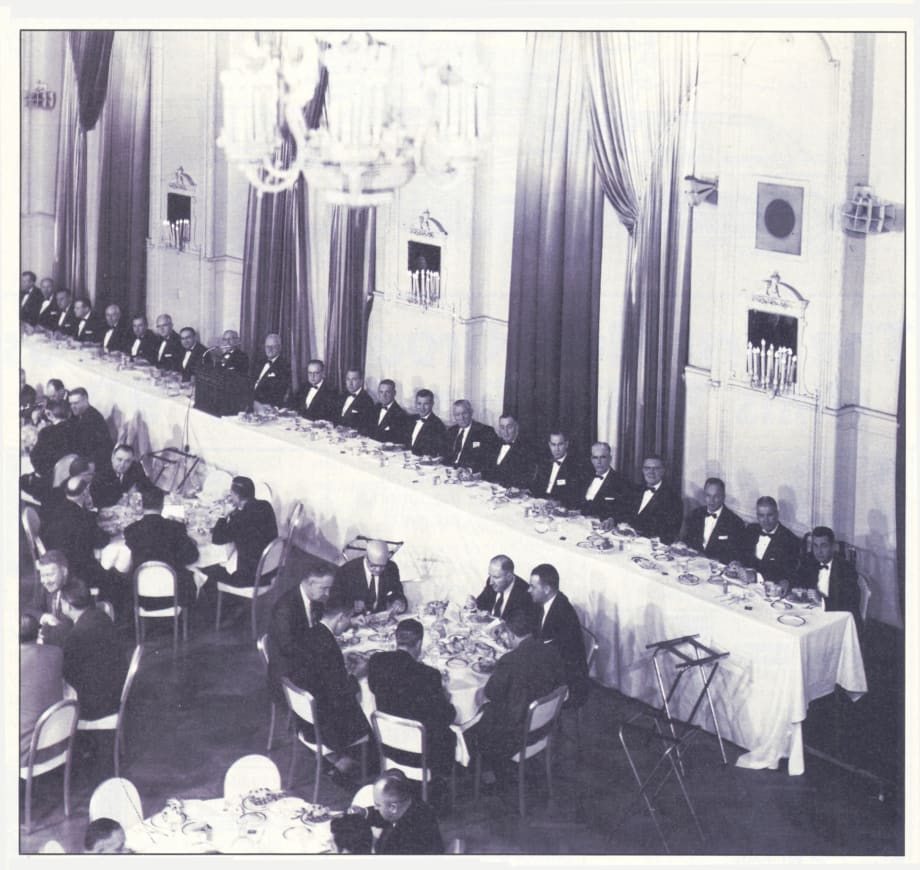
A memorable shot of NAFA's Annual Conference banquet (circa 1964).
A memorable shot of NAFA's Annual Conference banquet (circa 1964).
For one group of men, 1957 represented the commencement of interests and professional needs. This group came to be known as the National Association of Fleet Administrators (NAFA).
Fleet administration became a highly specialized field in the 1950s. More companies became aware of the need to furnish automobiles for transportation of field representatives through leasing or company ownership, and, at the same time, to create an investment worth millions of dollars.
The first meeting of fleet administrators was held in Chicago, 1L on Mar. 12 to 13, 1957 where it was decided to incorporate as a nonprofit organization under the name National Association of Fleet Administrators, Inc.
NAFA's actual articles of incorporation were signed on Apr. 11, 1957 by Emerson Parker, James Bekkering, and Sam Fee. They acted on behalf of the 27 men who at-tended that first luncheon meeting. One year later. John Limpert, the Association's first president, stood before those same men and reported that membership had increased to 50 and that a concentrated effort was being made to attract new members.
Due to the fact that NAFA's early founders dealt with the dual task of managing full-time jobs as fleet managers and volunteering the additional time they could to keep NAFA an active organization, the Association's growth was slow but steadily gaining new membership. Today, NAFA's membership has exceeded 3,000.
The need for change was recognized by the early 1960s. Increased efficiency and continued dedication were needed to flourish. The first step to increase revenues was to solicit advertising in the NAFA Bulletin, the Association's publication. The second step was to contract Emil Ames, one of the Association's founders and its president from 1960-1961, to serve as NAFA's "service consultant." The third step was completed on Mar. 1, 1965 with the appointment of Robert Burke as NAFA's executive director.
NAFA reached its goal of 500 members by 1970. In order to give recognition to those persons who were not eligible for membership, but were interested in motor fleet operation, the establishment of NAFA Affiliates was formed. As of 1982 there were 500 NAFA Affiliates who represented manufacturers, dealers, leasing companies, wholesale auto auctions, wholesalers, and brokers.
In 1975, the Association did a special study to define the ideal fleet car. The result was the NAFCAR and NAFVAN.
Another aggregate that was created was the NAFA Law Enforcement Group, which became an important source of information on police vehicle specifications and performance. One of the Association's primary goals was to promote safely on the nation's highways. The Departments of Energy and Transportation, the Environmental Protection Agency, and the Federal Trade Commission tire some of the regulatory agencies to whom NAFA has attempted lo present the views and special requirements of fleet operations.
The Association took a very important step in 1976 when it created the NAFA Foundation, a nonprofit, charitable organization dedicated to advancing the profession of vehicle fleet management and to improving upper management's perception of the valuable contribution that fleet operations make to organizational performance.
In 1980 there were two significant occurrences that increased the importance of the Association's relations with the federal government. The first was the passage of the Emergency Energy Conservation Act of 1979 which mandated the Department of Energy to develop a stand-by gasoline-rationing plan for distributing the rights to purchase gasoline in the event of a shortage.
NAFA pledged its complete support to a nationwide "Energy Efficiency" campaign that began in April, 1980. This year also marked the publication of NAFA's complete manual on automotive fleet management. In 1981 the first edition of NAFA's Annual Reference Book was published. It functions as a valuable source of information on fleet management and serves as a vital tool for members and affiliates.
NAFA itself has experienced a number of changes in the past 33 years. Administration of the Association's services are no longer done on a volunteer basis. Today's headquarter staff consists of separate departments including membership, publications, educational programs, accounting, and computer services. NAFA's monthly magazine, once a four-page bulletin, now averages 56 pages a month and accepts four-color advertising from major manufacturers and leasing companies. In addition, NAFA's Annual Conference is refered to as the "fleet event of the year" and attracts an average of 1,200 executives of the fleet business every year.
Despite the fact that NAFA's membership has grown, its structure is basically the same as it was 33 years ago, as are its goals although the activities have surpassed the original concepts.
The guidelines and goals still serve as the basis for NAFA's actions and programs.
More Operations
How to Manage Conflict for Your Fleet Operations
Conflict management is becoming a core leadership skill. Here are five strategies fleet leaders should know.
Read More →
Turning Connected Vehicle Data Into Decisions That Matter
Fleet leaders have more data than ever, but turning that data into clear, actionable decisions remains a challenge. This white paper shows how leading organizations are using connected vehicle data to improve safety, reduce costs, and optimize fleet performance. Learn how to turn insight into action across your fleet.
Read More →
Cameras, Safety and Insurance: From Reactive Claims to Real-time Prevention
Commercial auto remains one of the most challenging and costly lines of coverage for fleet operators and insurers alike. Learn more about how to effectively address these issues from Onur Aksan, Enterprise Business Development Executive, Geotab.
Read More →

Are You Tracking Your Fleet's True Total Cost of Ownership?
Bobit Business Media surveyed 190 fleet professionals and found that while most fleets are tracking costs, fragmented systems and data gaps are keeping true TCO visibility out of reach. With rising pressure to control spend in an increasingly volatile environment, the gap between what fleets think they know and what the data actually shows is wider than you might expect. See how your peers are managing costs today and where the industry still has room to improve.
Read More →
Turn Fleet Data Into Smarter Decisions
Fleet leaders have access to more operational data than ever, but disconnected systems and unclear metrics often slow decision-making instead of improving it. This whitepaper outlines five practical steps fleets can take to transform fragmented data into actionable insights that improve planning, safety, utilization, and long-term performance.
Read More →
Hybrids: Electrification Without the Challenges
For fleet managers, fuel is one of the biggest line items in the budget — and it's one hybrids can shrink without changing how your people work. Download the eBook to see the numbers, understand the technology, and get a step-by-step guide to making the switch.
Read More →
How NOV Uses Telematics to Improve Fleet Safety Across 160 Locations
James Victory of NOV discusses how the company manages fleet safety, maintenance, and telematics across more than 150 locations supporting oilfield operations throughout the U.S.
Read More →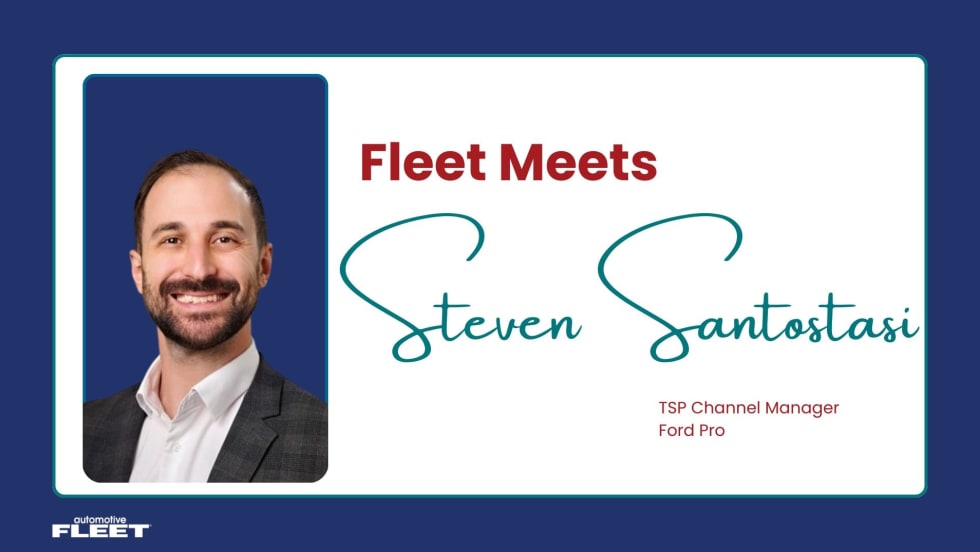
Fleet Meets: Steven Santostasi
This edition of the Fleet Meets series features Steven Santostasi, the current TSP channel manager for Ford Pro.
Read More →
Why Fleet Managers Are Replacing Departmental Vehicles with Shared Motor Pools
Departmentally assigned vehicles often create hidden costs through underutilization, poor visibility, and increased administrative burden. This white paper explores how shared motor pool strategies help fleets reduce costs, improve accountability, and optimize vehicle utilization.
Read More →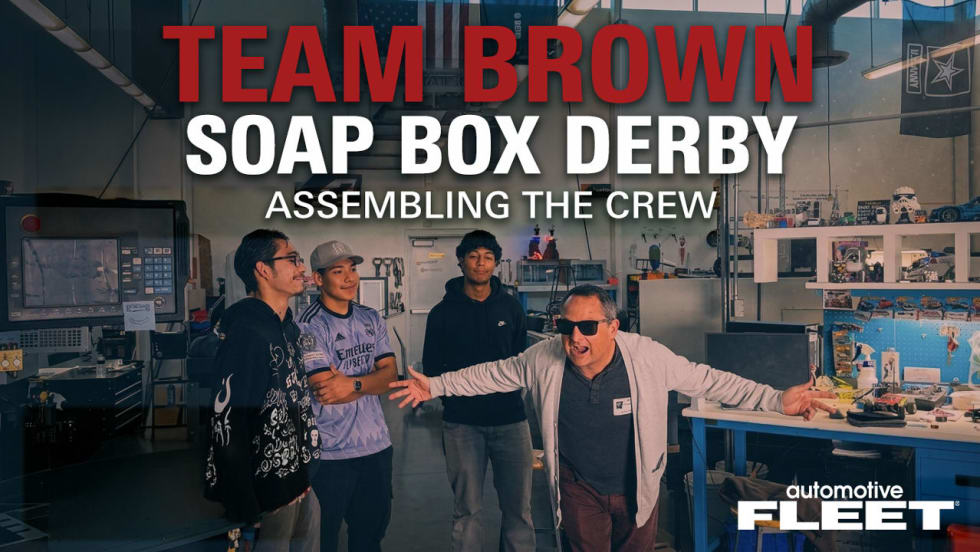
Soap Box Derby Challenge: Assembling the Crew
Meet Gabriel, Matthew, and Angel — the team helping bring this soap box derby build to life.
Read More →