




Mid-Size Fleets Measure Up
Though they may not have the resources or high-profile of their larger cousins, vehicle fleets of 100-300 units show they can be as efficient, safe, and well-run as any other.

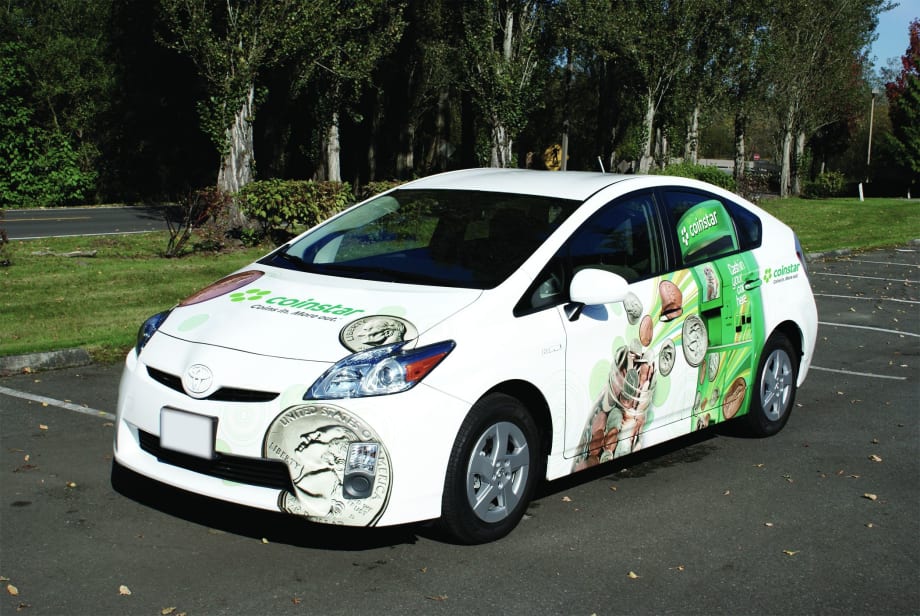
One of Coinstar's Toyota Prius vehicles.
One of Coinstar's Toyota Prius vehicles.
While mid-size fleets (100-300 vehicles) operate much like their larger cousins — managing lifecycle and fuel costs, keeping an eye on remarketing, offering driver training — there are also distinct differences, including more autonomy, an ability to react more quickly to market changes, and a closer relationship with executive management.
One thing that mid-size fleets definitely share with every other fleet, no matter the size or the industry, is that each is as unique as the fleet manager that oversees them. Some work hand-in-hand with a fleet management company (FMC) to manage day-to-day operations, while others divide up these functions, and others handle everything themselves. One characteristic that many mid-size fleet managers share is an independent, hands-on style that gives them the kind of deep insight and understanding of their companies’ fleets that managers in some of the larger fleets can’t get.
Creating Open Lines of Communication
David Anderson, senior fleet and travel manager for Pamlab, a Covington, La.-based pharmaceutical company, relies in equal measure on his company and FMC’s resources to keep things running smoothly.
Pamlab’s FMC, Wheels, Inc., handles vehicle maintenance, fuel cards, and funding for the fleet of 172 vehicles. Because drivers use company vehicles after hours, they are charged a monthly personal use fee. Condition reports are handled by the district managers who conduct monthly ride-alongs with the drivers.
Anderson’s relationship with his FMC account representative is quite close. “I communicate with my account rep, through e-mail or phone, at least once a week, and she is very responsive to our needs,” Anderson said.
Anderson’s pharmaceutical rep drivers primarily rely on Dodge Journey and Chevrolet Equinox crossovers because they better accommodate the salespeople’s samples. The fleet also consists of Dodge Charger and Nissan Altima models.
According to Anderson, he has a “great relationship” with the vehicle OEMs. “They seem like they’re willing to help us on any issue that comes up,” he said. “That’s one of the things I look for in an OEM. It’s not only about the best deal or the total cost of ownership, but who is going to treat us the best. I’ve had good luck with our OEMs whether it’s been face-to-face meetings or returning my phone calls. I don’t expect the red carpet, but I do expect common courtesy.”
With a sales fleet dispersed across the country, Anderson relies on an open line of communication with his drivers to handle any maintenance or other issues.
“The drivers can call Wheels directly or can call me for my opinion first,” Anderson noted. “In most cases, I don’t mind them checking with me first, since it often saves time and money for the company.”
The one area that Wheels doesn’t handle for Pamlab is driver training and accident management.
“We handle training in conjunction with sales, and it consists of internal e-mails and other publications,” Anderson explained. “I’m hoping to do something a little more formalized in the future. We handle accident management because we’re very fortunate and don’t have that many. It’s a very manageable number.”
Anderson is committed to his own training. He regularly attends NAFA Fleet Management Association and Automotive Fleet and Leasing Association (AFLA) conferences and training seminars. Anderson describes his management style as “hands on.”
Anderson, like other managers who handle mid-size fleets, has a fairly close working relationship with his executive management that gives him a fair amount of autonomy. He meets quarterly with Pamlab’s vice president of finance and at any other time when something comes up. “The advantage of working for a smaller company is that everyone seems receptive, accommodating, and open to suggestions,” he commented.
Because he has a better handle on the fleet and its lifecycle, and the flexibility of approaching executive management outside regular budget cycles, Anderson was able to “think outside the box” last year and cycle out 50 percent of the fleet’s vehicles when a resale opportunity presented itself. “I saw an opportunity and the advantage of it,” he said. “Because of the size of the company, it was just easier to react to the opportunity.”
The only stipulation that Pamlab’s management had was that Anderson was able to replace vehicles that were cycled out with other units. “The move was beneficial to us,” he said.
Anderson, who has been managing Pamlab’s fleet since 2004, said that one of the biggest advantages he has is something he brought to the table on his first day. “I’m a car lover — that’s not a requirement of the job, but it helps the drivers by making me a little closer to the fleet, which the drivers appreciate,” he said.
Partnering with the FMC
Coinstar Inc. works closely with its FMC, Automotive Resources International (ARI), to operate its fleet efficiently and effectively. The company owns and operates a network of self-service coin counting kiosks that are commonly found in grocery and other retail stores throughout the country.
Sam Besser, fleet manager and DOT compliance manager, for Coinstar, a Bellevue, Wash.-headquartered company relies on ARI as a resource in making sure the fleet remains on the road and on track. “ARI is a great source of information and is willing to support and share contacts.” In addition to relying on ARI to help keep his fleet knowledge up to date, Besser also networks with other fleet managers and reads fleet-related publications.
ARI handles many of the fleet management functions for the 300-vehicle fleet (which consists of a mix of Class 6-7 trucks, vans, SUVs, and sedans), including maintenance, vehicle acquisition, accident and fuel management, and subrogation, among other functions. “Personally, I’m happy with ARI’s support. They’re very easy for me to deal with,” he said.
Even with ARI’s help, Besser is a busy fleet manager who wears a lot of hats on a daily basis. “It makes life interesting for me — I like doing it that way,” he said.
Besser has worked closely with Coinstar’s executive management, particularly in the area of greening the company’s fleet. “Executive management seeks to improve environmental impact. So, it’s my responsibility to help deliver on those goals with the right vehicle selections,” Besser noted.
For Besser, making Coinstar’s fleet sustainable has involved rightsizing, including introducing lighter chassis Class 5 trucks and looking at alt-fuel vehicle technology, to see where it meets the needs of the fleet. For instance, “hybrid-diesel may not work for us across the board, but we are testing it in one location right now,” he said.
Besser, who has been Coinstar’s fleet manager for six years is a hands-on manager who said he likes to answer the phone and speak to his drivers, relies a great deal on his field management to help the drivers do their jobs.
Customer service-oriented, Besser sees his field service drivers as his customers.
From his perspective, Besser sees certain advantages in managing a larger fleet over a mid-size one. “Larger fleets can get greater cost savings,” he observed. “But, they also require more structure.”
Besser said he likes managing a mid-size fleet because he has more opportunities to “deal with technology, ideas, and customers. You don’t get that as much with larger fleets. Instead you spend more time managing process and organization,” he said.
Managing in the Best of Both Worlds
As a mid-size fleet, AgStar Financial Services exists in two worlds. As a fleet, it is a 189-vehicle, driver-focused entity, but, as part of the Farm Credit System, a federally chartered network of related service organizations that lends to agricultural producers, rural homeowners, and other agriculturally related businesses in the U.S., it has all the advantages of belonging to a large 3,500-unit organization. As a whole, the system acquires about 1,000 vehicles per year.
“The way the system acquires vehicles is similar to larger organizations, which allows us to get better discounts,” said Leroy Pavek, senior fleet manager, AgStar Financial Services, which is headquartered in Mankato, Minn.
Pavek, who has 30 years of fleet experience, has been a part of the Farm Credit System for 23 years and has been managing AgStar’s fleet for the last 10.
The organization handles all of its own fleet management, and, as part of its services, is also in the leasing business as well. It does, however, cobrand its fuel card with Wright Express and uses LeasePlan USA to provide maintenance, but all other functions are handled by Pavek and his staff of two.
The AgStar fleet is divided up between sedans, pickups, SUVs, and passenger vans, which are primarily used by sales personnel, appraisers, and at customer sites and offices.
The choice of vehicles is mainly left up to the driver, so the fleet includes vehicles from Ford, Chrysler, GM, Toyota, and Nissan. “Our vehicle program is structured so you can have whatever vehicle you want. There is a personal use expense per personal mile based on the mpg. So, for instance a Toyota Prius versus a Chevrolet Tahoe will probably have a lower expense. We focus on cost of ownership using Wright Express reports,” Pavek explained. Under the company’s personal use policy the driver and his or her spouse can drive the vehicle as long as he or she passes a driver record check.
Vehicles are typically cycled out at the 70,000- to 80,000-mile range, which helps save on maintenance expenses, since the powertrains are typically still under warranty.
However, because Pavek has the trust of executive management, it gives him the freedom to push these limits if they make sense. “I have the ability or freedom to make the decision to replace a vehicle at 30,000 miles or at 130,000 miles and have the flexibility to make a decision outside of the standard protocol,” Pavek said.
Typically, Pavek meets with AgStar’s CFO on a semi-annual basis to review cost-per-business mile, but, generally, executive management leaves the day-to-day operation of the fleet to Pavek. “They’ve mapped out a program and what they want me to deliver. I think I’ve got that trust from the CFO and senior management,” Pavek said.
Pavek’s management style is aimed solely at helping AgStar’s drivers. “I focus a lot on customer service — how to keep our drivers on the road safely and how to respond to new technology,” he explained.
According to Pavek, AgStar has no driver training or accident management program — because, he explained, it isn’t needed. “Internally, we have a minimal number of accidents. Most of our drivers are traveling in rural areas, so they don’t have the kind of traffic you’d find in a big city,” he said.
Pavek has been very involved in NAFA for the last decade, and is currently his chapter’s secretary. He attends meetings regularly. “It’s a good way of networking with dealers and automakers and is a way to meet other fleet managers,” he said.
More Operations

Avis Budget Group Deploys Neology Toll Management Technology Across Major Brands
Neology’s neoFleet platform will manage toll transactions and toll-authority operations for vehicles across Avis, Budget, Payless, Budget Truck and Zipcar.
Read More →
Fleet Personal-Use Charges Edge Higher in 2026
Nearly eight in 10 surveyed fleets allow personal use of company vehicles, while just over half of respondents report charging employees for the privilege.
Read More →
The Future of Fleet + What’s Changing Right Now | AF News Recap
Could developments overseas offer a preview of what’s coming for U.S. fleets? This week, we’re looking at the future of AI, autonomy, and electrification, plus Ford Pro’s new certified pre-owned program, smarter vehicle offboarding, and a new way for fleets to manage toll expenses.
Read More →
How to Handle Vehicle Offboarding
What do fleet managers need to do when a driver leaves?
Read More →
Fleet Manager’s Ultimate Playbook: Navigating the New Standard in OEM Connectivity
Rising operating costs, driver safety concerns, and unplanned downtime are putting unprecedented pressure on modern fleets. Discover how fleet managers use embedded OEM connectivity and real-time vehicle data to cut TCO, prevent downtime, and protect drivers without aftermarket telematics hardware.
Read More →
U.S. Bank Adds Verra Mobility Toll Management to Voyager Fleet Platform
The integration allows U.S. Bank Voyager fleet customers to manage toll payments and violations alongside fuel, EV charging and maintenance expenses.
Read More →
ADAS Prevents Crashes. But Repairs Cost More | AF News Recap
ADAS-equipped vehicles may crash less often, but they can cost more when they do. This week, we’re breaking down what that tradeoff means for fleets, plus Subaru’s first Forester Wilderness Hybrid, Nissan’s new e-POWER Rogue, and why Calstart has become Catalyst Mobility.
Read More →
Moventum Fleet Management Names Mark Iorillo Head of Sales
Iorillo brings nearly 20 years of fleet management and sales experience to the role, including previous positions at Element Fleet Management, CEI, Donlen and Ryder.
Read More →
Fleet Has a Talent Pipeline Problem. What Comes Next? | AF News Recap
Where will fleet’s next generation of leaders come from? This week, we’re looking at the industry’s talent pipeline, what certification can add to a fleet career, how to build an award-worthy track record, and the return of Automotive Fleet’s Personal Use Survey.
Read More →
Smith System Launches Driver Risk Management Program
Fleets have more driver data than ever, but identifying risky behavior doesn't necessarily correct it. Smith System's new Driver Risk Management program combines monitoring, training, and follow-up coaching to help fleets connect risk signals with driver intervention.
Read More →