




McCullagh's Culotta on Changes in the Automotive Fleet Industry
As McCullagh's new president, Culotta has charge of a firm that leases or rents more than 80,000 cars and trucks. The company offers vehicle leasing, fleet and maintenance management, and rental car services to commercial and governmental enterprises through 19 regional distribution and sales offices nationwide.
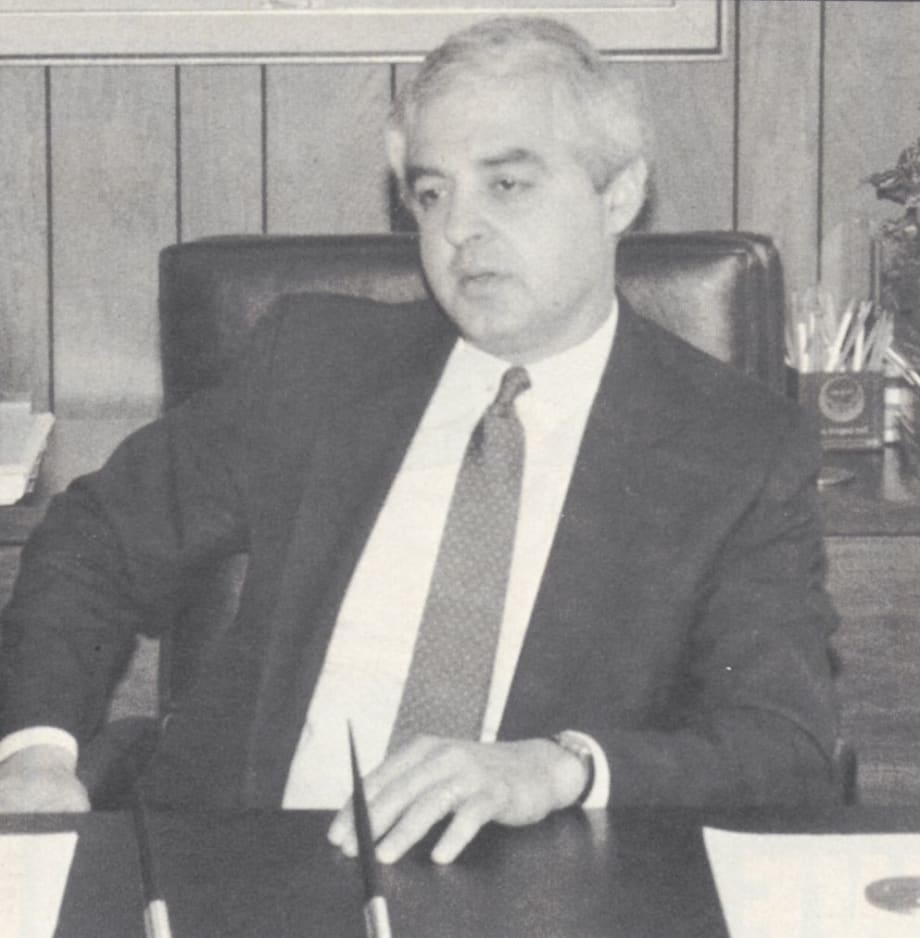
After serving as senior vice president since 1978, James A. Culotta has now been named president of McCullagh Leasing, Inc., the nation's fifth-largest vehicle lessor. The Detroit based company is a subsidiary of Commercial Credit Co., itself a subsidiary of Control Data Corp.
A native of Michigan, Culotta joined McCullagh as assistant treasurer in 1969. He holds a B.S. degree from Michigan State University and an M.B.A. from Wayne State University. He is also a member of the American Automotive Leasing Association and the Association of Equipment Lessors.
As McCullagh's new president, Culotta has charge of a firm that leases or rents more than 80,000 cars and trucks. The company offers vehicle leasing, fleet and maintenance management, and rental car services to commercial and governmental enterprises through 19 regional distribution and sales offices nationwide.
Those responsibilities were clearly on Culotta's mind as he talked about IRS regulation, change in the U.S. auto industry, and the evolution of fleet-leasing services in this informative, wide-ranging interview.
AF: With last year's Deficit Reduction Act and the IRS rules about recordkeeping, the automotive fleet industry seems to be going through some important changes. How do you read the impact of those changes?
Culotta: The Tax Reform Act of 1984 has caused many fleets to reevaluate their company car program, eliminating executive cars, increasing personal-use charges, and in some cases, eliminating all company cars. This legislation has especially impacted smaller fleets because they are needlessly confused and wary of potential tax liabilities.
AF: Does this uncertainty make fleets less willing to plan for the long-term?
Culotta: Yes! The IRS' constant issuance of temporary regulations contributed to the confusion. The recordkeeping requirements are still not clear, although Congress is on the verge of modifying record-keeping to a more sensible level.
AF: When "contemporaneous recordkeeping" is no longer a requirement, how do you think corporate fleets will maintain driver-accountability?
Culotta: Some will keep log books, but most companies will incorporate recordkeeping into their monthly expense reports or some other convenient method of maintaining mileage records, such as the S.A.V.E. II System. We developed that system to monitor all elements of fleet cost, and to do special analyses whenever required. McCullagh will also provide log books for companies that wish to use them.
AF: Since log books won't be required of vehicles that stay at the place of business during non-business hours, do you think more employers will prohibit fleet drivers from using the car for personal reasons?
Culotta: Some fleets will keep vehicles on site overnight, while other fleets will keep records or adopt other IRS "safe harbor" rules, such as the 70 percent business/30 percent personal split on sales and service cars.
AF: With all the changes, it's hard for companies to know exactly what the requirements are for record keeping. Do you have any advice in this area?
Culotta: A log book is not always necessary if a company adopts certain IRS "safe harbor" rules. Currently, McCullagh recommends adherence to existing regulations published by the IRS until the Congress acts on modifying the recordkeeping requirements. McCullagh's experts have done extensive reviews of the laws, and we would be happy to share that information with anyone.
AF: What are the current limits for corporate investment tax credits and depreciation that companies can claim each year for their fleet vehicles?
Culotta: There are restrictions on leased luxury cars that restrict depreciation for tax purposes to $4,000 the first year and $6,000 each year thereafter. Investment tax credit is currently limited to $1,000. The House of Representatives is proposing some change to the luxury car definition, bringing it down from $16,000 to $14,500. It remains to be seen if that position will prevail in the final legislation, though.
AF: From your vantage point, do you see any impending changes in the auto industry that might affect corporate fleets?
Culotta: The many joint ventures between U.S. and foreign manufacturers may result in corporate fleets having less resistance to the use of foreign nameplates. There is also a growing trend toward using foreign parts in U.S. assembled vehicles.
AF: There's sometimes a tendency in automotive fleet circles to overlook the very people we serve - the drivers themselves. How do you see the company's responsibility to the driver of a fleet vehicle?
Culotta: It's important that the person operating the fleet vehicle knows the ground rules to eliminate confusion and controversy. The only way to handle that is to supply a driver's manual establishing procedures and policies pertaining to vehicle operation, maintenance, and use.
Safety is also important, and it is connected to following these procedures that make certain a driver is operating a safe vehicle. Driver safety programs are also advantageous, since it has been show that participants have fewer insurance losses.
AF: On the other side of the coin, is there such a thing as abuse of a leased car?
Culotta: Yes. Abuse is flagrant failure to follow company policy for service or operation of the vehicle. This could be failure to service at proper intervals, using the vehicle for towing, not making body repairs promptly, failing to respond to the manufacturer's recalls, and generally not keeping the vehicle in good operating condition.
AF: How are the service intervals changing for the typical fleet car?
Culotta: Service intervals are a function of use. Proper intervals can be established through a combination of oil analysis, experience, and the manufacturer's guidelines. The guidelines must be modified to "fit" the use of the vehicle. An average fleet car does enough highway traveling to "live" on a 6,000 mile interval. Any stop-and-go delivery operation might require a 3,000 mile interval. A plant security vehicle with high idle time would need to be serviced once a month rather than by a mileage interval.
McCullagh has established a Preventative Maintenance Coupon to outline specific services at the proper interval to eliminate down time and emergency repairs. This coupon also allows us to monitor the vehicles that are not being serviced on time and take corrective action.
AF: Is it better to allow an employee to take the leased vehicle to his/her own mechanic for repairs or to retain a designated mechanic?
Culotta: Repairs made by an independent can be quite a convenience; however, it has some disadvantages. On an overall basis, it is better to use national account outlets or franchise dealers for certain service and authorized dealers for highly technical repairs. National account outlets and dealers provide for national warranty support. An independent can't do that, and you could face additional costs that are not recoverable from that independent.
A network of outlets such as the national accounts, dealers, and franchises provide a "known quality" of certified technicians who are constantly being updated on changes.
AF: Why might a company with a small fleet, let's say fewer than 100 vehicles, want to use a leasing company rather than lease through a local dealership?
Culotta: Most smaller fleets have operations in several states. Local dealers do not have expertise in multiple product lines, multi-state representation, or regulatory knowledge for each state. Leasing companies like McCullagh provide all these services and more.
AF: Once the decision has been made to lease, what factors should fleet managers consider in choosing which lessor to retain?
Culotta: Today, fleet managers are looking for a very responsive leasing company with quality and high levels of services, including such items as product recommendations, as well as efficient order and delivery systems. Fleet managers are looking for sophisticated electronic data processing capabilities, such as management information systems and teleprocessing. Maintenance management services are also a key factor with today's fleet.
AF: What qualities should a fleet look for in regard to service?
Culotta: A good fleet leasing company must have financial resources and organizational depth. They should have a nationwide operation with regional support. The leasing company must be responsive to customer needs with availability of creative and flexible programs.
AF: Would you establish priorities for the different points that the fleet manager should consider when choosing which vehicles to lease?
Culotta: The first thing any manger should consider is application. How is the vehicle used? After that, consideration should be given to geographics, image, purchase price, resale value, fuel economy, safety, and many other factors.
AF: In March, you became president of McCullagh Leasing. Can we look for any changes at McCullagh in the near term?
Culotta: McCullagh will be focusing all of its resources towards enhancing the value added services that we make available to our clients. It is our intent to provide the fleet manager, through, the way of technology, the tools required for productivity increases and total fleet control.
More Operations
Here's When You Should Make an Exception to Fleet Policy
Fleet policies are designed to create consistency, but not every driver or situation fits neatly within standard rules.
Read More →
AI-Native or AI-Acquired: What Should Fleet Managers Look for in an AI Platform?
Six questions can help fleet managers look beyond AI marketing claims to evaluate integration, data access, and real-world operational performance.
Read More →
A buyer's guide to fleet management software in 2027
Buying fleet management software in 2027 means looking beyond features and price. As fleet operations, technology and expectations evolve, this guide explores what today’s fleet professionals should consider when choosing a system that can deliver value now and adapt to what comes next.
Read More →

What Will Shape the Next Era of Fleet Management?
EVs, AI, and autonomous vehicles are reshaping fleet management. Discover what’s ahead—and how fleet leaders can prepare for the next era.
Read More →
How Fleets Can Recruit and Train Veterans for Technician Roles
Here's how the technician shortage has affected uptime for fleets, and what to do about it.
Read More →
Avis Budget Group Deploys Neology Toll Management Technology Across Major Brands
Neology’s neoFleet platform will manage toll transactions and toll-authority operations for vehicles across Avis, Budget, Payless, Budget Truck and Zipcar.
Read More →
Fleet Personal-Use Charges Edge Higher in 2026
Nearly eight in 10 surveyed fleets allow personal use of company vehicles, while just over half of respondents report charging employees for the privilege.
Read More →
The Future of Fleet + What’s Changing Right Now | AF News Recap
Could developments overseas offer a preview of what’s coming for U.S. fleets? This week, we’re looking at the future of AI, autonomy, and electrification, plus Ford Pro’s new certified pre-owned program, smarter vehicle offboarding, and a new way for fleets to manage toll expenses.
Read More →
How to Handle Vehicle Offboarding
What do fleet managers need to do when a driver leaves?
Read More →
Fleet Manager’s Ultimate Playbook: Navigating the New Standard in OEM Connectivity
Rising operating costs, driver safety concerns, and unplanned downtime are putting unprecedented pressure on modern fleets. Discover how fleet managers use embedded OEM connectivity and real-time vehicle data to cut TCO, prevent downtime, and protect drivers without aftermarket telematics hardware.
Read More →