




Managing the Fleet of the Navajo Nation
The Navajo Nation Fleet Management Department is a service department of the Navajo Tribal Government. The department maintains and services 1,356 vehicles, thus providing support to 140 Tribal operating programs.
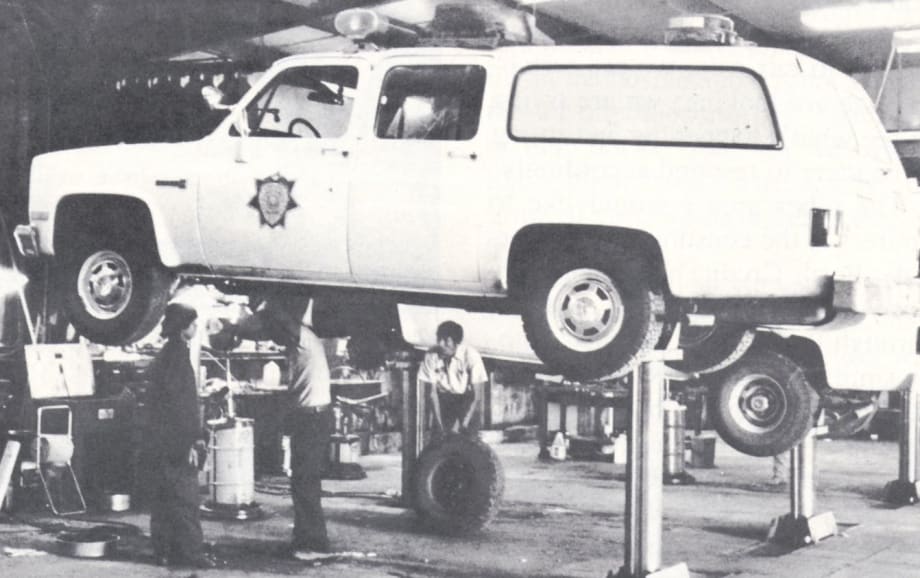
The Navajo people number more than 200,000, making them the largest American Indian tribe. They live in or near a 25,000-square-mile area in Northeast Arizona, Southeast Utah, and Northwest New Mexico. The capital of the Navajo Nation, Window Rock, AZ, is located approximately 330 miles northeast of Phoenix, right on the Arizona and New Mexico state boundary. Window Rock is also the home of the Navajo Nation Fleet Management Department.
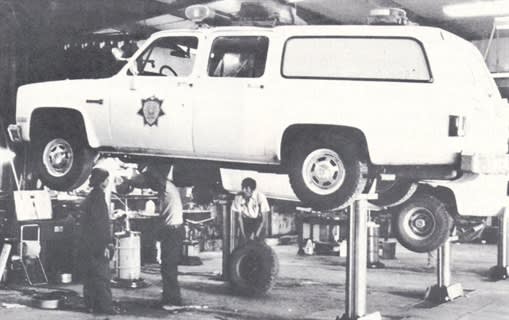
The Fleet Management Department is a service department of the Navajo Tribal Government. The department maintains and services 1,356 vehicles through five maintenance centers strategically located throughout the Navajo Territory. It provides support to 140 Tribal operating programs through permanent vehicle assignments and daily trip rentals and also provides bulk fuel at nine fueling stations throughout the Nation. Vehicles that travel away from a bulk fuel station are issued commercial credit cards by the Fleet Management Department.
The central office in Window Rock is staffed by a director, fleet operations coordinators, and an accounting staff. At this time, there is limited automated capability for storing and retrieving vehicle and fuel-usage data, which is a significant change from a predominantly manual record-keeping system. The General Equipment Management System from Diagonal Data Corp. is currently being installed, and the Rusco Fuel Management system will improve the timely management of the fleet. It will be some months, however, before the benefits of these changes are realized.
The central maintenance shop is staffed by a shop superintendent, shop supervisor, records clerk, 13 service technicians, and three parts personnel. The machine shop provides the capability to do in-house engine overhauls in this central shop. Also centrally located is an auto body repair shop with a supervisor and four auto body repairmen. A tire shop and fuel island are manned by three service workers.
The other four maintenance stations are located in Tuba City and Chinle, AZ, and in Shiprock and Crownpoint, NM. Each of these satellite shops is staffed by a shop supervisor, a service worker, a parts person, and five service technicians. All shops are fully equipped to handle all mechanical repairs, "A" through "C" services, and 24-hour wrecker service.
The "A," "B," and "C" preventive maintenance services are used at 5,000-mile intervals. However, police vehicles are serviced at 3,000-mile intervals. "A" services are mainly oil, lube, and filter changes and general safety inspections. "B" services are scheduled for every 10,000 miles and include more extensive inspections and adjustments as well as "A" services. They usually include tire rotations and front-end alignments. "C" services are scheduled for every 20,000 miles and include "A" and "B" services, as well as a thorough t inspection, adjustments, and vehicle repairs, including transmission and drivetrain service as required.
In 1980, the department tried to downsize into subcompact and compact sedans and compact trucks. This plan failed due to the severe terrain that these vehicles traversed. User acceptance of the downsized vehicles was also poor, adding to the maintenance load. Savings in fuel consumption were offset by increased use of replacement parts and increased downtime on vehicles. In 1985 and 1986, the department returned to full-size sedans and trucks. User satisfaction has improved, and the vehicles are proving to be more durable and reliable. Equipment downtime has also decreased.
The replacement cycle is based primarily on depreciation, mileage, and the condition of the vehicle. Most vehicles are replaced every four years. Police vehicles are usually replaced every two or three years, depending on available funding. Experience has shown that, at these intervals, there is an increase in the cost of maintenance and in downtime.
Of the 1,356 vehicles in the Navajo Nation Fleet, the Tribe owns 463. The other 893 are on lease-purchase agreements with a one dollar "buyout" at the end of the term. When vehicles are taken out of service, they are transferred to the Property Control and Stores Department for disposal. Sales to employees and to wholesalers are common methods of disposal. The proceeds from the sales of these vehicles are returned to the vehicle lease-purchase account.
Training is important. The Tribe takes advantage of training offered by vehicle and equipment manufacturers. The fleet management department is approved by General Motors as an authorized fleet warranty service station. It receives monthly training notices, and is authorized to send mechanics to product schools. The department has also taken advantage of equipment manufacturers' training, such as that offered for engine analyzers and front-end alignment equipment.
The Navajo Nation Fleet Management Department is a self-sustaining operation. It is operated on revenue generated by charging using departments monthly or daily rental and mileage rates.
Ray Barton, the author of this article, is director of the Navajo Nation Fleet Management Program, based in Window Rock, AZ.
This article appeared in California Fleet News and is available courtesy of Bob Edwards, editor/publisher.
More Operations
Here's When You Should Make an Exception to Fleet Policy
Fleet policies are designed to create consistency, but not every driver or situation fits neatly within standard rules.
Read More →
AI-Native or AI-Acquired: What Should Fleet Managers Look for in an AI Platform?
Six questions can help fleet managers look beyond AI marketing claims to evaluate integration, data access, and real-world operational performance.
Read More →
A buyer's guide to fleet management software in 2027
Buying fleet management software in 2027 means looking beyond features and price. As fleet operations, technology and expectations evolve, this guide explores what today’s fleet professionals should consider when choosing a system that can deliver value now and adapt to what comes next.
Read More →

What Will Shape the Next Era of Fleet Management?
EVs, AI, and autonomous vehicles are reshaping fleet management. Discover what’s ahead—and how fleet leaders can prepare for the next era.
Read More →
How Fleets Can Recruit and Train Veterans for Technician Roles
Here's how the technician shortage has affected uptime for fleets, and what to do about it.
Read More →
Avis Budget Group Deploys Neology Toll Management Technology Across Major Brands
Neology’s neoFleet platform will manage toll transactions and toll-authority operations for vehicles across Avis, Budget, Payless, Budget Truck and Zipcar.
Read More →
Fleet Personal-Use Charges Edge Higher in 2026
Nearly eight in 10 surveyed fleets allow personal use of company vehicles, while just over half of respondents report charging employees for the privilege.
Read More →
The Future of Fleet + What’s Changing Right Now | AF News Recap
Could developments overseas offer a preview of what’s coming for U.S. fleets? This week, we’re looking at the future of AI, autonomy, and electrification, plus Ford Pro’s new certified pre-owned program, smarter vehicle offboarding, and a new way for fleets to manage toll expenses.
Read More →
How to Handle Vehicle Offboarding
What do fleet managers need to do when a driver leaves?
Read More →
Fleet Manager’s Ultimate Playbook: Navigating the New Standard in OEM Connectivity
Rising operating costs, driver safety concerns, and unplanned downtime are putting unprecedented pressure on modern fleets. Discover how fleet managers use embedded OEM connectivity and real-time vehicle data to cut TCO, prevent downtime, and protect drivers without aftermarket telematics hardware.
Read More →