





Related: WIFM Marks 10-year Milestone
Major Fleet Milestones: 1938 - 1959
As Automotive Fleet celebrates its 60th anniversary, we look back on the milestones that changed fleet management since its inception.
March 9, 2021

4 min to read
As Automotive Fleet celebrates its 60th anniversary, we look back on the milestones that changed fleet management since its inception. However, the fleet industry started earlier in the late 1930s and by the early 1940s, businesses started to migrate from salespeople reimbursement to company-owned fleets.
Below is a sampling of more than 60 key milestones that helped shape the fleet industry, with this volume looking at milestones that occurred between 1930 to the end of the 1950s.
1938
Creation of the Open-End Lease: Early lessors offering full maintenance leases were R.A. Company, established by David, Harry, and Nathan Robinson, and Four Wheels, founded by Zollie Frank and Armund Schoen in 1938 and incorporated in 1939.
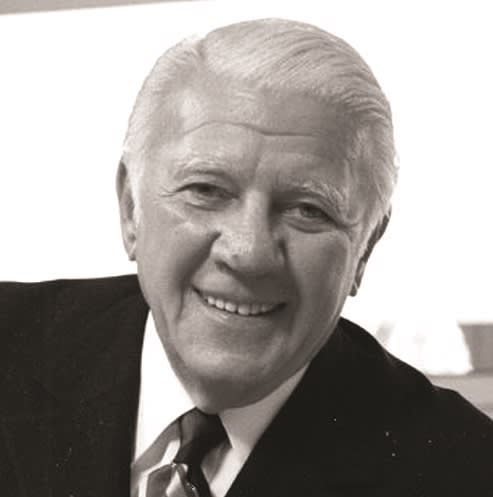
Zollie Frank
Changing conditions in the 1950s led to the development of open-end or finance leasing, which PHH offered in 1951. Fleets wanted the ability to replace units after a 12-month period with off-balance sheet reporting. In 1981, the Swift Dodge vs. IRS court decision legitimized the use of the TRAC clause in an open-end lease.
1946
Development of National Account Programs: The first recorded purchase of a fleet management program, other than leasing, was by Gibson Art in 1946. Tire company national account billing started in the early 1950s. PHH, Consolidated Service Corp. (acquired by LeasePlan), and Mileage Consultants started selling tires nationally using centralized billing.
Other programs, such as maintenance management, were not in great demand because gas was cheap and operating costs were manageable. This gradually began to change in response to market demands and new fleet services proliferated, such as fuel management, accident management, and personal use reporting.

To put it in perspective, Harry S. Truman was president when national account programs developed.
1946
Factory Ordering: Before the advent of OEM fleet departments, companies purchased vehicles from individual dealers. Use of dealer ordering codes by non-dealers, such as fleet lessors, allowed factory-direct orders. Another factory innovation was the introduction of fleet previews to provide new-model specifications to facilitate vehicle replacement planning.
1948
Drop-Ship/Courtesy Deliveries: In the late 1940s, the concept of volume drop-shipping fleet vehicles was developed. At that time, PHH factory-ordered vehicles were delivered to drivers by local dealers. Wheels and McCullagh (acquired by GE) started delivering cars from regional dealers directly to drivers. Ultimately, it became an accepted industry practice to pay a courtesy delivery fee to non-ordering dealers to deliver and prep vehicles.
1949
Expanding the functionality of automobile door keys, Chrysler invented technology that allowed car keys to start both the electric starter and the ignition of a vehicle with a turn of the ignition tumbler.
1950s
Creation of Fleet Maintenance Management Program: Early lessors offering full maintenance leases were R.A. Company and Four Wheels. During the past 50 years, fleet maintenance programs evolved from preventive maintenance coupon books to sophisticated online systems.
Fleet maintenance programs are continuing to evolve with many fleet management companies working to migrate programs to hand-held devices, along with incorporating vehicle-related data acquired by onboard telematics devices.
1951
Power steering first appeared on a Chrysler Imperial, which uses hydraulic power to amplify the pressure on the wheels as drivers turn the steering wheel.
1953
The first production car to have air conditioning as an option was the Chrysler Imperial. It came with low, medium and high settings.
1955
Creation of AALA: The American Automotive Leasing Association (AALA) was founded in 1955. AALA is comprised of commercial automotive fleet leasing and management companies. Its primary goal is to ensure that the business interests of the fleet leasing industry are properly represented to lawmakers, including the state and local governments.
It has been highly successful in helping to influence legislation that, if left unmodified, would be highly detrimental to commercial fleets. In addition, AALA worked closely with state CATRALAs (Car and Truck Renting and Leasing Association) on influencing state legislation.
1957
Founding of NAFA: Finding the Society of Automotive Engineers (SAE) didn’t meet their needs, a group of fleet management professionals banded together to form the National Association of Fleet Management Administrators (later renamed NAFA Fleet Management Association).
Emerson Parker, James Bekkering, and Sam Lee signed the articles of incorporation in 1957, and John Limpert was named its inaugural president, with 26 founding members. Membership was opened to suppliers as affiliates on a non-voting basis in 1968. The Association now has several thousand members in 33 regional chapters in the U.S. and Canada.
1958
Cruise control was introduced to allow drivers to maintain constant vehicle speed without needing to use the accelerator. The system made steady driving easier, and was first used in another Chrysler Imperial and by 1960 was a standard feature on all Cadillacs also.
1959
The modern three-pin seatbelt originated from Volvo, and the automaker decided to give away the patent to other carmakers for free, knowing it would save lives. It was invented by Volvo’s first safety engineer Nils Bohlin.
Subscribe to Our Newsletter
More Operations

Here's When You Should Make an Exception to Fleet Policy
Fleet policies are designed to create consistency, but not every driver or situation fits neatly within standard rules.
Read More →
AI-Native or AI-Acquired: What Should Fleet Managers Look for in an AI Platform?
Six questions can help fleet managers look beyond AI marketing claims to evaluate integration, data access, and real-world operational performance.
Read More →
Sponsored•October 14, 2026
A buyer's guide to fleet management software in 2027
Buying fleet management software in 2027 means looking beyond features and price. As fleet operations, technology and expectations evolve, this guide explores what today’s fleet professionals should consider when choosing a system that can deliver value now and adapt to what comes next.
Read More →

What Will Shape the Next Era of Fleet Management?
EVs, AI, and autonomous vehicles are reshaping fleet management. Discover what’s ahead—and how fleet leaders can prepare for the next era.
Read More →
How Fleets Can Recruit and Train Veterans for Technician Roles
Here's how the technician shortage has affected uptime for fleets, and what to do about it.
Read More →
Avis Budget Group Deploys Neology Toll Management Technology Across Major Brands
Neology’s neoFleet platform will manage toll transactions and toll-authority operations for vehicles across Avis, Budget, Payless, Budget Truck and Zipcar.
Read More →
Fleet Personal-Use Charges Edge Higher in 2026
Nearly eight in 10 surveyed fleets allow personal use of company vehicles, while just over half of respondents report charging employees for the privilege.
Read More →
The Future of Fleet + What’s Changing Right Now | AF News Recap
Could developments overseas offer a preview of what’s coming for U.S. fleets? This week, we’re looking at the future of AI, autonomy, and electrification, plus Ford Pro’s new certified pre-owned program, smarter vehicle offboarding, and a new way for fleets to manage toll expenses.
Read More →
How to Handle Vehicle Offboarding
What do fleet managers need to do when a driver leaves?
Read More →
Sponsored•October 1, 2026
Fleet Manager’s Ultimate Playbook: Navigating the New Standard in OEM Connectivity
Rising operating costs, driver safety concerns, and unplanned downtime are putting unprecedented pressure on modern fleets. Discover how fleet managers use embedded OEM connectivity and real-time vehicle data to cut TCO, prevent downtime, and protect drivers without aftermarket telematics hardware.
Read More →