Looking Beyond Tailpipe Emissions – How Clean is Your Fuel?
A recent study is making fleet owners think twice about the common perception that electric vehicles (EVs) offer the lowest emissions for work trucks.
by Steve Whaley, PERC
March 12, 2021
when renewable propane is considered, propane-powered MD-HD vehicles currently provide a lower carbon footprint solution in every U.S. state except Vermont where electricity is generated by, and imported from, Canadian hydroelectric power plants.
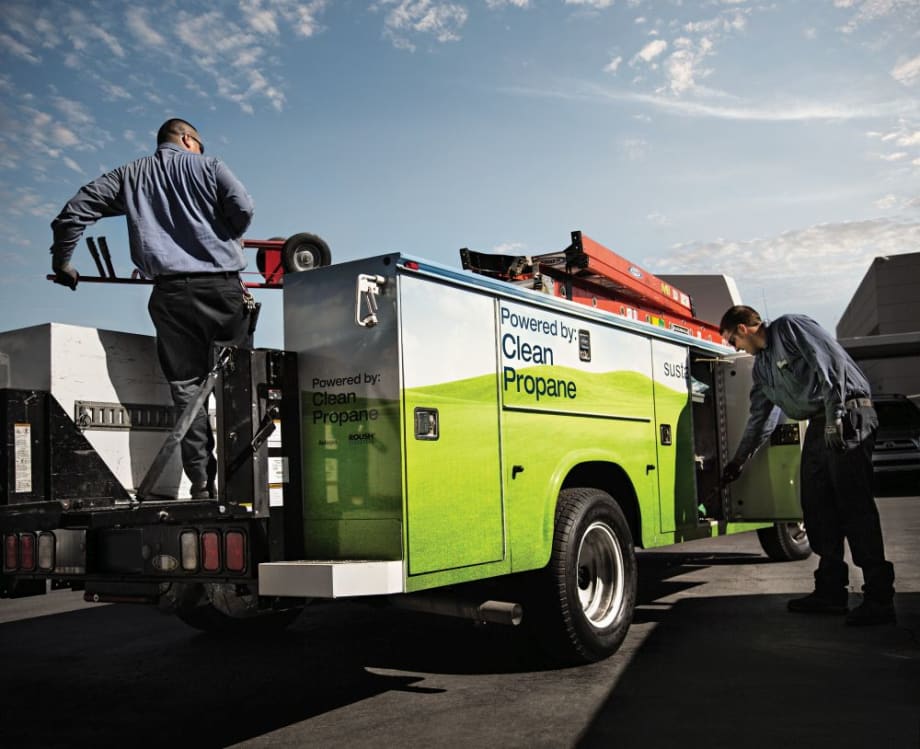
Photo: PERC
4 min to read
Across the nation, discussions are underway about government regulations to decrease vehicle emissions in the next 10 to 20 years. In the near future, fleet owners will need to make decisions about how to comply with these new goals. While there are multiple energy sources that can reach these emissions reduction targets, many benchmarks, and the conversations that surround them, have started to veer toward an electric-only future.
Ad Loading...
While electric vehicles (EVs) may be a good selection for light-duty consumer vehicle applications, other energy sources, like propane autogas, are better suited for medium- and heavy-duty work truck applications where payload, performance, range, and operational costs matter greatly.
Ad Loading...
The good news is a low-emissions future doesn’t have to be only based on one fuel source.
A new study is debunking the common perception that EVs are “zero-emission” vehicles and offer the lowest emissions in medium- and heavy-duty fleet vehicles. In most of the United States, propane autogas produces fewer emissions than comparable electric vehicles. As the study shows, there is no such thing as a “zero emission” vehicle.
More than the Tailpipe Emissions
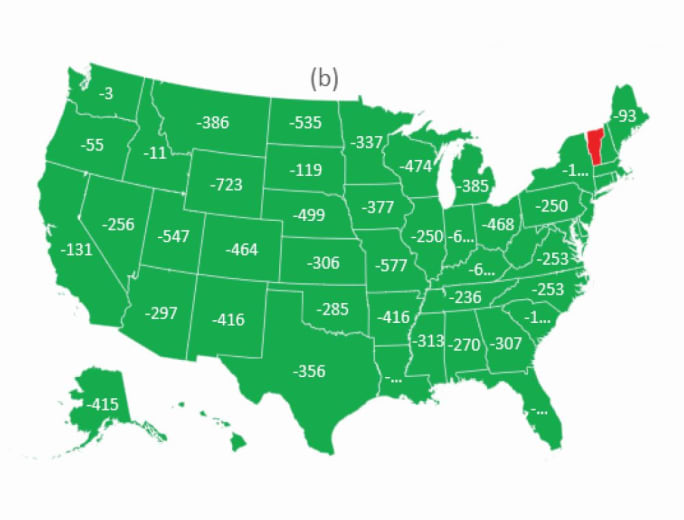
This shows the well-to-wheels carbon intensity of propane (a) and grid electricity (b) by state.
Image: PERC
When fleet owners consider the emissions their vehicles produce, many think solely about the tailpipe emissions, since that’s what they are directly responsible for. But to truly understand how their fleet impacts the environment, they have to factor in all of the emissions that go into creating the energy source that is powering the vehicle.
In a comparative analysis conducted by the Propane Education & Research Council (PERC), researchers found propane-powered medium- and heavy-duty vehicles provide a lower carbon footprint solution in 38 U.S. states and Washington, D.C. when compared to medium- and heavy-duty EVs that are charged using those state’s electric grid.
This is due to the amount of carbon that is produced from each state’s unique energy mix for electricity generation using coal, petroleum, or other energy sources. In addition, battery production is significantly energy and carbon intensive.
Ad Loading...
While electric vehicles may have zero tailpipe emissions, emissions are generated prior to the wheels turning on the road through the electric grid and the powertrain (chiefly battery manufacturing) production.
When comparing the difference in lifecycle equivalent carbon dioxide (CO2eq) emissions of a single medium-duty vehicle, propane autogas on a national average emits 125 tons of CO2eq less than an electric medium-duty vehicle, according to PERC data.
Looking to the Future
There’s no doubt the electric grid is going to keep getting cleaner as new technology and innovation becomes available. However, it’s important to point out that propane autogas is also getting cleaner by leaps and bounds through new engine developments and renewable propane.
Renewable propane is a byproduct of the renewable diesel and sustainable aviation fuel production process, which converts plant and vegetable oils, waste greases, and animal fat into fuel. It has the same chemical structure and physical properties as conventional propane and can be used in any existing propane autogas engine. Because it’s produced from renewable raw materials, renewable propane has an even lower carbon intensity than conventional propane and is far cleaner than other energy sources.
This shows the total difference in life-cycle CO2eq emissions (U.S. tons) between a single medium-duty conventional propane vehicle and a single medium-duty EV.
Image: PERC
As such, the study found when renewable propane is considered, propane-powered medium- and heavy-duty vehicles currently provide a lower carbon footprint solution in every U.S. state except Vermont where electricity is generated by, and imported from, Canadian hydroelectric power plants.
Ad Loading...
This shows the total difference in life-cycle CO2eq emissions (U.S. tons) between a single medium-duty renewable propane vehicle and a single medium-duty EV.
Image: PERC
The Business Case for Propane
These emission regulations will no doubt also start driving operational cost and efficiency conversations within work truck fleets. At the end of the day, it’s no secret that companies have to avoid bankrupting their budgets in the process. Propane autogas provides more than just an environmental benefit. When you factor in the cost of a new vehicle, regardless of fuel type and the costs for fuel, fluids, maintenance, and repairs, propane autogas has the lowest cost of any fuel for the lifetime of the vehicle.
The incremental capital cost for a medium-duty propane autogas vehicle, relative to its gasoline or diesel counterpart, is on average 15%. Comparatively, a similar medium-duty EV is over 250%. Not to mention, the cost to purchase and install refueling equipment for a fleet of medium- or heavy-duty propane autogas vehicles is lower than the cost to purchase fast charger equipment for charging a comparable electric vehicle fleet in a comparable time frame.
As transportation moves toward a cleaner energy future, I encourage fleet owners to discover the truth about propane autogas and its lifecycle emissions reduction capabilities.
About the Author: Steve Whaley is the director of autogas business development for the Propane Education & Research Council. He can be reached at stephen.whaley@propane.com. This article was authored and edited according to WT editorial standards and style to provide useful information to our readers. Opinions expressed may not reflect that of WT.
Geofencing is a familiar fleet tool today, but its early adoption marked a major shift in vehicle tracking, route monitoring, and the debate over employee privacy.
Holman is bringing its Mexican fleet management operation fully under its own brand after more than 30 years as a joint venture. The change gives multinational fleet customers a single Holman operation across the U.S., Canada, and Mexico.
Regular tire checks can do more than extend tread life. These five maintenance practices can help work truck fleets catch problems early, reduce costs, and prevent downtime.
Part Two: Commercial auto remains one of the most challenging and costly lines of coverage for fleet operators and insurers alike. Continue learning more about how to effectively address these issues from Onur Aksan, Enterprise Business Development Executive, Geotab
Commercial auto remains one of the most challenging and costly lines of coverage for fleet operators and insurers alike. Learn more about how to effectively address these issues from Onur Aksan, Enterprise Business Development Executive, Geotab.
Fleet leaders are under pressure to reduce costs, adapt to economic uncertainty, and make smarter decisions. See how peers across North America are responding with real data, proven strategies, and forward-looking insights. Download the 2026 Market Pulse Report to benchmark your strategy and uncover where you can gain an edge.