




Keys to Managing Fleet Safety With Telematics
While telematics systems are designed to improve fleet safety, merely installing a system isn't enough — it's how you manage the data and alerts with your drivers that really makes the difference.


Jim Coniglione uses his system as a deterrent to erratic driving, and he’s also nearly eradicated red light camera violations by his drivers. Photo courtesy of Scoopy Doo.

Jim Coniglione uses his system as a deterrent to erratic driving, and he’s also nearly eradicated red light camera violations by his drivers. Photo courtesy of Scoopy Doo.
Fleet operators understand that telematics systems provide a window into the behavior of their fleet and drivers — from immediate vehicle location and engine diagnostics to fuel economy and erratic driving events.
Of course, gaining the greatest benefits depends on how the telematics system is deployed. In this article, we delve into managing telematics systems’ data and alerts to improve fleet safety.
For businesses, which don’t necessarily have the resources for a dedicated safety manager, the stakes might be even higher. “A driver-related incident could have a catastrophic impact on the company,” says Bernie Kavanagh, SVP and general manager for Large Fleet at WEX.
Basic to Advanced
When it comes to safety, telematics systems’ most immediate impact comes from understanding driver behaviors such as speeding, hard braking and cornering, and jack-rabbit starts.
Measuring engine diagnostics provides another safety net, as understanding pending parts failures can stave off the potential for an on-road incident while shortening maintenance downtime.
Today’s telematics systems offer increased functionality. Some systems offer in-cab alerts that give immediate feedback to the driver for erratic events. “This curbs behavior much faster than coming into the office two days later and being told you had nine speeding events,” says Todd Ewing, director of product marketing at Fleetmatics, A Verizon Company.
Others can tie into a vehicle’s advanced safety features to report behaviors such as proximity to another vehicle or “tailgating.” Fleets are connecting telematics to devices that block cellphone use while driving and can also detect safety belt use.
Safety extends beyond a moving vehicle. For instance, in work truck applications, telematics can prevent a boom extension if stabilizers haven’t been deployed.
“Geofencing,” or creating a virtual geographic boundary to trigger an alert upon entry or exit, can be used to monitor dangerous intersections, blind turns, or construction zones. When a fleet operator is alerted to a driver entering a geofence, “It’s a coaching moment,” says Kavanagh. “You can reinforce to your drivers that the area is dangerous and should be avoided at all costs.”
Recently, telematics systems have made organizing and interpreting the data easier by aggregating driving behaviors to produce a single, dynamic score for each driver. “Fleet operators don’t want to compare and interpret three different reports to understand how their employees are driving,” Ewing says. “The score gives them one simple way to think about it.”
Another new trend is to give drivers immediate access to their scorecards — including their ranking within a group — through an app. With this transparency, fleet managers can coach drivers and adjust programs with rewards or penalties based on their scores. “You’re starting to see the fleet taking it beyond waving a piece of paper at a driver to putting it in a mobile platform so they can look at the data,” Ewing says.
We spoke with small business fleets to understand how they’re managing safety through these basic and advanced features.
Reducing Speeding (and Tickets)
Jim Coniglione, owner of Scoopy Doo, a pet waste removal service, says he installed the TomTom Telematics system “for basic accountability and to give logical answers to customers about when we were at the house.”
The company runs 16 pickups, a mix of Nissan Frontiers, Ford Rangers, and Toyota Tacomas, to residences across Long Island, Queens, Westchester County, and the Albany area. The trucks run 35,000 to 40,000 miles a year.
Coniglione started Scoopy Doo when his friend’s wife stepped in dog poop at a barbecue 17 years ago. “I said wait a minute, we got something here,” he says.
Many of Scoopy Doo’s technicians are retired military, and they generally behave on the road. Coniglione won’t quibble when his drivers are a few miles over the speed limit in the normal flow of traffic. “It’s not like we’re sitting there all day long looking to break these guys’ chops,” he says. “But [the telematics system is] a tool and a deterrent, because they know that we’re watching.”
The company assembles the drivers’ routes the night before and sends them electronically to each driver. More precise routing has saved the company 10% in fuel costs, and fewer miles traveled presents fewer opportunities for accidents.
Coniglione’s office manager monitors alerts for speeding and erratic driving. If it warrants attention, “We nip it in the bud and call them right then and there,” he says.
Scoopy Doo’s drivers must navigate New York’s numerous red light cameras, and violations had been a problem. Coniglione set the TomTom system to audibly alert drivers through the in-cab unit before entering an intersection with a red light camera.
“It was really getting crazy, us absorbing the cost [of the tickets],” he says, adding that his drivers pay the fines after the first violation. “Miraculously, no one is getting red light tickets anymore. We went from 35 a year down to two.”
Follow the Driver
For Second Harvest, Canada’s largest food rescue organization, safety wasn’t the first reason for incorporating a telematics system. “We didn’t want our trucks idling,” says Mickey Kuchar, fleet & warehouse manager. “As an environmental organization that was very important to us.”
“We have the best drivers,” says Lori Nikkel, director of programs & partnerships. “We work for a nonprofit; they’re very mission focused. We don’t have a lot of safety issues. But the system shows us when something happens. When it does, it’s an anomaly.”

Second Harvest switched to a fob system that matched the driver with the truck driven that day. The change made it easier to identify patterns and address them. Photo courtesy of Second Harvest.
In terms of safety, Second Harvest uses its Geotab telematics system to monitor metrics such as speeding and hard braking, and that information is populated into Excel spreadsheets to allow for driver comparisons. Engine diagnostics monitor battery, oil, and brake fluid levels.
“We don’t condone speeding, but we’re more lenient on the highway than we are in the city,” says Kuchar, who admits he’s only scratching the surface of all the data to interpret. “In school zones, then we have issues. That’s where we clamp down.”
Running mostly perishable produce across Ontario and into Quebec, Second Harvest runs a fleet of nine straight trucks: a mix of Class 6 refrigerated Freightliners and Kenworths and a GMC Savana van.
The organization recently switched to a fob system that links each driver to the truck he is driving that day, and the change delivered a substantial process improvement. “With the fob system, we can more easily see patterns,” Kuchar says. “Before, we had to go through a lot of paperwork to tie the incidents together.”
When patterns are identified, “They’re stopped right away when the drivers are informed that the information is coming to us at the management level,” Kuchar says. “The Geotab [system] doesn’t lie.”
To augment its safety efforts, Second Harvest offers outside training and conducts driver meetings every morning. A longer meeting is held bimonthly in which health and safety is a focus, Kuchar says.
Eye on the Road, and Driver
Serenity House Detox, a drug and alcohol rehabilitation center, uses telematics for standard safety features — and adds another layer of protection through in-cab video.
The company installed Lytx’s DriveCam system in 2015. In addition to telematics functions, DriveCam’s event recorder provides fleet operators with a split-screen, one view through the front windshield and the other on the driver.
Terrie Hornick, director of education and acting safety manager, says the company signed on after an incident in which another driver clipped a fleet vehicle and flipped it, and then tried to blame the crash on Serenity House. “We chose to get cameras in all our vehicles to protect not only our company but our staff,” she says, adding that the system has since documented another rear-end crash.
With two locations in Florida and one in Texas, Serenity House runs seven vehicles — a mix of Lincoln models — to transport patients in and out of a seven-day program. Serenity House behavioral health techs, who are also drivers, regularly make the 200-mile drive from West Palm Beach to Daytona Beach and back.
Fleet vehicles accumulate as many as 50,000 miles a year per vehicle. With so much time on the road, the company wanted to mitigate as many driving incidents as possible. Hornick has alerts sent to her cellphone. “I stop whatever I’m doing and address the situation at that moment,” she says.
Hornick has made reviewing DriveCam data part of her daily workflow. “The first thing I do every morning is jump on DriveCam and check all my drivers,” she says. “I even do it on Saturdays and Sundays. It takes me 15 minutes. If I want to further investigate, I can.”
The system can be configured to trigger the cameras for a variety of driving events, though not all warrant communication from management. In any case, the video recording adds another level of transparency. In reviewing the footage, Hornick can detect handheld phone use, but also can understand mitigating factors such as an object in the road or the need to overtake a slow vehicle. “It helps me when I go to coach them,” she says.
Drivers receive coaching for a first event. The second event results in a verbal warning; the third results in suspension for a time period commensurate with the event. Three suspensions in a year will result in termination. “I’ve suspended a few people, but I’ve never had to suspend them again,” Hornick says.
Video documentation has further benefits specific to the mission of Serenity House, whose drivers can activate the camera if necessary.
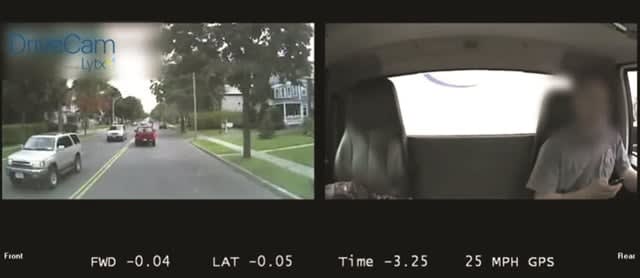
Lytx’s DriveCam system uses an event recorder to provide visual insight into driving events. It also captures in-cab activity such as handheld cell phone use. Photos courtesy of Lytx.
Hornick recounts an incident in which a client suffered a seizure while being transported, and another in which a client grabbed the driver’s cellphone and jumped out of the vehicle. “[The client] was on video stealing our company cellphone, versus word of mouth,” she says. “We have proof.”
Now What?
These fleet operators demonstrate the holistic approach needed to manage safety through telematics. All three connect with drivers as soon as events are identified. Kavanagh agrees. “Sit down with them as soon as you’re aware of behavior that is potentially putting people at risk,” he says.
Having that conversation with the driver can be uncomfortable. However, “[Drivers] should be OK with that, as long as it’s positioned in the right way, by putting the individual’s safety first and providing a safe working environment,” Kavanagh says.
From there, follow-up is essential. “[Telematics provides] a great deal of information, but unless you do something with it, you’re going to continue to have the same behaviors,” Kavanagh says.
Some telematics providers offer consultation services to review data and identify anomalies. “The days of just sending data are long gone,” Kavanagh says. “The data needs to be interpreted to change those behaviors.”
Beyond consultation, telematics providers can connect clients to a variety of safety programs, from driver coaching to online classes. Some systems link to third-party safety programs to tailor driver remediation plans.
These types of follow-ups not only reinforce a safety culture, but their documentation also becomes a mitigating factor in a liability situation. “Smaller companies may not have a manager dedicated strictly to safety compliance, so online courses can become an outsourced tool,” Kavanagh says.
Kavanagh suggests incorporating the steps to correcting the behavior into the employee handbook, which further documents the company’s proactive approach to safety.
Originally posted on Work Truck Online
More Global Fleet

GeoFencing Adds to Your Truck Security Arsenal
Geofencing is a familiar fleet tool today, but its early adoption marked a major shift in vehicle tracking, route monitoring, and the debate over employee privacy.
Read More →
Holman Takes Full Ownership of ARIZA in Mexico
Holman is bringing its Mexican fleet management operation fully under its own brand after more than 30 years as a joint venture. The change gives multinational fleet customers a single Holman operation across the U.S., Canada, and Mexico.
Read More →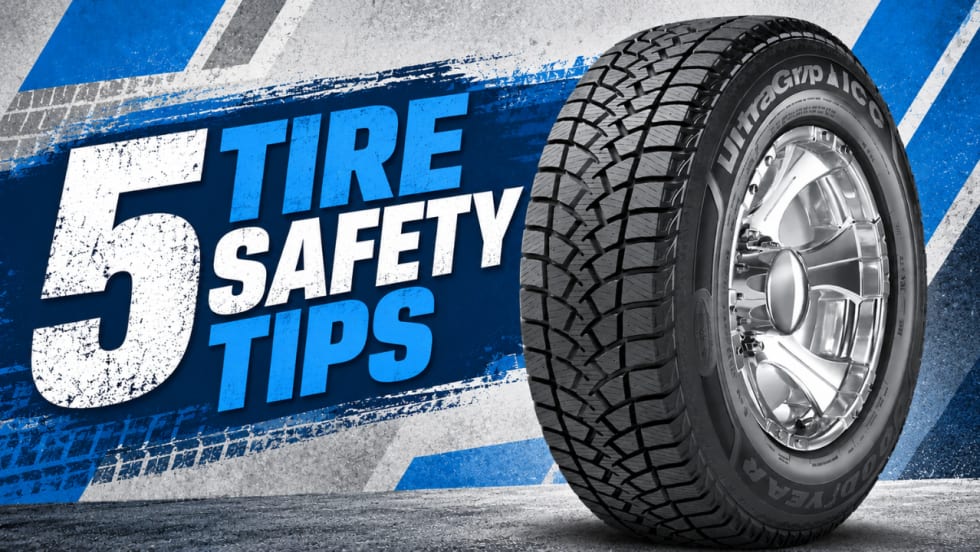
5 Tire Maintenance Tips to Help Prevent Work Truck Downtime
Regular tire checks can do more than extend tread life. These five maintenance practices can help work truck fleets catch problems early, reduce costs, and prevent downtime.
Read More →

Proven Ways to Reduce Work Truck Downtime
The age-old problem of downtime will always be a reality, but with new strategies at hand, fleets have more ways to keep trucks on the road longer.
Read More →


Cameras, Safety and Insurance: From Reactive Claims to Real-Time Prevention (Part 2 of 2)
Part Two: Commercial auto remains one of the most challenging and costly lines of coverage for fleet operators and insurers alike. Continue learning more about how to effectively address these issues from Onur Aksan, Enterprise Business Development Executive, Geotab
Read More →
Cameras, Safety and Insurance: From Reactive Claims to Real-time Prevention
Commercial auto remains one of the most challenging and costly lines of coverage for fleet operators and insurers alike. Learn more about how to effectively address these issues from Onur Aksan, Enterprise Business Development Executive, Geotab.
Read More →
Fleet Costs Are Rising: Here’s How Leaders Are Responding
Fleet leaders are under pressure to reduce costs, adapt to economic uncertainty, and make smarter decisions. See how peers across North America are responding with real data, proven strategies, and forward-looking insights. Download the 2026 Market Pulse Report to benchmark your strategy and uncover where you can gain an edge.
Read More →
Enterprise Fleet Management Surpasses 900,000 Vehicles in U.S. & Canada
Enterprise Mobility connects with mobility solutions around the globe
Read More →