




How Wyeth-Ayerst Built an In-Fleet Management
Today, much of the focus on fleet management information revolves around the Internet and e-commerce; many fleet managers, however, like Jack O'Donnell of Wyeth-Ayerst, believe in keeping their data in-house.
It often seems like one cannot read about business without the words "web," "Internet," and "e-commerce" popping up over and over again. While the Internet is evolving into an excellent business tool, in-house software is still alive and well. Wyeth-Ayerst Labs in Philadelphia, PA, has developed a fleet management software program that gives it the security of owning its fleet data with the flexibility and utility needed to manage a large fleet.
Managing Maintenance
The driving force behind Wyeth-Ayerst's need for an in-house system was managing the maintenance and repair of its 3,700-vehicle fleet. Jack O'Donnell, director of fleet services, has been running the Wyeth-Ayerst fleet for 20 years.
"We began the process in the early '80s," he says. "We were managing our own maintenance, providing authorization for repairs, and we needed a system to automate the process."
Wyeth-Ayerst used (and still uses) a national account program (currently Consolidated Service Corp.) to purchase preventive maintenance and tires. It uses a preventive maintenance coupon book for basic work. If the shop discovers that the vehicle required additional work, beyond that on the coupon, it contacts Wyeth-Ayerst for approval.
"We provided a purchase order to the shop for the additional work," says O'Donnell. "Our manual system was cumbersome and paper-intensive." Wyeth-Ayerst first looked at the marketplace to see if there was a program it could purchase. "The 'canned' software we looked at didn't really fit what we were trying to accomplish," O'Donnell recalls, "so we began to plan our own system." O'Donnell met with the Wyeth-Ayerst information services (IS) department and outlined what was needed. IS began to work on a fleet system using a relational database program called Paradox. "I guess we were a bit ahead of the curve in that this was a PC-based system from the start," O'Donnell says. Most fleet management systems in the early '80s were mainframe systems.
Automated Purchase Orders
The first module that was produced was designed to automate the issuance of purchase orders to shops and related processes. "When a call comes in for repair authorization, we generate a purchase order right off the system," O'Donnell explains. "The P.O. is automatically numbered." The issuer enters the work to be authorized, any notes or comments, prints the purchase order, and sends a copy to the shop. The order is maintained in the system for future reference. "You can imagine how much paper this system has saved and how much easier our recordkeeping has become," O'Donnell says. The shop does the work and the billing flows through CSC. The database maintains a complete maintenance and repair history for each vehicle. "Although we've tweaked the system over the years, we like to think we did it right the first time, and it is essentially the same as it was a decade ago," he said.
Next Steps
O'Donnell knew there were a number of other important functions the system would be able to automate, including inventory, accident management, and fleet management reporting. "The system evolved over the years," he says. "We've added other functions to the original maintenance management process and now have a fully functional fleet management tool." The company's entire inventory is maintained in the system. O'Donnell receives regular inventory updates from his lessors, Wheels and ARI. "We download our inventory files directly from ARI's online system," he says. "Wheels provides us with a diskette on a monthly basis." As Wyeth-Ayerst makes changes in inventory (such as new orders, deliveries, and transfers), the lessors update their own systems, and those changes are reflected in the data downloaded to O'Donnell's system.
Wyeth-Ayerst also uses CSC for accident management services, and this data is also provided. "CSC sends us a diskette monthly, which has all of our accident and subrogation data," O'Donnell says.
Using Pre-Formatted Reporting
All of this data, inventory, maintenance purchase orders and histories, and accident-related costs are of little value unless the user can produce management reports. Wyeth-Ayerst's system enables O'Donnell and his staff to manipulate data in just about any way they require. "The existence of the P.O. and maintenance histories, for example, enables us to manage transactions, but we need to track costs on a macro basis," O'Donnell explains. The system contains both pre-formatted reports, which O'Donnell uses for regular management of costs, as well as an ad hoc report writer, which allows O'Donnell and his staff to drill down to more detailed and specific data, and to respond to requests for information from the field and management.
Another feature the system has is the ability to audit invoicing. "The database maintains a rolling average for the coupon billings," explains O'Donnell. "For example, the 20,000-mile coupon might bill out at so many dollars. The system takes our billing and each coupon billing is compared to this average." Exceptions are reported and O'Donnell and his staff can research to determine why there is a difference. Finally, billings are broken out automatically by accounting codes and charged to the appropriate function or location.
The system is installed on a client server, and O'Donnell has six users. "We're probably going to change our database program," he says. "The Paradox product has become obsolete, we'll look at others, such as Oracle."
More Operations
How to Manage Conflict for Your Fleet Operations
Conflict management is becoming a core leadership skill. Here are five strategies fleet leaders should know.
Read More →
Turning Connected Vehicle Data Into Decisions That Matter
Fleet leaders have more data than ever, but turning that data into clear, actionable decisions remains a challenge. This white paper shows how leading organizations are using connected vehicle data to improve safety, reduce costs, and optimize fleet performance. Learn how to turn insight into action across your fleet.
Read More →
Cameras, Safety and Insurance: From Reactive Claims to Real-time Prevention
Commercial auto remains one of the most challenging and costly lines of coverage for fleet operators and insurers alike. Learn more about how to effectively address these issues from Onur Aksan, Enterprise Business Development Executive, Geotab.
Read More →

Are You Tracking Your Fleet's True Total Cost of Ownership?
Bobit Business Media surveyed 190 fleet professionals and found that while most fleets are tracking costs, fragmented systems and data gaps are keeping true TCO visibility out of reach. With rising pressure to control spend in an increasingly volatile environment, the gap between what fleets think they know and what the data actually shows is wider than you might expect. See how your peers are managing costs today and where the industry still has room to improve.
Read More →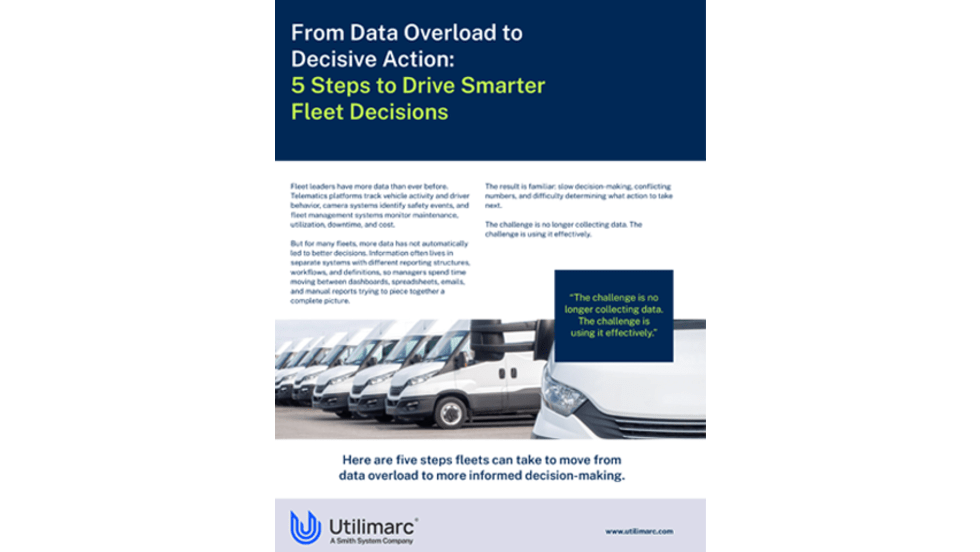
Turn Fleet Data Into Smarter Decisions
Fleet leaders have access to more operational data than ever, but disconnected systems and unclear metrics often slow decision-making instead of improving it. This whitepaper outlines five practical steps fleets can take to transform fragmented data into actionable insights that improve planning, safety, utilization, and long-term performance.
Read More →
Hybrids: Electrification Without the Challenges
For fleet managers, fuel is one of the biggest line items in the budget — and it's one hybrids can shrink without changing how your people work. Download the eBook to see the numbers, understand the technology, and get a step-by-step guide to making the switch.
Read More →
How NOV Uses Telematics to Improve Fleet Safety Across 160 Locations
James Victory of NOV discusses how the company manages fleet safety, maintenance, and telematics across more than 150 locations supporting oilfield operations throughout the U.S.
Read More →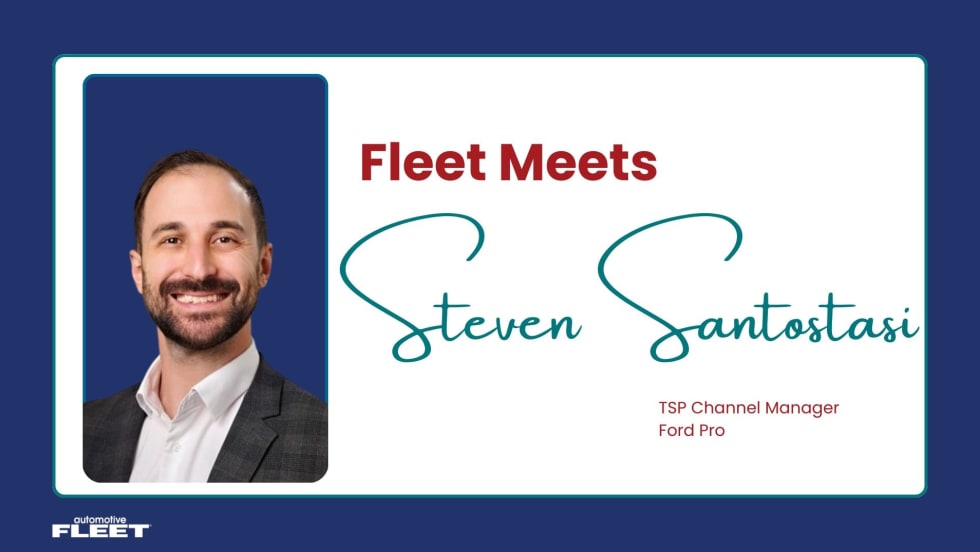
Fleet Meets: Steven Santostasi
This edition of the Fleet Meets series features Steven Santostasi, the current TSP channel manager for Ford Pro.
Read More →
Why Fleet Managers Are Replacing Departmental Vehicles with Shared Motor Pools
Departmentally assigned vehicles often create hidden costs through underutilization, poor visibility, and increased administrative burden. This white paper explores how shared motor pool strategies help fleets reduce costs, improve accountability, and optimize vehicle utilization.
Read More →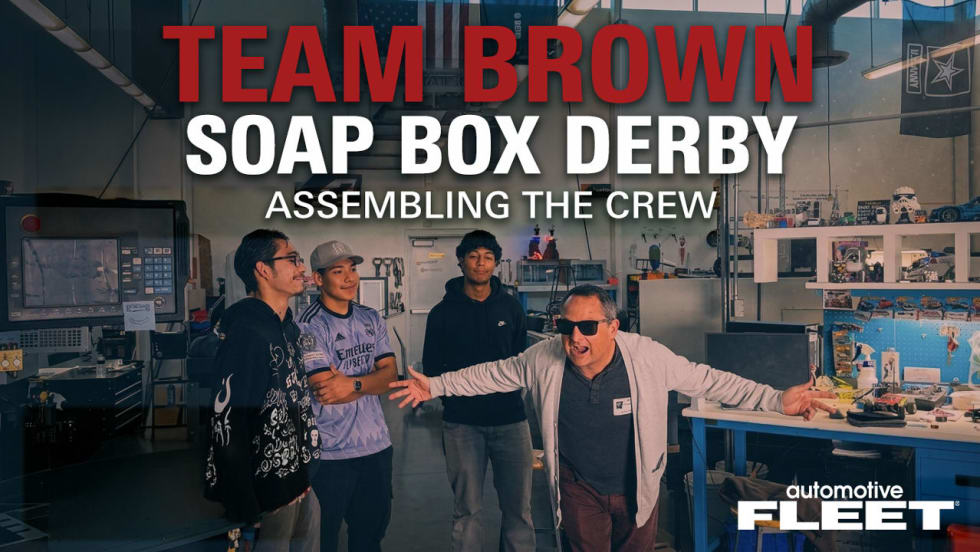
Soap Box Derby Challenge: Assembling the Crew
Meet Gabriel, Matthew, and Angel — the team helping bring this soap box derby build to life.
Read More →