




How to Implement a Fuel Hedging Program
Fleets can manage the risk of rising fuel prices with financial instruments known as fuel hedges.

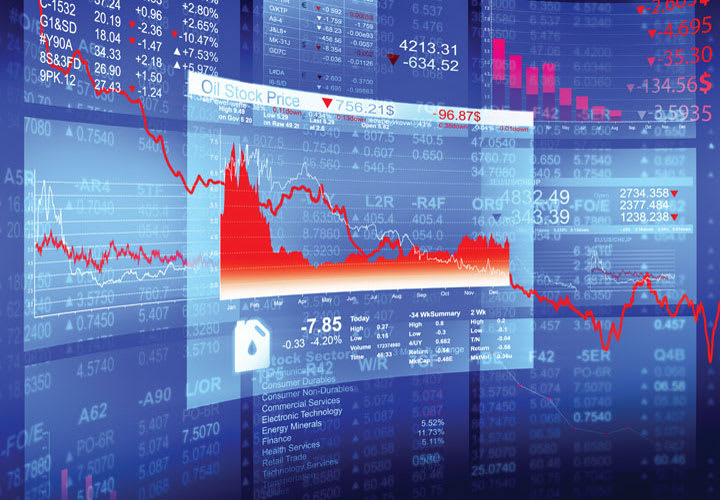
Photo courtesy of iStockphoto.com.
[EMPTY CREDIT]
With the possibility that declining fuel prices have hit bottom, fleet managers are turning to fuel hedging as insurance to control fuel spend, the second highest fleet cost behind depreciation, because low prices may inevitably rise in the not-to-distant future.
The U.S. Department of Energy (DOE) expects retail gasoline prices to rise slightly during the summer driving season, and fall lower toward the end of 2016 in a pattern similar to the price trajectories of 2014 and 2015. The national average price per gallon of regular unleaded gasoline has remained below $3 per gallon since Oct. 27, 2014.
With gasoline at a nearly eight-year low and diesel fuel at a 12-year low as tracked by the DOE, commercial fleet managers have begun to wonder how long lower fuel prices will last. Eventually, it's generally accepted that prices will rise for the cyclical commodity, and the good news is that fleets have a way to manage fuel prices.
How It Works
Fleets can turn to a variety of hedging vendors, including fuel card provider WEX Inc., energy consultants Mercatus Energy Advisors, hedging specialist Pricelock, energy servicer World Fuel Services, or a variety of financial institutions for a hedging plan.
These companies track the forward-traded commodities market for diesel fuel and gasoline that determines the price at the pump. Fleets can get a sense of where fuel prices are heading with the U.S. Energy Information Administration's monthly Short Term Energy Outlook that includes forecasted prices through the end of 2017.
"Retail gasoline and diesel fuel prices historically follow seasonality of which prices are typically lower during the winter season and higher in the summer season," said Bernie Kavanagh, vice president of North American fleet for WEX. "Understanding the historical retail fuel seasonality has helped many fleets with fuel hedging programs being purchased during the winter season."
Fleets can implement fuel hedges for as little as one to three months or for several years. A short-term hedge offers little protection due to the high volatility of fuel, said Stephen Sly, president of Stabilitas Energy, Inc., an energy consultancy firm.
"Some clients have purchased fuel hedges through December of 2018 to lock in prices at six-and-a-half-year lows and control their fuel budgets for several years," Sly said. "As taught in hedge schools, the main purpose of fuel hedging is cost stabilization and budget certainty."
While fuel hedging instruments can be viewed as investments, they shouldn't be viewed as profit tools but rather an insurance policy, said Steve Sinos, a Mercatus vice president.
"There's a cost like any insurance product," Sinos said. "It's a very methodical incremental approach to reduce volatility and increase margin."
Fleets typically want the hedges to fail unless the fleet is fully hedged, since the overall fuel cost would be lower and below a fleet's fuel budget. If the fuel hedge makes money and fleets receive a payout, their overall fuel costs are typically higher.
"Focusing too much on how the hedge is going to save money is not the correct approach to hedging in our opinion," said Sly. "A hedge can save clients millions of dollars, but, if prices have risen significantly, the fleet is paying higher total fuel costs with the hedge."
Hedging Instruments
There are nearly endless financial instruments available for a fuel hedging plan. Commercial fleets typically use three primary hedge instruments: call options, swaps, and futures contracts. Fuel hedges used by commercial fleets are typically traded on the Chicago Mercantile Exchange & Chicago Board of Trade (CME Group).
Call options, which are also known as caps or ceilings, are the least risky hedge structure. This instrument provides payouts to the fleet when prices rise above the cap price. If prices fall below the fuel cap, then the fleet receives no payout. Fleets acquire the cap as a premium. It functions most like insurance, because only the premium is at risk. Fleets can also acquire a put option that provides a hedge against declining fuel prices. With a call option, the value grows when fuel prices rise. With a put option, the value grows when the price falls.
A fuel swap is the most risky type of hedge instrument and also provides payouts when prices rise above the fuel swap price. There's no premium associated with the swap, but, if prices fall below the swap price, the fleet must make payments to the underwriter who sold them the fuel swap. A swap carries similar risk to fixed fuel contracts used by fleets with onsite storage tanks.
A futures contract gives fleets yet another choice for hedging. This instrument is an agreement between two parties to buy or sell a specific quantity of a commodity for a price agreed to at the time of the transaction with delivery and payment occurring at a specified future date. Futures contracts are sold in lots of 42,000 gallons per month.
Futures contracts are traded on exchanges and settle on the last trading day of each calendar month. They tend to be much less correlated to a commercial fleet's fuel risk, since fleets are purchasing fuel every day throughout the month. "Typically, a straight futures contract on the CME Group is less than 85% correlated to a fleet consuming fuel every day, whereas the over-the-counter hedge indexes are typically over 95% correlated," said Stephen Sly, president of Stabilitas Energy, Inc.
"In addition, a futures contract purchase has similar risk as buying a swap, which is the most risky type of hedge," said Sly. "The over-the-counter fuel hedges may be tailored to fit a commercial fleet's risk much better, using different gallons sizes each month, different types of hedge indexes, and different types of hedge structures."
Taking Hedging to the Next Level
A more advanced hedging instrument that provides a limited hedge against rising prices is called a four-way collar. This hedge exploits spreads on options with a combination of call and put options to protect a company's exposure in a specific price range.
A four-way collar combines a call option spread and a put option spread. The company would purchase a call option with a lower strike price and sell a second call option with a higher strike price than the option with the lower price. The call option spread provides a hedge against rising fuel prices up to a certain point.
The strategy also includes a put option spread with a high strike price and a second put with a strike price lower than the option with the higher strike price. The put option spread provides a hedge against declining pricing up to a certain point.
Lessons Learned From the Airline Industry
Fleets interested in fuel hedging can learn a lot from the airline industry, which began using fuel hedging at the end of the 20th century and had a rude awakening in the 21st.
Most airlines weren't hedging jet fuel until the late 1990s, when Southwest Airlines began hedging about 65% of its fuel risk using crude oil as a hedge at about $26 per barrel for a 7-year term in 1999. Southwest saved about $4 billion between 1999 and 2008 with its fuel hedge program.
Following this success story, other airlines began hedging a higher percentage of their fuel; several lost a significant amount of money on their hedges in 2015 after the large drop in prices following higher prices in 2013 and 2014.
What lesson can fleets learn from how hedging has played out in the airline industry?
"In a low-price environment, a risky type of hedge structure such as a swap is a reasonable tool to hedge fuel for longer periods forward," said Sly. "In a high-price environment, a less risky type of hedge structure and strategy should be considered for shorter terms forward."
More Operations
Here's When You Should Make an Exception to Fleet Policy
Fleet policies are designed to create consistency, but not every driver or situation fits neatly within standard rules.
Read More →
AI-Native or AI-Acquired: What Should Fleet Managers Look for in an AI Platform?
Six questions can help fleet managers look beyond AI marketing claims to evaluate integration, data access, and real-world operational performance.
Read More →
A buyer's guide to fleet management software in 2027
Buying fleet management software in 2027 means looking beyond features and price. As fleet operations, technology and expectations evolve, this guide explores what today’s fleet professionals should consider when choosing a system that can deliver value now and adapt to what comes next.
Read More →

What Will Shape the Next Era of Fleet Management?
EVs, AI, and autonomous vehicles are reshaping fleet management. Discover what’s ahead—and how fleet leaders can prepare for the next era.
Read More →
How Fleets Can Recruit and Train Veterans for Technician Roles
Here's how the technician shortage has affected uptime for fleets, and what to do about it.
Read More →
Avis Budget Group Deploys Neology Toll Management Technology Across Major Brands
Neology’s neoFleet platform will manage toll transactions and toll-authority operations for vehicles across Avis, Budget, Payless, Budget Truck and Zipcar.
Read More →
Fleet Personal-Use Charges Edge Higher in 2026
Nearly eight in 10 surveyed fleets allow personal use of company vehicles, while just over half of respondents report charging employees for the privilege.
Read More →
The Future of Fleet + What’s Changing Right Now | AF News Recap
Could developments overseas offer a preview of what’s coming for U.S. fleets? This week, we’re looking at the future of AI, autonomy, and electrification, plus Ford Pro’s new certified pre-owned program, smarter vehicle offboarding, and a new way for fleets to manage toll expenses.
Read More →
How to Handle Vehicle Offboarding
What do fleet managers need to do when a driver leaves?
Read More →
Fleet Manager’s Ultimate Playbook: Navigating the New Standard in OEM Connectivity
Rising operating costs, driver safety concerns, and unplanned downtime are putting unprecedented pressure on modern fleets. Discover how fleet managers use embedded OEM connectivity and real-time vehicle data to cut TCO, prevent downtime, and protect drivers without aftermarket telematics hardware.
Read More →