With the world's reliance on cashless transactions growing every year, now is the time for fleet operators to get ahead in the race against fuel card payment fraud.
by Henry Miller
February 12, 2015
Fuel-card related fraud results in millions of dollars lost each year for the fleet industry. Photo courtesy of Shell.
5 min to read
Fuel-card related fraud results in millions of dollars lost each year for the fleet industry. Photo courtesy of Shell.
It’s never been more important for fleet managers and drivers to protect their fleets against fraud.
Ad Loading...
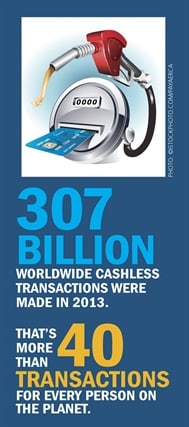
Driven by our ever-increasing preference for paying for items or services without cash, the global card payment industry has grown almost beyond recognition in the past two decades. In fact, according to consulting company CapGemini’s latest World Payments Report, there were a staggering 307 billion worldwide cashless transactions made in 2013. That’s more than 40 transactions for every person on the planet.
Ad Loading...
Increased Use = Increased Fraud
Not surprisingly, fuel-card usage in the commercial road transport sector is also on the rise. Every year, Shell fuel cards are used to make around 260 million transactions worldwide.
While fuel cards remain the most secure, efficient, and simple way for drivers to fill up on the road, criminals are taking note — organized crime and fraud are on the rise. For the fleet industry, this results in millions of dollars lost each year to fuel-card-related fraud. And, this is a problem that affects all countries and all fuel card providers, since fuel can account for up to 30 percent of a fleet’s running costs.
More than half of the world’s credit card fraud occurs in the United States. Especially in light of the recent rash of high-profile retail security breaches in the U.S., it’s imperative for fleet managers to take a two-pronged approach to protecting their fleet and for drivers to practice effective habits to combat fraudulent behavior — from the straightforward to the sophisticated.
Protect PINs
Ad Loading...
At A Glance Effective habits to combat card payment fraud include:
Ensuring drivers protect their PIN codes.
Telling drivers to look for any signs of tampering at the pump (such as broken seals) and filling up exclusively at stations with onsite security measures.
Working with a fuel card operator that offers the latest anti-fraud protections.
The first and most important step drivers can take to reduce fuel-card fraud is actually the most obvious — hiding their personal identification number (PIN) code. Chances are, you keep your personal card information safely stored in your head or secured from prying eyes. Ensure drivers understand the importance of taking the security of their company fuel card PIN code just as seriously as they do for their personal cards.
Don’t make life any easier for criminals. Beyond the obvious step of securing and shredding any statements with sensitive information, both fleet managers and drivers should always ensure that electronic devices, such as laptops, tablets, and smartphones, remain locked or password protected at all times. Just by reinforcing the importance of securing a fuel card PIN, fleet managers could eliminate a large number of fraud cases virtually overnight.
Of course, not everything is quite that clear-cut. There are also more complex types of criminal behavior, including card copying, falsified or hijacked accounts, and abuse of genuine fuel cards.
Be Mindful at the Pump
Photo illustration courtesy of Capgemini/iStockPhoto.com.
Encourage drivers to mind any signs of tampering at the pump (such as broken seals) and to fill up exclusively at stations with comprehensive onsite security measures such as surveillance systems. This is a serious deterrent to fraud because of its success in identifying — and, ultimately, catching — perpetrators.
Ad Loading...
For fleet managers, high-tech anti-fraud solutions can help alleviate some of the pressure by allowing them to focus not just on matters of security but also on wider operational concerns. Equally important is to ensure that existing management tools are being employed as effectively as possible.
This is especially true for online fuel card solutions, which can help users analyze transactions according to specific criteria — such as when, where, and by whom a fuel card is used — and receive personalized alerts if a payment occurs outside the “normal” pattern or exceeds a pre-set maximum fill-up limit. This, in turn, means potentially fraudulent behavior can be detected early, and fleet managers and law enforcement can respond swiftly.
Utilize Anti-Fraud Technology
The final step is for fleet operators to work with a fuel card operator that offers the latest anti-fraud protections. Criminal tactics change and adapt, so it is up to fuel card operators to help fleet managers stay one step ahead of the game. That includes offering sophisticated technologies, such as online systems for real time fraud detection and preventive back-end measures. For example, the Shell Fleet Navigator Card’s “Site Selector” can restrict usage based on geography (including high fraud areas) and specific days/times.
Though some of these steps might seem fairly obvious, they can protect fleets from taking a financial hit as a consequence of commercial card fraud. According to J.P. Morgan’s AFP Payments Fraud and Control Survey, nearly one third of defrauded organizations suffered a loss in 2013.
Ad Loading...
While advanced measures, such as the widespread rollout of smart cards in the U.S., may help to change the playing field, reinforcing best practices will help to ensure optimum security. Ultimately, the race against card payment fraud will continue as long as the world’s appetite for cashless payments continues.
For fleet operators, working with a fuel card provider with a proven ability to combat illegal behavior is imperative for the bottom line — an approach that should be supplemented by ongoing staff education around proper fuel card PIN handling and secure fill-up locations.
Put another way, the best way for businesses to achieve payment security success and protect drivers from fraud is to ensure they have the tools and techniques to make life as difficult as possible for criminals. Beyond that, it is only by constantly refining, reinventing, and renewing our methods of fraud prevention that this race can ever truly be won.
Henry Miller is general manager of the Commercial Fleet Card Program for Shell Oil Company in North America. He has been with Shell for more 25 years in various roles in its Retail Fuels division.
Rising operating costs, driver safety concerns, and unplanned downtime are putting unprecedented pressure on modern fleets. Discover how fleet managers use embedded OEM connectivity and real-time vehicle data to cut TCO, prevent downtime, and protect drivers without aftermarket telematics hardware.
Mental health belongs in the fleet safety conversation. This week, we’re looking at five ways fleets can support employee well-being before a crisis, plus Holman’s expansion in Mexico, new one-day Fleet Forward passes, and why EV charging demand is outpacing infrastructure growth.
Stefan Heck tells Automotive Fleet that combining more than 10 billion miles of driving history with Nexar's AI models will give fleets deeper insights into driver risk and roadway conditions than either company could provide independently.
Insights from a commercial insurance carrier and a broker show how fleets can turn video telematic data, driver coaching, and improved claims results into a stronger case at insurance renewal.
Fleet compliance isn't just about having policies — it's about consistently enforcing them. This practical guide reveals six hidden compliance risks common in public sector and shared fleet operations and outlines proven strategies to improve visibility, accountability, and audit readiness
The Sept. 15–17 program will feature fleet benchmarking data, case studies, emerging technologies, and implementation strategies while running alongside the NSC Safety Congress & Expo.