




Related: How Fleet Management Will Impact the Mobility Revolution
How the Autonomous Shuttle Is Gaining Traction, Fast
Between mobility solutions such as ride-hailing, electric vehicles, and fully-autonomous cars and trucks, we’re already seeing many forms of mobility hit the streets. However, many forget to pay attention to one frontrunner in the world of mobility: the autonomous shuttle.
by John Korte
May 2, 2019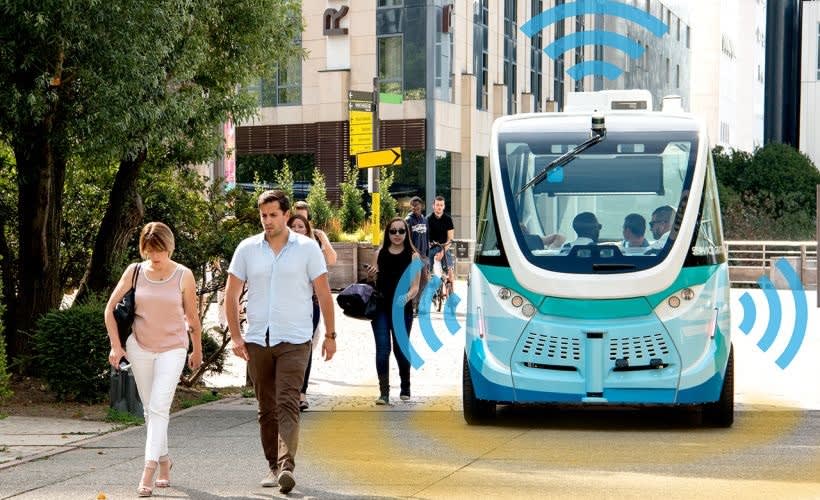
Cities need not ignore the autonomous shuttle, as they attempt to control and alleviate traffic in their downtown areas. Corporate campuses interested in sustainability and environmental responsibility also need to pay particular attention to the shuttle, as most of these vehicles are electric.
Photo courtesy of Sebastien Durand/Shutterstock.com.
3 min to read
It’s likely you’ve heard fleet management companies and fleet managers explore the topic of mobility for the last few years. To identify it simply – mobility is an industry disruptor. And many are unsure how to tackle this venture.
People, services, and things have always needed paths, vehicles, and strategies to move from place to place. Mobility, as a whole, opens up the opportunity for businesses and communities, to rely less on traditional fleet vehicles. The million-dollar question is: how exactly will mobility transform the fleet landscape in the next 10, 20, 50 years?
There’s a lot to explore and a lot that will remain unexplorable. Between different mobility solutions like ride-hailing, electric vehicles and fully-autonomous cars and trucks, we’re already seeing many forms of mobility hit the streets. However, many forget to pay attention to one frontrunner in the world of mobility: the autonomous shuttle.
Autonomous shuttles primarily drive on private roads and private routes. Think university campuses, corporate campuses, and to a lesser extent, cities and counties. The autonomous shuttle operates often with fewer cars on the road, and their pre-programmed routes contribute to less of a headache for companies and communities. Through software and lidar scans, autonomous shuttles are able to map their surroundings to ensure a safe ride.
Cities, as they attempt to control and alleviate traffic in their downtown areas, need not ignore the autonomous shuttle. Corporate campuses interested in sustainability and environmental responsibility also need to pay particular attention to the shuttle, as most of these vehicles are electric. Take for example the University of Michigan Mcity Shuttle. Running on electricity, the shuttle was created in an attempt to lessen congestion and study the way shuttles interact with pedestrians, cars, and external aggressors.
My prediction: there will be an adoption by corporate fleets to incorporate these shuttles earlier in the cycle than general public. Fleets including rental car companies and ride hailing companies will begin to integrate them into normal operations because of their potential ROI through fuel savings, accident management, and data collection. I won’t say it’s a short journey – but the potential is imminent.
Donlen, as an FMC, possesses a unique opportunity to help shape corporate fleet education, overall opportunity, and start-to-finish integration. It’s our responsibility to deliver solutions whether it’s identifying partners for autonomous vehicles through general maintenance (like repairing sensors), updating our software so its complementary and technically aligned, or introducing new acquisition and leasing options for acquiring vehicles. We’ll be able to help guide fleets on this journey.
Working within the autonomous space has allowed for me to view the industry straight from its innerworkings. If you’re interested in a more robust, collective view of the possibilities that exist within fleet mobility, feel free to visit my Mobility Deep Dive session at the Global Fleet Conference. We’re talking all about how electric vehicles, the sharing economy and last-mile delivery fleets will help guide us to a world that is as familiar with autonomous fleets as we are with the Ford Fusion.
You can find more information here.
Editor's note: John Korte is responsible for Donlen’s emerging fleet and mobility solution, as the leader of the Emerging Fleet and Mobility Offering. He is helping shape best practices surrounding on-demand mobility, last-mile delivery, and autonomous vehicle developers. Prior to Donlen, John held positions at US Bank, TCF, and GE Capital over a more-than-25-year career.
Subscribe to Our Newsletter
More Operations
Sponsored•October 14, 2026
A buyer's guide to fleet management software in 2027
Buying fleet management software in 2027 means looking beyond features and price. As fleet operations, technology and expectations evolve, this guide explores what today’s fleet professionals should consider when choosing a system that can deliver value now and adapt to what comes next.
Read More →
What Will Shape the Next Era of Fleet Management?
EVs, AI, and autonomous vehicles are reshaping fleet management. Discover what’s ahead—and how fleet leaders can prepare for the next era.
Read More →
How Fleets Can Recruit and Train Veterans for Technician Roles
Here's how the technician shortage has affected uptime for fleets, and what to do about it.
Read More →

Avis Budget Group Deploys Neology Toll Management Technology Across Major Brands
Neology’s neoFleet platform will manage toll transactions and toll-authority operations for vehicles across Avis, Budget, Payless, Budget Truck and Zipcar.
Read More →
Fleet Personal-Use Charges Edge Higher in 2026
Nearly eight in 10 surveyed fleets allow personal use of company vehicles, while just over half of respondents report charging employees for the privilege.
Read More →
The Future of Fleet + What’s Changing Right Now | AF News Recap
Could developments overseas offer a preview of what’s coming for U.S. fleets? This week, we’re looking at the future of AI, autonomy, and electrification, plus Ford Pro’s new certified pre-owned program, smarter vehicle offboarding, and a new way for fleets to manage toll expenses.
Read More →
How to Handle Vehicle Offboarding
What do fleet managers need to do when a driver leaves?
Read More →
Sponsored•October 1, 2026
Fleet Manager’s Ultimate Playbook: Navigating the New Standard in OEM Connectivity
Rising operating costs, driver safety concerns, and unplanned downtime are putting unprecedented pressure on modern fleets. Discover how fleet managers use embedded OEM connectivity and real-time vehicle data to cut TCO, prevent downtime, and protect drivers without aftermarket telematics hardware.
Read More →
U.S. Bank Adds Verra Mobility Toll Management to Voyager Fleet Platform
The integration allows U.S. Bank Voyager fleet customers to manage toll payments and violations alongside fuel, EV charging and maintenance expenses.
Read More →
ADAS Prevents Crashes. But Repairs Cost More | AF News Recap
ADAS-equipped vehicles may crash less often, but they can cost more when they do. This week, we’re breaking down what that tradeoff means for fleets, plus Subaru’s first Forester Wilderness Hybrid, Nissan’s new e-POWER Rogue, and why Calstart has become Catalyst Mobility.
Read More →