




How Disruption Is Affecting the Auto Industry
Disruption in the automotive industry will affect many businesses with close ties to it, including those in wholesale remarketing, health care, and accident litigation.

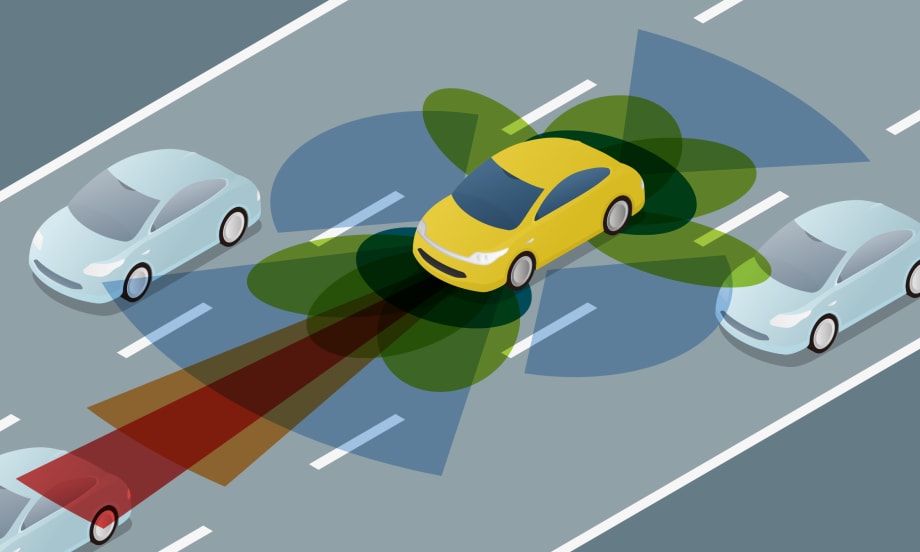
Automotive accident litigation cases will start to diminish in the future with the implementation of autonomous vehicles as there will likely end up being fewer accidents.
Photo courtesy of Getty Images.
Recent technological advancements are disrupting numerous industries all over the world, and the auto industry is no exception. This was the main topic for discussion at the opening keynote speech presented by Bob White, president of ARI, at the International Automotive Remarketers Alliance (IARA) 2018 Spring Roundtable in Las Vegas held on March 6.
White covered how many facets of the automotive industry, including wholesale remarketing, are currently reacting to big technological advancements. This included discussing the continued interest in ride-hailing services, and the development of autonomous vehicles.
A key idea that served as a foundation for much of the keynote was the concept that companies that are unable to effectively address disruption in the industry will find themselves struggling to survive in an ever-changing world.
“I think the greatest danger we all face today is not in not knowing what to do and it’s not in doing the wrong things, necessarily, it’s in doing nothing at all.” White said during his keynote speech. “I think in this day and age if you’re viewed as an organization, a business, or an individual who’s not going to change and adapt, I think you’re going to be viewed as someone who’s not relevant to the future.”
The ideas for this, he said, were based heavily on Holman Enterprises, the parent company of ARI, reviewing its business strategy in 2017 and realizing that adapting to disruptive forces is integral to success in the industry.
“Our clients’ expectations and demands aren’t getting any less,” he said. “They expect more of us. They want us to do more. And there have always been new players, new programs, new technology, and new things coming at us within our business lives, so that’s not new.”
Impacts of Disruption
White addressed some of the more current disruption trends, such as ride hailing, that have been top of mind for those with close ties to the automotive industry, including its effects the trends have had on auto manufacturers.
“They’re being disrupted, and they’re attempting to disrupt. They have lots of other companies enter their operating space, mostly technology companies,” he said. “Most OEMs have now opened facilities and offices out in Silicon Valley to get closer to that entrepreneurial thinking.”
Other ways OEMs are impacted by disruption in the industry is with the push to create and launch more alt-fuel vehicles, he added.
“Competition or regulations have pushed them deeper into alternative-fuel products,” said White. “Mostly today that’s in hybrid and plug-in electric vehicles. That’s not going away anytime soon.”
He also noted the significance of autonomous vehicle production in the OEM space.
“The companies in and out of the automotive space are investing billions of dollars to come to market with fully autonomous vehicles,” he said. “Think about the technology advancements that are already there. There are lots of advancements in cars being sold today that will get us to that fully autonomous state.”
Meanwhile, in the wholesale remarketing industry, White said ARI has observed trends that about half of auction sales occur without people physically being there, noticing the trend of more interest being placed in online auctions.
“In the not-too-distant past, pretty much every vehicle sold through an auction was sold to somebody who was physically at the auction,” he said. “They were there that day, or they came in, looked at the inventory, walked around it, kicked the tires, tried to make sure they get the right price. Then they would bid on it. They would purchase the vehicle that day physically at the auction.”
He also noted that a shift toward data analytics, as well as the continued use of data to look at trends, will have a big impact on remarketing as well.
“So data can be used to buy inventories and get better ideas with predictive residual values for vehicles we’re trying to sell today, and vehicles we want to sell two years from now,” said White. “We can use that data to help us do that. We can also do it to help target motivated buyers.”
Noting that some may be hesitant to embrace new data and technology, he stressed to remarketers in attendance to not be the ones left behind.
“There may be many of you that are driving that disruption and change,” he said. “If you are, kudos to you, and if it’s not you, make sure you’re up to speed on it because you’re going to have to react to it.”
Where Disruption Will Affect Other Industries
Disruption in the automotive industry will also have a major effect on many businesses with close affiliation to the automotive space, White noted.
For example, living in a world where ride-hailing services and autonomous vehicles make a majority of how people commute would mean the auto insurance industry could take a big hit due to the potential drop in accident claims.

Bob White, president of ARI, discusses disruption in the automotive industry at the most recent International Automotive Remarketers Alliance (IARA) Spring Roundtable in Las Vegas.
Photo by Andy Lundin
“Automobile insurance in the U.S. alone drives over $220 billion in revenue annually to insurance companies,” said White. “And over $22 billion of that drops straight to the bottom line. It’s the most profitable line of insurance that insurance companies have. If people no longer own their own cars or there are no longer accidents, what happens to that part of their business? How do they react to it? What happens to insurance companies?”
Beyond insurance claims, White mentioned how automotive accident litigation cases will diminish as there will likely end up being fewer accidents. This will also affect the health care industry, which sees much of its revenue coming from automobile accidents.
“There are four million emergency room visits every year resulting from automobile accidents,” he said. “There won’t be as many doctors, as many nurses, or as many hospitals.”
Public and private vehicle parking will also change dramatically as ride hailing becomes increasingly ubiquitous and autonomous vehicles begin to rollout to the public, thus eliminating the need for drivers having to waste time searching for a place to safely leave their vehicles. Due to this, entirely new issues may come in fruition, such as how can parking spaces be repurposed if fewer people are using them.
“Parking garages, parking lots, driveways, we have all that real estate to accommodate a vehicle sitting 95% of the time,” he said. “Well, if we don’t own as many vehicles or any vehicles and if the autonomous cars are driving around, and they are not parked, how do we repurpose all that real estate?”
The History of Change
White likened all of these substantial technological changes in the automotive industry with the recent ubiquity of the smartphone in the 21st Century and how that has impacted everyone.
“The way people manage their personal lives and the way they communicate their expectations of how things happen personally has translated into how they want to do business. So that’s something we all need to be aware of and we need to be working on,” said White.
Comparing to another substantial disruptive moment in world history, White addressed the early 20th Century shift of people riding on horses and carriages to the adoption of cars as the primary mode of transportation.
“The degree of change, the scale of change, and the speed of change is something I don’t know if we’ve ever experienced in our working lives. A lot of this is driven by technology. It’s really hard to escape the fact that technology is everywhere, so we’re choosing to embrace it instead,” said White.
More Operations
A buyer's guide to fleet management software in 2027
Buying fleet management software in 2027 means looking beyond features and price. As fleet operations, technology and expectations evolve, this guide explores what today’s fleet professionals should consider when choosing a system that can deliver value now and adapt to what comes next.
Read More →
What Will Shape the Next Era of Fleet Management?
EVs, AI, and autonomous vehicles are reshaping fleet management. Discover what’s ahead—and how fleet leaders can prepare for the next era.
Read More →
How Fleets Can Recruit and Train Veterans for Technician Roles
Here's how the technician shortage has affected uptime for fleets, and what to do about it.
Read More →

Avis Budget Group Deploys Neology Toll Management Technology Across Major Brands
Neology’s neoFleet platform will manage toll transactions and toll-authority operations for vehicles across Avis, Budget, Payless, Budget Truck and Zipcar.
Read More →
Fleet Personal-Use Charges Edge Higher in 2026
Nearly eight in 10 surveyed fleets allow personal use of company vehicles, while just over half of respondents report charging employees for the privilege.
Read More →
The Future of Fleet + What’s Changing Right Now | AF News Recap
Could developments overseas offer a preview of what’s coming for U.S. fleets? This week, we’re looking at the future of AI, autonomy, and electrification, plus Ford Pro’s new certified pre-owned program, smarter vehicle offboarding, and a new way for fleets to manage toll expenses.
Read More →
How to Handle Vehicle Offboarding
What do fleet managers need to do when a driver leaves?
Read More →
Fleet Manager’s Ultimate Playbook: Navigating the New Standard in OEM Connectivity
Rising operating costs, driver safety concerns, and unplanned downtime are putting unprecedented pressure on modern fleets. Discover how fleet managers use embedded OEM connectivity and real-time vehicle data to cut TCO, prevent downtime, and protect drivers without aftermarket telematics hardware.
Read More →
U.S. Bank Adds Verra Mobility Toll Management to Voyager Fleet Platform
The integration allows U.S. Bank Voyager fleet customers to manage toll payments and violations alongside fuel, EV charging and maintenance expenses.
Read More →
ADAS Prevents Crashes. But Repairs Cost More | AF News Recap
ADAS-equipped vehicles may crash less often, but they can cost more when they do. This week, we’re breaking down what that tradeoff means for fleets, plus Subaru’s first Forester Wilderness Hybrid, Nissan’s new e-POWER Rogue, and why Calstart has become Catalyst Mobility.
Read More →