





Related Video: 7 Acquisition Strategies to Enhance 2022 Product Availability
How Are Supply Chain Disruptions Affecting Car Haulers?
The auto transport sector requires specialized trucks and training. In times of surges and droughts of production, driver retention becomes an even bigger issue.
September 9, 2021
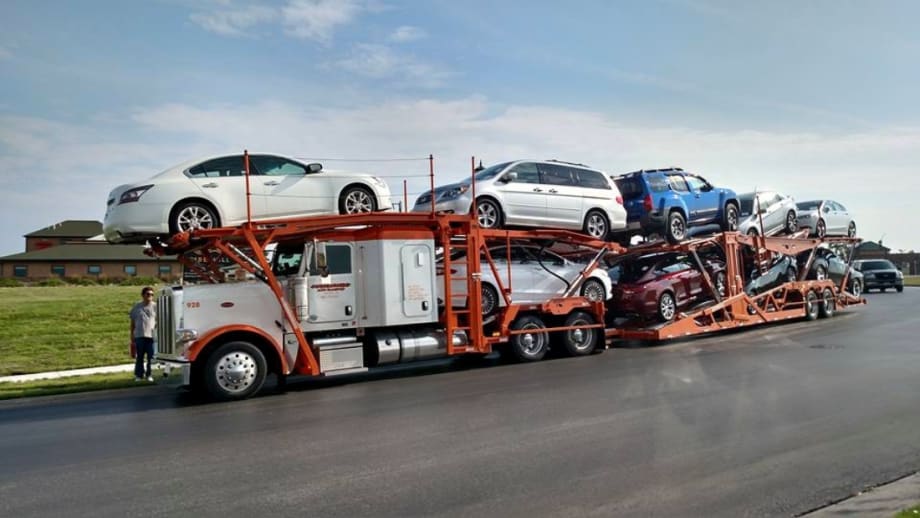
Auto transporters are trying to maintain a steady volume of work for their drivers to keep them from seeking employment elsewhere.
Photo courtesy of Nationwide Auto Transport
2 min to read
The effects of the supply chain disruptions in the automotive industry are being felt in all sectors, including auto transport. “The largest pressure we face is retaining drivers through surges and droughts of production,” says Joe Bercari, vice president and general manager of Mid-Western Car Carriers.
Bercari acknowledges the shortage of professional drivers throughout trucking. “But then when you contemplate how specialized car hauling is — and the amount of time it takes to train the craft — losing experienced human capital can be a devastating problem with no fast path to recovery,” he says.
Bercari is seeing competing industries employ aggressive tactics to attract drivers into their markets, often promising stability and substantial bonuses. “Whether those promises are kept is another discussion, but the result is our industry stands to lose talent faster than it is equipped to replace it,” he says.
Bercari says with the recent dip in volume the company had to work harder to find alternative types of traffic to keep its drivers busy, “and we still lost drivers.”
Julie Delp, president of Nationwide Auto Transport and Nationwide Auto Logistics, sees a direct link between the semiconductor chip shortage, volume forecasts, inventory management, and the ebb-and-flow of freight stability, along with dealer satisfaction and available inventory for the public.
To Bercari’s point, “The direct impact to our operations is the ability to maintain a steady volume of work to keep our drivers busy and engaged in a consistent way,” Delp says, adding that many drivers have left the industry to seek out more stable employment.
“The constant stress placed on drivers of not knowing when or if they’ll have work for the week is pushing them to seek employment elsewhere,” she says. “Families want security and simply cannot make it on a ‘maybe.’”
Delp adds that transporters are being forced to reduce their truck fleets to save on insurance costs, debt service, and interest. “If you don’t have a driver for the truck, you can’t absorb those holding costs for long,” she says.
Specialized transportation providers, particularly those engaging strictly in auto transport, feel the effects to replace drivers that left more severely. “Our trucks are as specialized as our drivers are,” she says. “Many companies simply cannot forecast their fleet need projections for the coming year or years, which will impact freight movement once the chip shortage is addressed.”
Delp says that these issues could have a direct effect on most companies’ abilities to perform to the OEM’s standards. Fewer drivers and trucks on the road mean lower volumes of freight being moved for on-time deliveries. “I suspect that this will have long-term effects on our industry,” she says.
Subscribe to Our Newsletter
More Operations

Sponsored•October 14, 2026
A buyer's guide to fleet management software in 2027
Buying fleet management software in 2027 means looking beyond features and price. As fleet operations, technology and expectations evolve, this guide explores what today’s fleet professionals should consider when choosing a system that can deliver value now and adapt to what comes next.
Read More →
What Will Shape the Next Era of Fleet Management?
EVs, AI, and autonomous vehicles are reshaping fleet management. Discover what’s ahead—and how fleet leaders can prepare for the next era.
Read More →
How Fleets Can Recruit and Train Veterans for Technician Roles
Here's how the technician shortage has affected uptime for fleets, and what to do about it.
Read More →

Avis Budget Group Deploys Neology Toll Management Technology Across Major Brands
Neology’s neoFleet platform will manage toll transactions and toll-authority operations for vehicles across Avis, Budget, Payless, Budget Truck and Zipcar.
Read More →
Fleet Personal-Use Charges Edge Higher in 2026
Nearly eight in 10 surveyed fleets allow personal use of company vehicles, while just over half of respondents report charging employees for the privilege.
Read More →
The Future of Fleet + What’s Changing Right Now | AF News Recap
Could developments overseas offer a preview of what’s coming for U.S. fleets? This week, we’re looking at the future of AI, autonomy, and electrification, plus Ford Pro’s new certified pre-owned program, smarter vehicle offboarding, and a new way for fleets to manage toll expenses.
Read More →
How to Handle Vehicle Offboarding
What do fleet managers need to do when a driver leaves?
Read More →
Sponsored•October 1, 2026
Fleet Manager’s Ultimate Playbook: Navigating the New Standard in OEM Connectivity
Rising operating costs, driver safety concerns, and unplanned downtime are putting unprecedented pressure on modern fleets. Discover how fleet managers use embedded OEM connectivity and real-time vehicle data to cut TCO, prevent downtime, and protect drivers without aftermarket telematics hardware.
Read More →
U.S. Bank Adds Verra Mobility Toll Management to Voyager Fleet Platform
The integration allows U.S. Bank Voyager fleet customers to manage toll payments and violations alongside fuel, EV charging and maintenance expenses.
Read More →
ADAS Prevents Crashes. But Repairs Cost More | AF News Recap
ADAS-equipped vehicles may crash less often, but they can cost more when they do. This week, we’re breaking down what that tradeoff means for fleets, plus Subaru’s first Forester Wilderness Hybrid, Nissan’s new e-POWER Rogue, and why Calstart has become Catalyst Mobility.
Read More →