First Interview: New President of Isuzu Commercial Truck of America
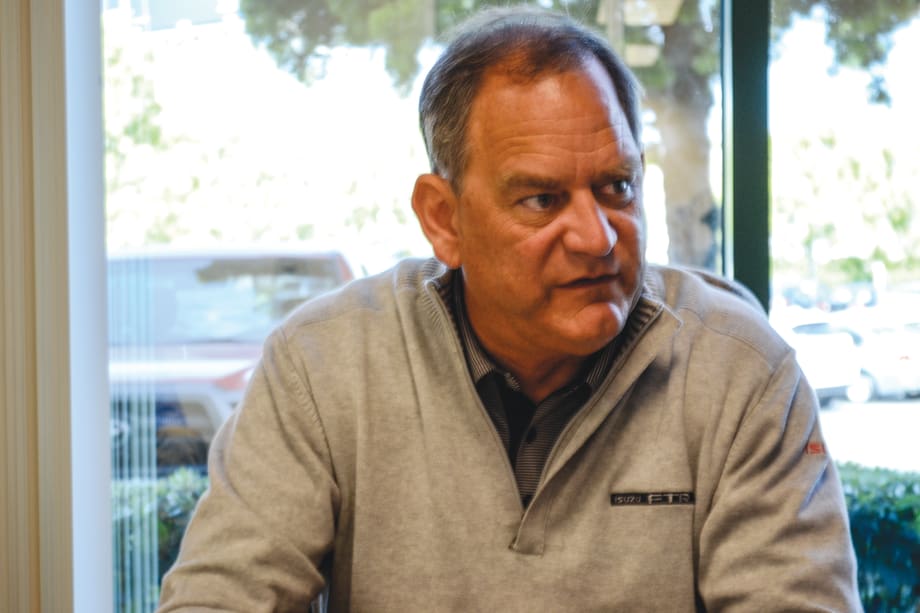
A 29-year veteran, Shaun Skinner was promoted to president of Isuzu Commercial Truck of America from his role of executive vice president and general manager.
Isuzu Commercial Truck of America Inc. (ICTA) promoted Shaun Skinner to president, effective April 1, 2016. Previously, he was executive vice president and general manager. Skinner replaces Hisao Sasaki, who returned to parent firm Isuzu Motors Limited in Japan.
Ad Loading...
Shortly after his promotion, Business Fleet’s sister publication, Work Truck, had an opportunity to interview Skinner at the company’s U.S. headquarters.
Ad Loading...
WT: Will your role change with the new title?
SKINNER: It is evolving, but it will change. This is less about me, and more about a change in direction for the company to get closer to the marketplace.
There are three core areas we deal with as an organization:
First, we have our customers and dealers. Our dealers are the closest point of contact to our customers. There are about 300 ICTA dealers.
Second, we have the ICTA organization.
Ad Loading...
Third, we have our parent company, which is Isuzu Motors, Ltd. (IML), the majority stakeholder in Isuzu Commercial Truck of America. IML develops the products we sell in this marketplace.
Typically, the ICTA president’s role has focused on the relationship with our parent company. The president delegated to the staff much of the responsibility to build the relationships between ICTA and its customers and dealers.
With advances in technologies, new government regulations, and the complexities of our vehicles, ICTA will need to move closer to our dealers and, by virtue of that, closer to our customers. The closer we get to our dealers and customers, the better feedback we can give to IML, our parent company, on the product needed for this market. As a result, ICTA will become more market driven and less product driven.
WT: How will you bring Isuzu Commercial Truck of America closer to your dealers and customers? What will you do differently than what you are currently doing today?
SKINNER: That’s a really good question, but it’s too early in the process to offer a definitive answer. There are a number of things behind the scenes we’re doing based on feedback from dealers and customers.
Ad Loading...
We are talking to our customers to better determine their product needs. Let me give you an example of how we’re heading in that direction: The 2018 FTR is our all-new entry in the Class 6 medium-duty truck segment, and it will go into production in the U.S. in the middle of 2017. A lot of the design work on the FTR was done at the Isuzu Technical Center of America in Plymouth, Mich.
Many of the components we’re going to use on the FTR are sourced in the U.S. and the final point of assembly will also be in the U.S. at Spartan Motors in Charlotte, Mich. This is the same plant where we assemble the gasoline-powered NPR and NPR-HD trucks. The cab is Japanese built and will come in the form of knock-down kits. A lot of the things we did for the truck are unique to this market.
WT: How do you see the U.S. market changing in the future?
SKINNER: The population in the U.S. is growing and isn’t going to be moving to the suburbs as it did historically. They’re going to be moving back to metropolitan areas, with populations of a million people or more. You are already seeing this renaissance taking place in cities, such as Philadelphia.
Our belief is we’re going to need larger delivery trucks for urban environments. The FTR truck was a byproduct of where we believe U.S. markets are going based on listening to our customers and studying the market.
Ad Loading...
WT: How else do you see your customer product needs changing?
SKINNER: Again, another good question, but a little more difficult because there are subtleties. When the price of gasoline was high, and a barrel of oil was more than $100, I would have certainly thought we would see more growth in alternative fuels.
But, to our surprise, the price of a barrel of oil dramatically dropped. The price of a gallon of gasoline went way down, and some of the developments we expected to see in alternative fuels were diminished. So, sometimes, your best logic ends up being temporarily delayed or your path is slightly corrected because of something you didn’t foresee happening. I believe there’s going to be changes. But, I don’t want to tip our hand too much as to things we’re looking at by identifying all of those changes.
Instead, I’m going to flip your question around and say the single biggest challenge we will be regulatory issues; in particular, complying with greenhouse gas (GHG) emissions standards.
Safety and emissions are going to play a huge role in the actions we take to ensure we come to market with products that not only meet what the marketplace needs but exceed them.
Ad Loading...
I envision we’re going to see more smaller-displacement engines. The car industry is a bellwether for us, since they typically adapt to technologies pretty quickly. We have to go to smaller displacement engines from an emissions standpoint, and the car industry has already moved very quickly in that direction.
This trend is emerging because customers are demanding lower cost of ownership and lower initial acquisition cost. In addition to fuel economy, smaller displacement engines are important to meet Phase 1 of the greenhouse gas emission standards and, later, Phase 2 of the greenhouse gas emission standards we’re going to be dealing with in the 2020-2021 timeframe.
We’re going to have to find ways to make sure we get more performance out of smaller engines. The market will require it in more than one way. It will require it from customers needing lower cost of ownership, but also complying with government regulations requiring lower emissions. Again, I look to the car market because smaller engine sizes, which in the past were deemed unacceptable, are now commonplace.
When we launch the FTR, it is a Class 6 equipped with a four-cylinder engine. Freightliner also announced it’s coming out with a four cylinder. This is where the future of the marketplace is going.
Isuzu Debuts Class 6 2018 FTR
Isuzu Commercial Truck of America unveiled the 2018 Isuzu FTR, the company’s all-new entry in the Class 6 medium-duty truck segment at the 2016 Work Truck Show in Indianapolis.
The FTR will be powered by Isuzu’s 4HK1-TC 5.2L turbocharged four-cylinder diesel engine — a first in the segment. The powerplant will be mated to an Allison 2000 Series automatic transmission.
The four-cylinder engine carries a B10 durability of 310,000 miles — meaning that 90% of engines should reach that mileage before requiring an overhaul.
Flexibility and Capability
As with all Isuzu trucks, the FTR will feature a low-cab-forward design that increases visibility and maneuverability — especially important in the crowded city centers where the FTR is expected to be in greatest demand. The truck will have a tight turning radius with a 50-degree wheel cut.
The FTR will feature eight wheelbase configurations to accommodate bodies from 16 to 30 feet, allowing for a variety of body applications. It was designed with a clean back-of-cab to provide more space for body applications compared to the previous F-Series truck.
The 2018 FTR features a dock-height stance, which may make it even more popular than the company’s other medium-duty trucks.
“This truck represents our vision of the future of the medium-duty truck industry,” said Skinner. “As the adult population grows and as people move to urban centers, there will be an increasing need for delivery trucks that can carry a lot of cargo, but, at the same time, be fuel efficient, maneuverable, environmentally friendly, and offers a low cost of ownership.”
Holman is bringing its Mexican fleet management operation fully under its own brand after more than 30 years as a joint venture. The change gives multinational fleet customers a single Holman operation across the U.S., Canada, and Mexico.
Part Two: Commercial auto remains one of the most challenging and costly lines of coverage for fleet operators and insurers alike. Continue learning more about how to effectively address these issues from Onur Aksan, Enterprise Business Development Executive, Geotab
Commercial auto remains one of the most challenging and costly lines of coverage for fleet operators and insurers alike. Learn more about how to effectively address these issues from Onur Aksan, Enterprise Business Development Executive, Geotab.
Fleet leaders are under pressure to reduce costs, adapt to economic uncertainty, and make smarter decisions. See how peers across North America are responding with real data, proven strategies, and forward-looking insights. Download the 2026 Market Pulse Report to benchmark your strategy and uncover where you can gain an edge.
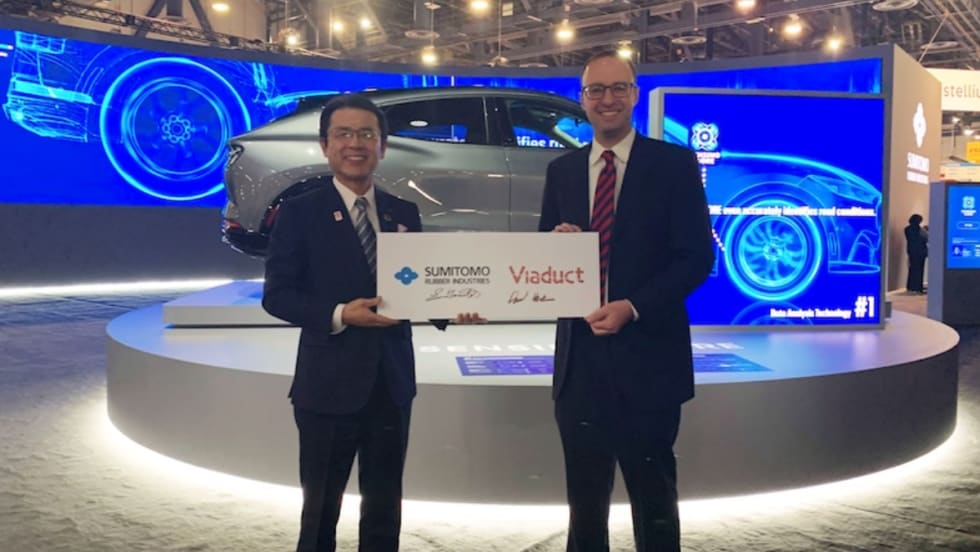
Viaduct will join Sumitomo as an independent subsidiary. Partnership strengthens global reach and accelerates AI-driven innovation for fleets and manufacturing.