




Equipping Vehicles to Operate Through Winter
Service fleets share their insights on how to convert vehicles for winter as well as how they deal with the challenges of cold weather and harsh roads.

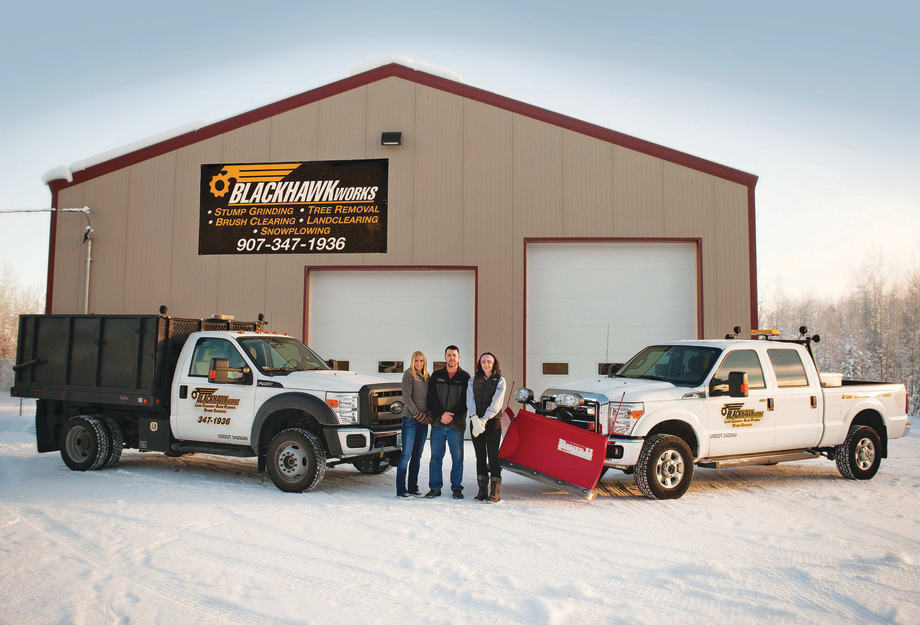
To continue working through the Alaskan winter, BlackHawk Works, a tree removal company, adds snow plows to three of its trucks. Additionally, BlackHawk Works hauls a skid steer with the F-550 and puts a sander in the F-450’s bed.
To continue working through the Alaskan winter, BlackHawk Works, a tree removal company, adds snow plows to three of its trucks. Additionally, BlackHawk Works hauls a skid steer with the F-550 and puts a sander in the F-450’s bed.
In some parts of the country, many businesses shut down upon the arrival of the snowy days of winter. For others, it’s merely the time to switch business gears.
Business Fleet talked to service fleets to learn more about how they prep and equip their vehicles as well as how they deal with the challenges — including maintenance — of the winter season.
To continue working through the Alaskan winter, Derek Broderick’s tree removal company adds snow plows to three of its trucks.
“The weather here in Alaska dictates a lot of your working season,” says Broderick, owner of BlackHawk Works in North Pole, Alaska. “Everyone is frozen in time in the winter and then everyone comes out in the construction season during the summer.”
After he retired from the military, Broderick started his tree removal company with a Ford F-450 truck and a snow plow. He says his fleet contact at the local Ford dealership was instrumental in advising him on how to prep his trucks for harsh winter conditions.
Broderick would use the truck for snow plowing in the winter and for stump grinding and tree removal during the rest of the year. Currently, he attaches plows to his F-250, F-450, and F-550 trucks in the winter. Additionally, he hauls a skid steer with the F-550 and puts a sander in the F-450’s bed.
Michigan-based Summit Landscape Management continues to run a majority of its trucks during the winter. Out of its 55 vehicles, the landscape fleet only has eight to 10 vehicles rest in the winter, says Jeff Hoeksema, production manager.
“The trucks cost so much money that we try to use them year-round,” says Hoeksema. “There are certain vehicles that we just can’t use in the winter, but we try to use what we can.”
Prepping for Winter Work
Before the snow hits, Summit Landscape’s in-house mechanics check the oil and fluids, the brakes, the truck’s front end and rear end, and the frames to make sure there are no cracks.
“In the fall, I start rotating the trucks into the shop for a day or two, allowing the mechanics to go through the entire vehicle,” says Hoeksema. “I also have our mechanics look at the plow systems to make sure they are working properly and there is no visible damage.”
When he purchased his vehicles, Broderick opted for Ford’s plow prep package, which coordinates the snowplow’s interaction with the vehicle seamlessly and works with the truck’s warranty.
Broderick wanted a contractor-grade, steel plow that would hold up in extreme temperatures and could be installed easily. Ultimately, he went with a Boss plow with V-blades. “The V-blades help cut into the snow while a straight blade tends to just push [snow] forward.”
To prep his plows, Broderick installs Arctic-grade hoses and makes sure to change out the fluid, which is designed for cold temperatures as well.
Conversion Challenges
To make the conversion process smoother, Summit Landscape leaves the plow’s wiring and hookups on each truck year-round. Then once the snow starts falling, they can add the front and back plows to the hookups.
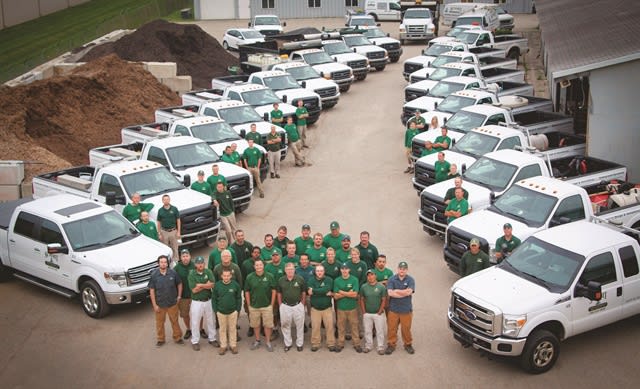
During the winter, Summit Landscape Management’s fleet equips a majority of its vehicles with plows and hauls salters and skid steers. The company has one full-time mechanic working nights at the office while its crew is out plowing and salting the roads.
For Hoeksema, the biggest challenge of converting his trucks is the uncertainty of when the snow will start; it comes at different times each year.
“Our landscapers try to work until Thanksgiving, but if it doesn’t snow, they will go farther into the season, which complicates the process for getting the trucks ready for snowfall,” says Hoeksema.
For example, a landscape crew will be using a dump truck and skid steer on a landscape project. But if there is snow coming the next day, Hoeksema will have to get that skid steer to a job site to clear snow and will need to add plows and a salter to the dump truck.
During the winter, Hoeksema also faces the issue of rotating trucks for different tasks. If a customer needs snow hauled off a job site, the dump trucks that are being used for salting now need to get ready for hauling snow. But to haul snow, the salter needs to be taken off the dump truck, he says.
To be ready at all times, Broderick leaves the plows on his trucks all winter long. That way, he doesn’t have to worry about trying to hook up the plow when he gets a customer call. “Hooking up the wires on the plow can be difficult when it’s really cold out,” says Broderick.
During the winter, the conversion process for Sonoma County’s fleet of dump trucks includes adding sand spreaders to the back and plows to the front.
“We do have snow and ice occasionally,” says David Worthington, fleet manager of Sonoma County, Calif. “The push/plow blades can also push dirt off the roads from mud slides and debris associated with heavy rains.”
Worthington’s team employs a master welder and fabricator, who designed and built metal covers to sit over the tops of the dump truck bodies. This allows the enclosed space to be used for collecting wood and brush chipper wood waste. “It allows us to not have a dedicated truck for just a single purpose in the fleet,” Worthington says.
Maintaining Vehicles
Winter’s cold temperatures and harsh conditions can lead to more maintenance issues for vehicles and equipment.
During winter, Hoeksema has one full-time mechanic working nights at the office while his crew is out plowing and salting the roads. Then during the day, the other mechanic repairs any vehicles or equipment from the previous night.
“My mechanics work every day to keep up with the maintenance through the whole season,” says Hoeksema. “Having in-house mechanics saves us money and has a quicker turnaround compared to sending the vehicles out to an off-site repair shop.”
According to Hoeksema, the top weather-related damage comes from road salt, which causes vehicle rust. To help alleviate rusting, Summit Landscape adds a rubberized undercoating to the trucks and washes them regularly. The aluminum bodies on the new Ford trucks have the added benefit of greater protection against rust, says Hoeksema.
Wet, heavy snow also leads to maintenance issues. Hoeksema advises his drivers to take it easy when plowing; hammering into snow piles can damage the plow and the front end of the truck.
In preparation for on-the-road maintenance issues, Hoeksema keeps spare parts for the plows in his trucks.
Broderick uses engine block heaters to keep his trucks warm. He also keeps extra parts, fluids, and hoses on hand. An extra strap came in handy when a plow broke, which kept the plow off the road and allowed him to get the truck in for servicing, he says.
Wintertime is Downtime
For some service fleets, finding new work in a different season isn’t the right course. Jim Zylstra, owner of Tuff Turf Molebusters, a pest control and lawn fertilization company based in West Michigan, says he wouldn’t consider adding plows to continue operating in the winter.
Zylstra references the extra allocation for liability insurance, as well as having to convert his current two-wheel-drive trucks to four-wheel drive or buy new ones. “Also, all salt, all night long, is really hard on the trucks,” he says. “You shorten the life of the trucks; you can’t clean them as easily in the winter. And the driver doesn’t want to clean the truck. They want to park it, go home, and sleep.”
Typical for seasonal professions, Tuff Turf lays off most of its field technicians in the winter, keeping only a few to stay on as indoor vehicle mechanics. At BlackHawk Works, Broderick’s team of six scales down to two, including his full-time mechanic.
“During our off-season in the winter, we do all the major maintenance work on our vehicles, such as rewiring taillights, putting in new hoses, replacing brake pads, and rewiring tanks,” Zylstra says.
The extra downtime in the winter means mechanics can do additional — and more extensive — maintenance processes, including pulling off the flatbed with a forklift to check the frames for rust. Similar to Summit’s process, the mechanics clean off rust and protect with a rubberized undercoating spray, according to Zylstra.
Originally posted on Work Truck Online
More Global Fleet

GeoFencing Adds to Your Truck Security Arsenal
Geofencing is a familiar fleet tool today, but its early adoption marked a major shift in vehicle tracking, route monitoring, and the debate over employee privacy.
Read More →
Holman Takes Full Ownership of ARIZA in Mexico
Holman is bringing its Mexican fleet management operation fully under its own brand after more than 30 years as a joint venture. The change gives multinational fleet customers a single Holman operation across the U.S., Canada, and Mexico.
Read More →
5 Tire Maintenance Tips to Help Prevent Work Truck Downtime
Regular tire checks can do more than extend tread life. These five maintenance practices can help work truck fleets catch problems early, reduce costs, and prevent downtime.
Read More →

Proven Ways to Reduce Work Truck Downtime
The age-old problem of downtime will always be a reality, but with new strategies at hand, fleets have more ways to keep trucks on the road longer.
Read More →


Cameras, Safety and Insurance: From Reactive Claims to Real-Time Prevention (Part 2 of 2)
Part Two: Commercial auto remains one of the most challenging and costly lines of coverage for fleet operators and insurers alike. Continue learning more about how to effectively address these issues from Onur Aksan, Enterprise Business Development Executive, Geotab
Read More →
Cameras, Safety and Insurance: From Reactive Claims to Real-time Prevention
Commercial auto remains one of the most challenging and costly lines of coverage for fleet operators and insurers alike. Learn more about how to effectively address these issues from Onur Aksan, Enterprise Business Development Executive, Geotab.
Read More →
Fleet Costs Are Rising: Here’s How Leaders Are Responding
Fleet leaders are under pressure to reduce costs, adapt to economic uncertainty, and make smarter decisions. See how peers across North America are responding with real data, proven strategies, and forward-looking insights. Download the 2026 Market Pulse Report to benchmark your strategy and uncover where you can gain an edge.
Read More →
Enterprise Fleet Management Surpasses 900,000 Vehicles in U.S. & Canada
Enterprise Mobility connects with mobility solutions around the globe
Read More →