




Editor's Page
There is an anti-trust case going on in California that should be of vital concern to fleet operators. It is the federal government’s suit against General Motors Corp. and its Chevrolet division.
There is an anti-trust case going on in California that should be of vital concern to fleet operators. It is the federal government's suit against General Motors Corp. and its Chevrolet division.
The government is trying to prove that GM, three Southern California dealer associations and four top sales officials of Chevrolet conspired illegally to bring pressure on Chevrolet dealers to stop them from selling cars to discount houses. New car discounting has become a big business in California with discount operators purchasing their cars from new car dealers and reselling them to the public. Most auto executives believe that new car discounting is not only dangerous to the auto industry's dealer network since it upsets the established price structure but to the public as well since discounters do not sell service or maintenance. And, as fleet operators well know, service is vital in the purchase of a new car. In fact, not many durable goods can be successfully sold to the public unless they are supported by a network of servicing dealers.
The fleet operators interest in the Chevrolet anti-trust suit is rather obvious. In the first place, the suit, although it is denied in the usual bureaucratic double talk, is a direct attack on the heart of the American system of free enterprise - the franchise. If government is successful in prosecution of Chevrolet, it would, spell the beginning of the end of the franchise system. Manufacturers - and for that matter renting and leasing operators and other sales organizations - need some sort of control over the people they license or franchise to handle their products. Without such control, the gyp artists would run rampant.
As a General Motors attorney told the court: "We are not a public utility and we do not have to sell our cars to everyone. We do not choose to have our dealers select any method of merchandising without our approval." This is nothing but good business philosophy!
I feel that a government victory in the Chevrolet case would result in a total breakdown in the automotive distribution system - a system that has been nutured and built up over a period of 50 years. The success of the auto industry is largely due to the fact that the auto companies have stronger dealer networks who provide strong service support and who prosper in good auto sales years and suffer in bad years. Can you imagine the chaos that would develop if there were no franchise system in the auto industry? The market would be swamped with fast buck operators during boom sales years and abandoned just as quickly in bad years. And the public would suffer.
Most fleet purchases and disposal programs are built around the franchised auto dealer. They buy their new cars from him and sell their used cars to him. In many cases, fleet operators rely upon the new car dealer for maintenance and service. They know they can depend upon the franchised car dealer for satisfaction in warranty recognition where defective parts or poor workmanship are concerned. And fleet operators are secure with the knowledge that the franchisee new car dealer has both the parts and equipment to repair and service his cars. The problem is even more acute for fleets with cars scattered about in remote areas across the country. These fleets are entirely dependent on the franchised new car dealer for service. Without the new car dealer, the fleet manager with a scattered fleet would be in serious trouble.
Unfortunately, the fleet administrator can't do much about the California suit except to hope for a favorable outcome.
More Operations

Why Reactive Fleet Management Is Becoming Too Expensive to Sustain
Research highlights a growing need for proactive management strategies to address rising costs in fleet operations effectively.
Read More →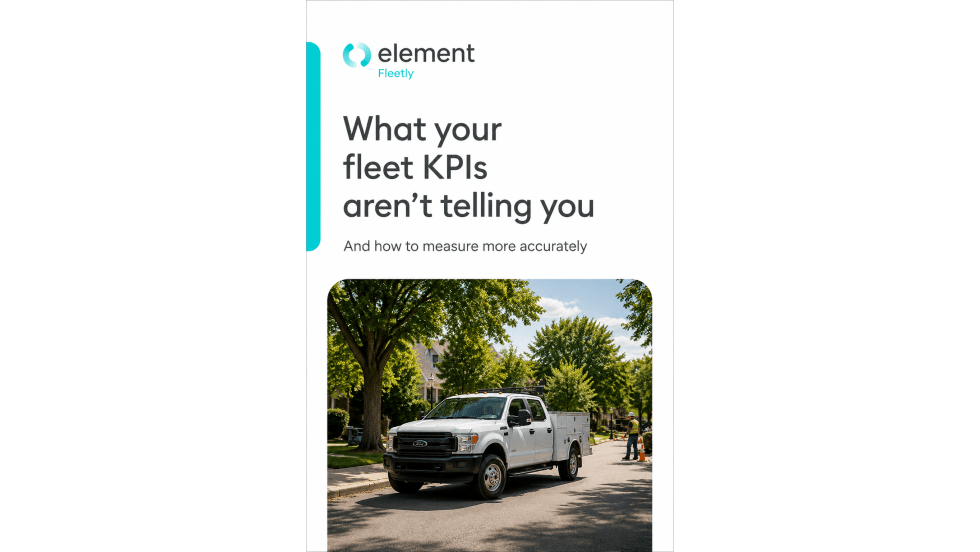
What Your Fleet KPIs Aren’t Telling You
Tracking fleet metrics is only useful when the data leads to better decisions. This guide helps fleet leaders assess cost, utilization, and downtime more accurately, identify performance gaps, and prioritize the actions that can improve operational results.
Read More →
Hidden in Plain Sight: Fleet Compliance Risks
Fleet compliance isn't just about having policies — it's about consistently enforcing them. This practical guide reveals six hidden compliance risks common in public sector and shared fleet operations and outlines proven strategies to improve visibility, accountability, and audit readiness
Read More →

Turning Fleet Payment Data into Executive Insights
Does data alone drive results in operations?
Read More →
Automotive Fleet Opens 2026 Personal Use Survey for Commercial Fleet Managers
Commercial and corporate fleet managers are invited to share how their organizations handle company vehicle personal-use policies, charges, and driver eligibility.
Read More →
Gary Van Orden Retires After Nearly Four Decades in Commercial Fleet
From answering customer calls at Ford Motor Company to leading fleet sales across multiple OEMs and a fleet management company, Gary Van Orden's career reflects nearly four decades of leadership in commercial fleet.
Read More →
How Stellantis Plans to Get Ahead of Fleet Downtime
Vehicle acquisition may grab the headlines, but fleet uptime increasingly determines operating success. Darren Bradshaw of Mopar North America gives the details.
Read More →
Hyundai Releases 2027 Commercial Program Incentives
The 2027 Model Year "Fleet Street Incentives" are available to commercial and government fleets.
Read More →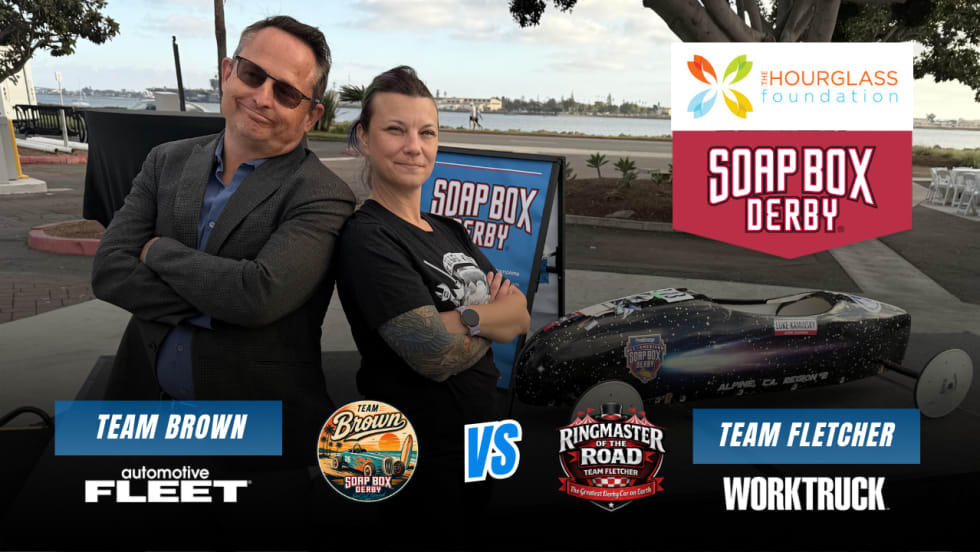
It's All Downhill from Here! Fleet Industry Raises $22,000 for Skilled Trades Scholarships
Work Truck’s Lauren Fletcher and Automotive Fleet’s Chris Brown turned a friendly racing rivalry into $22,000 for automotive technology and skilled trades scholarships.
Read More →
The Top 300 Commercial Fleets
The Top 300 Commercial Fleets: See the List
Read More →