




Ed Bobit's Publisher's Page
I would like to doff my hat to both the NAFA and AFLA convention committees. Having just returned from a week in New York, attending meetings, discussing current crises, listening to leaders, participating in the Fleet Fair, enjoying hospitality suites and just plain talking with literally hundreds of our readers, makes me feel that our industry is following a wise course.

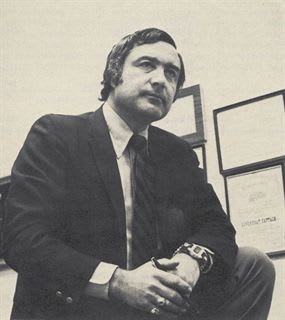
"I would have all the professors in colleges, all the teachers in schools of every kind, including those in Sunday schools, agree that they would teach only what they know, that they would not palm off guesses as demonstrated truths." -Robert G. Ingersoll: What I want for Christmas.
Leading off with a bit of potpourri for this month, I would like to doff my hat to both the NAFA and AFLA convention committees. Having just returned from a week in New York, attending meetings, discussing current crises, listening to leaders, participating in the Fleet Fair, enjoying hospitality suites and just plain talking with literally hundreds of our readers, makes me feel that our industry is following a wise course.
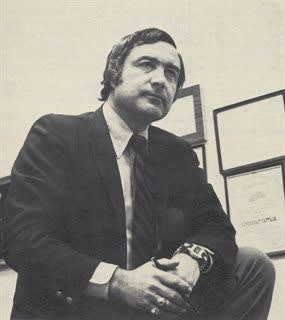
For the hundreds that attended as I did, it was an extreme help toward understanding fundamental questions of the day; and it provided the opportunity to obtain the solutions. The panels, individual speakers and seminars were well planned, let by experts and concisely executed.
My only regret is that the thousands more who were not there have missed another golden opportunity to take a step toward professionalism. They and their management are the losers in every way. One important item that came out of my observation and discussions reality perplexes me; and it should perplex the industry. There were obviously two directly opposing views extended. John Sawhill, FEO's number two man, made it clear that there would be a plentiful supply of gasoline this summer. Plan your vacation and so on.;
A top management man whom I highly respect informed me that he has instructed his leasing company's used car department (it's one of the biggest) to 'get rid of all big car inventory by the end of May,' since there will undoubtedly be another severe gas shortage that may not bode well for big car values during the summer.
Only time will tell what will happen, but it is surely an area worth watching carefully by all of us.
Sawhill also strongly supports maintaining current reduced speed limits for safety and fuel savings. He stated that we are now saving 100,000 to 150,000 barrels per day with the 50 or 55 MPH limits. I took the interest to call the National Safety Council today to find out what their fatality statistics were under our new top speeds. They are down 25% for the first two months of the year. Impressive. And welcome.
I then tried to find out what was the reduced total mileage traveled during this period. They do not know. They guess at 'maybe 10 to 15%.' I believe that it is more.
Since 70% of all traffic fatalities occur within a 25-mile radius of one's home, we are really talking mainly about the other 30% for the high mileage fleet drivers who are constantly on the interstates and states roads. Certainly the big truck rigs are less efficient at the reduced speeds; and the teamsters are calling for repeal, as is the head of the California State Highway Patrol and others. Another problem worth pondering, and acting on.
Duke Tookman, the very able dealer and leasing management leader, is working on some definite research for a total report to the industry and your cooperation is requested.
It you have any experience, documentation or reaction from your work on the following topics, it would be valuable to him.
Problems with the new interlock system.
Problems encountered with the exhaust emission devices; and does it affect the engine if disconnected. (Factory manuals and epistles differ on this.)
Have any factory personnel actually asked you about what you want or would like on a car; i.e. went windows, windshield antennae, etc.
Odometer inequities, nonenforcement of the federal regs and how you may be affected in fleet sales versus the causal sale.
If you have something to contribute, please send your letter to Duke Tookman at South East Chevrolet, 8815 Broadway, Cleveland, OH 44105; or to me and I will pass it along. He promises to make an industry report available when tabbed.
Finally, Lincoln-Mercury's fleet impresario (and the only thing more handsome than a Mark in Dearborn), John Rowley hit me with a most provocative idea. Why not develop a real top level executive fleet seminar that would bring a limited group (perhaps 25 or 30) of veteran fleet and industry men together for a two-day shirt-sleeve session on key topics not offered by NAFA, AFLA or AMA.
As we got into it, we thought of: 'How to make a presentation to management;' 'Supervisory analysis and programming of computer operating data;' 'How to set up a viable liason with the general sales manager and his sales force;' 'Getting max um utilization from your leasing company's resources;' and, undoubtedly, other vital topics just not available anywhere else.
If the thought is a good one or if you have some topics that should be considered for such a seminar, let John or me know. We might even get some golf in, too.
More Operations

Avis Budget Group Deploys Neology Toll Management Technology Across Major Brands
Neology’s neoFleet platform will manage toll transactions and toll-authority operations for vehicles across Avis, Budget, Payless, Budget Truck and Zipcar.
Read More →
Fleet Personal-Use Charges Edge Higher in 2026
Nearly eight in 10 surveyed fleets allow personal use of company vehicles, while just over half of respondents report charging employees for the privilege.
Read More →
The Future of Fleet + What’s Changing Right Now | AF News Recap
Could developments overseas offer a preview of what’s coming for U.S. fleets? This week, we’re looking at the future of AI, autonomy, and electrification, plus Ford Pro’s new certified pre-owned program, smarter vehicle offboarding, and a new way for fleets to manage toll expenses.
Read More →
How to Handle Vehicle Offboarding
What do fleet managers need to do when a driver leaves?
Read More →
Fleet Manager’s Ultimate Playbook: Navigating the New Standard in OEM Connectivity
Rising operating costs, driver safety concerns, and unplanned downtime are putting unprecedented pressure on modern fleets. Discover how fleet managers use embedded OEM connectivity and real-time vehicle data to cut TCO, prevent downtime, and protect drivers without aftermarket telematics hardware.
Read More →
U.S. Bank Adds Verra Mobility Toll Management to Voyager Fleet Platform
The integration allows U.S. Bank Voyager fleet customers to manage toll payments and violations alongside fuel, EV charging and maintenance expenses.
Read More →
ADAS Prevents Crashes. But Repairs Cost More | AF News Recap
ADAS-equipped vehicles may crash less often, but they can cost more when they do. This week, we’re breaking down what that tradeoff means for fleets, plus Subaru’s first Forester Wilderness Hybrid, Nissan’s new e-POWER Rogue, and why Calstart has become Catalyst Mobility.
Read More →
Moventum Fleet Management Names Mark Iorillo Head of Sales
Iorillo brings nearly 20 years of fleet management and sales experience to the role, including previous positions at Element Fleet Management, CEI, Donlen and Ryder.
Read More →
Fleet Has a Talent Pipeline Problem. What Comes Next? | AF News Recap
Where will fleet’s next generation of leaders come from? This week, we’re looking at the industry’s talent pipeline, what certification can add to a fleet career, how to build an award-worthy track record, and the return of Automotive Fleet’s Personal Use Survey.
Read More →
Smith System Launches Driver Risk Management Program
Fleets have more driver data than ever, but identifying risky behavior doesn't necessarily correct it. Smith System's new Driver Risk Management program combines monitoring, training, and follow-up coaching to help fleets connect risk signals with driver intervention.
Read More →