




Ecolab Boosts GHG-Reduction Efforts
Ecolab has been able to significantly reduce greenhouse gas (GHG) emissions and improve fuel efficiency in its fleet operations since 2006.

(L-R) Joe LaRosa, NAFA's international vice president, and Rick Sikes, chair of NAFA's Fuels & Technology Advisory Council, presented a Sustainable Fleet Award to Gayle Pratt, director of global fleet for Ecolab, at the 2012 NAFA Institute & Expo.
Ecolab Inc. has made great strides in “going green” over the past several years. Headquartered in St. Paul, Minn., the company provides cleaning, sanitizing, pest-elimination, food safety, and infection-prevention products and services in more than 160 countries around the globe.
Despite an increase in total vehicles and miles traveled, Ecolab has managed to reduce greenhouse gas (GHG) emissions, improve average mpg, and lower fuel consumption in its 7,000-vehicle U.S. fleet over a five-year period.
Striving for Greener Operations
Ranked No. 28 on Automotive Fleet’s 2012 Top 300 Commercial Fleets listing, Ecolab’s fleet operations are headed up by Gayle Pratt, director of global fleet. Pratt is responsible for its 7,900-plus vehicles in the U.S. and Canada, and more than 17,700 units globally. Under her leadership, Ecolab’s U.S. fleet operations was recognized as a “Sustainable Fleet” in April at the 2012 NAFA Fleet Management Association Institute & Expo in St. Louis.
The fleet’s drive to reduce GHG emissions aligns with Ecolab’s corporate goal to reduce U.S. GHG emissions per dollar of sales by 20 percent from the base year of 2006. From 2006 to 2011, Ecolab’s U.S. fleet achieved:
● A 22-percent reduction in GHG
emissions, normalized to sales.
● An 18-percent improvement in
average mpg per vehicle.
● A 12-percent absolute reduction
in GHG emissions.
● An 8-percent reduction in fuel
consumed (1.4 million gallons) while the
number of vehicles grew 1 percent and
total miles driven increased nearly 9 percent.
The company has incorporated sustainability principles into a revised fleet policy, changed vehicle models and measures, and managed the fleet sustainability program overall to meet both business and sustainability objectives.
“Our sustainability action plan included rightsizing the fleet and redefining the optimal vehicle for business requirements,” Pratt said. “We revised our fleet policies to acquire more fuel-efficient vehicles, focusing on EPA-certified SmartWay vehicles. We moved from large to intermediate to small vehicles; and from eight- to six- to four-cylinder engines whenever possible.”
Pratt led a fleet group that established a project charter and assembled a team of key individuals from 13 operational divisions, environmental health and safety, the fleet leasing supplier, and corporate communications.
In addition, fleet drivers participate in surveys, eco-driver awareness and safety training, and provide continuous feedback via a fleet Web portal. The fleet also implemented forecasting tools to determine how to optimize fleet operations to achieve both business goals and the company’s overall sustainability goals.
Ecolab has been on AF’s Top 50 Green Fleets listing since 2008, ranking in at No. 25 this year.
More Green Fleet

Merchants Fleet Reports 290M EV Miles as Fleets Navigate Changing Electrification Market
From millions in operating savings to hundreds of millions of EV miles, Merchants Fleet’s latest report reveals what’s working and what’s changing in fleet electrification.
Read More →
The EV Breakdown Nobody's Talking About: Why Most Electric Vehicle Roadside Calls Aren't Mechanical Failures
Here's why EV breakdowns are widely misunderstood.
Read More →
ChargePoint Now Available in Energy Pass
ChargePoint and additional planned charging network integrations were added to GM's Energy Pass.
Read More →

First Look: Slate Auto's Electric Fleet Pickup
Could an affordable, modular EV pickup make electrification more practical for fleets?
Read More →
Slate Debuts Colorful, Unique EV Models
A recent media and client event, studded with electric vehicles dressed up on platforms, planted a new position for the manufacturer in the wider EV market. Fleets will find cost-saving advantages.
Read More →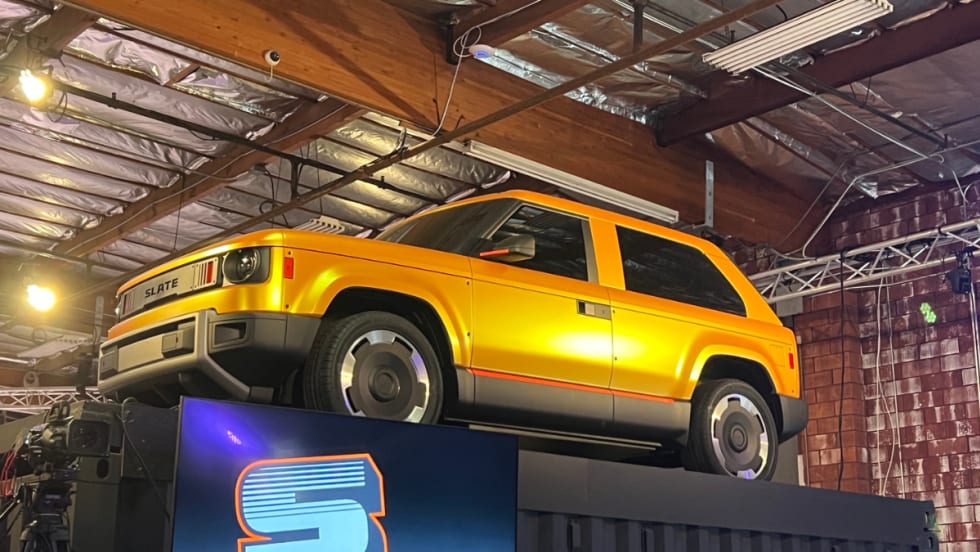
Slate Electric SUV, Pickup Switchable Model Aims For Light-Duty Fleets
Everything about this EV is counterintuitive and understated, making it stand out from the crowd.
Read More →
Inspiration Mobility Acquires Key Electrada Assets
Inspiration Mobility Group has acquired select assets of Electrada, adding the fleet electrification provider's team, technology, and charging infrastructure development capabilities to its energy management business.
Read More →
Turning Connected Vehicle Data Into Decisions That Matter
Fleet leaders have more data than ever, but turning that data into clear, actionable decisions remains a challenge. This white paper shows how leading organizations are using connected vehicle data to improve safety, reduce costs, and optimize fleet performance. Learn how to turn insight into action across your fleet.
Read More →
Are You Tracking Your Fleet's True Total Cost of Ownership?
Bobit Business Media surveyed 190 fleet professionals and found that while most fleets are tracking costs, fragmented systems and data gaps are keeping true TCO visibility out of reach. With rising pressure to control spend in an increasingly volatile environment, the gap between what fleets think they know and what the data actually shows is wider than you might expect. See how your peers are managing costs today and where the industry still has room to improve.
Read More →