




Developing a Fleet Business Plan to Drive Organizational Change
A fleet business plan forces change when the company has 2,100 vehicles providing electric power to nearly 800,000 customers and delivers nearly 1 million acre-feet of water to a service area in central Arizona.
In 1999 when Dave Olsen took over the fleet department for the Salt River Project - the water provider and electric utility for central Arizona - he knew the only way to jump-start the operation was to develop a business plan. Olsen has a master’s degree from Arizona State University and knows the value of strategic thinking, creating a common departmental vision, and following through on implementation. A fifth generation Arizonan, Olsen uses “cowboy” logic to guide his thinking on business plans. He believes many people overcomplicate the business planning process, which makes implementation “darn near impossible.” The purpose of a business plan is to create a blueprint for fleet operations, providing an on-going strategic direction. An effective business plan includes internal/external customers as partners in the process, educating them about the operational goals for the coming years. Business planning should force strategic, not tactical, thinking. Olsen started a business plan primarily to facilitate allocating resources appropriately among departments and organizational needs. His supervisors and other decision-makers appreciated his proactive approach to managing more than $93 million in fleet assets. The plan Olsen developed was in place when his fleet department was named the most efficient in North America. This plan can be adapted to nearly any fleet operation. The following is an outline of Olsen’s business plan, designed as a cut-and-paste model for fleet manager use.
Begin with an Executive Summary
The plan includes an executive summary that simplifies and clarifies key messages and direction. Providing direction for the leadership team and a common vision for the entire transportation department, it is a living document, modified and updated periodically to reflect changes in the operating environment, including pricing, regulation, growth, environmental, and internal operations. Specifically, the summary includes sections on:
• Vision. A statement that captures long-term operational ideals, such as maximum effectiveness of fleet and equipment, high levels of service and maintenance, and readiness of mission-critical vehicles.
• Purpose. The job of each fleet department employee, e.g., “to do our part in ensuring the highest quality of life for our customers.”
• Values. A list of core department virtues, e.g., quality of workmanship, respect for co-workers and customers, trust and dependability, innovation and openness to new and better ways to do things, commitment to service.
• Products and Services. Define the specific services provided by the department, including fleet engineering and management, preventive maintenance, equipment repair, fueling, tire repairs, auto parts, regulatory compliance, procurement, etc.
• Information Technology. A list of the major application software tools used in support of core business functions. Describes information system applications and current operating environments.
Initiative Section Details Projects and Activities.
The initiative section of the business plan is a comprehensive list of major projects and activities to be accomplished during the year. These activities can range from human resource initiatives to operational changes or regulatory compliance. Olsen’s plan included a six-year Aging Work Force Plan and a comprehensive Individual Vehicle Replacement Plan, along with a dozen other major initiatives.
Current Operating Environment(s).
A clear understanding of the department operating environment is critical. Outline the variety of internal and external forces and key assumptions that impact fleet operations. Answer each with a detailed management strategy. External Environment. Changes in regulations and compliance issues, fuel prices, growth, skilled labor shortages, etc. Internal Environment. Internal customer organizations and resource/operating requirements, individual processes and procedures, the balance of value versus cost in budgeting, fleet size, staffing skills and tenure, evolving workforce mix, corporate emphasis on safety and customer service, etc. Key Assumptions. List key company and department assumptions regarding fleet operations. For example: “Utilization of equipment will become increasingly important as we…” “New vehicles and standardization will require less…” “Fleet size will increase by a certain percentage over the next several years.” “Pressure from internal clients to improve service value and reduce rates.” “Move away from ‘managing to budget’ toward ‘managing the business.’ ”
Major Departmental Initiatives.
Next, determine and describe the major initiatives that your department will undertake to create the work conditions identified above and provide the greatest overall value for your services. Each description should include:
• Initiative. A clear-written explanation of the proposed action.
• Goal/Objective.
• Outline of opportunity/area of focus.
• Expected outcomes with milestone dates.
Key Industry Trends.
Analyze industry developments and trends for their impact, influence, or adoption for your fleet operations. For example: “Greater emphasis on environmental issues.”
Human Resource Plan.
Summarize human resource plans over a specific time frame. Changes in the workplace often require a close look at future workforce needs, for example, to ensure an adequately trained workforce. These changing conditions include opportunities. Determine incremental steps to achieve a long-term goal, e.g. “Apprentices will need to be hired and trained prior to (date).”
Key Performance Indicators.
Finally, establish Key Performance Indicators (KPIs) to track progress and ensure implementation effectiveness. Use quantifiable measurements to accurately assess progress.
Communication.
The real cornerstone to an effective fleet business plan is communication. Communicate to employees what and, importantly, why actions are taken and changes implemented. Communicate to customers how your fleet operations provide value for them. As Olsen’s fleet business plan began to improve the department’s effectiveness, he was promoted to director of the entire facilities area to help drive change through an organization that has been named “Best Run Utility in the West,” the last four out of five years by J. D. Power and Associates.
More Operations
How to Manage Conflict for Your Fleet Operations
Conflict management is becoming a core leadership skill. Here are five strategies fleet leaders should know.
Read More →
Turning Connected Vehicle Data Into Decisions That Matter
Fleet leaders have more data than ever, but turning that data into clear, actionable decisions remains a challenge. This white paper shows how leading organizations are using connected vehicle data to improve safety, reduce costs, and optimize fleet performance. Learn how to turn insight into action across your fleet.
Read More →
Cameras, Safety and Insurance: From Reactive Claims to Real-time Prevention
Commercial auto remains one of the most challenging and costly lines of coverage for fleet operators and insurers alike. Learn more about how to effectively address these issues from Onur Aksan, Enterprise Business Development Executive, Geotab.
Read More →

Are You Tracking Your Fleet's True Total Cost of Ownership?
Bobit Business Media surveyed 190 fleet professionals and found that while most fleets are tracking costs, fragmented systems and data gaps are keeping true TCO visibility out of reach. With rising pressure to control spend in an increasingly volatile environment, the gap between what fleets think they know and what the data actually shows is wider than you might expect. See how your peers are managing costs today and where the industry still has room to improve.
Read More →
Turn Fleet Data Into Smarter Decisions
Fleet leaders have access to more operational data than ever, but disconnected systems and unclear metrics often slow decision-making instead of improving it. This article outlines five practical steps fleets can take to transform fragmented data into actionable insights that improve planning, safety, utilization, and long-term performance.
Read More →
Hybrids: Electrification Without the Challenges
For fleet managers, fuel is one of the biggest line items in the budget — and it's one hybrids can shrink without changing how your people work. Download the eBook to see the numbers, understand the technology, and get a step-by-step guide to making the switch.
Read More →
How NOV Uses Telematics to Improve Fleet Safety Across 160 Locations
James Victory of NOV discusses how the company manages fleet safety, maintenance, and telematics across more than 150 locations supporting oilfield operations throughout the U.S.
Read More →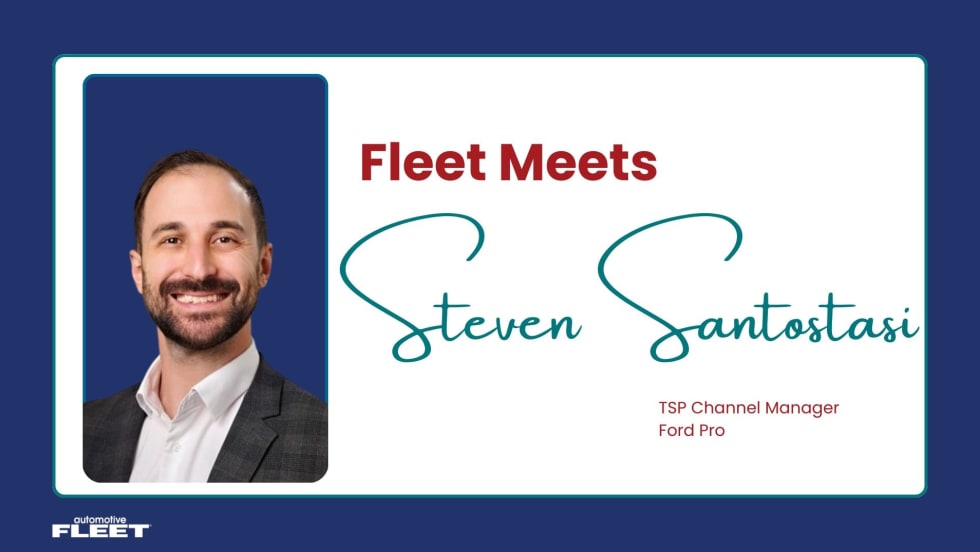
Fleet Meets: Steven Santostasi
This edition of the Fleet Meets series features Steven Santostasi, the current TSP channel manager for Ford Pro.
Read More →
Why Fleet Managers Are Replacing Departmental Vehicles with Shared Motor Pools
Departmentally assigned vehicles often create hidden costs through underutilization, poor visibility, and increased administrative burden. This white paper explores how shared motor pool strategies help fleets reduce costs, improve accountability, and optimize vehicle utilization.
Read More →
Soap Box Derby Challenge: Assembling the Crew
Meet Gabriel, Matthew, and Angel — the team helping bring this soap box derby build to life.
Read More →