




Choose Any Vehicle Color, But It'll Probably be White, Silver, or Black
Fleet managers choose vehicle color options for a variety of practical, economical, and psychological reasons. Choices should be made with an eye to the future and the consumers who ultimately buy out-of-service fleet vehicles.


At a Glance
Vehicle color choices are probably the most individualized and emotional of decisions fleet managers can make; however, they can be influenced by:
Economic factors, such as cost
Psychological factors, such as company branding
Long-term remarketing considerations
Of all the elements of style, color is probably one of the most individualized and the most emotional. Ask 10 people for their favorite color and it wouldn’t be surprising to receive 10 different answers — resulting in a veritable rainbow.
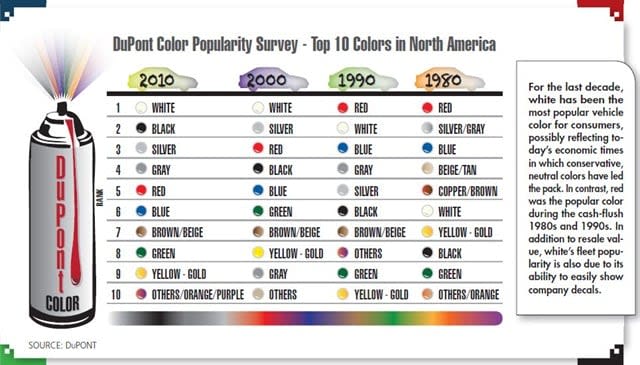
However, there are definitely some colors more popular than others — particularly for vehicles — and this year the top color is white, repeating its first place 2010 finish. This should come as no surprise to U.S. fleet managers, since, according to Nancy Lockhart, color marketing manager for DuPont, this is also the No. 1 color for fleet vehicles.
Significantly, about 70 percent of U.S. vehicles are white, silver/gray, and black — all colors popular with fleets — with red, blue, brown, beige, and every other automotive color splashed to a much lesser degree across the remaining 30 percent.
For the last 59 years, DuPont has issued an annual survey of the most popular automotive colors culled from a worldwide industry poll.
Red for Visibility
Lockhart explained that white’s popularity is a sign of the times with fleets making more conservative, safer decisions, and the speculation they will be keeping their vehicles longer.
She also said that buying core colors is a way to ensure uniformity of fleet vehicles. “Core colors (black, white, silver, gray, red, and blue) are most likely to be available the next model year. Yellows, oranges, purples, and browns can come in and go out of the color palette throughout time.”
However, Bob Graham, vice president of vehicle remarketing for Automotive Resources International (ARI), offered a different perspective on Lockhart’s observation about the neutral paint colors.
“I don’t think fleet uniformity is an issue at all,” Graham said. “There are no fleets that get a color because it’s exactly the same as last year. They might get white every year because they like it, but not because they think it’s the same white as last year. You cannot order a ‘white’ car or a ‘black’ car. All the colors are very specific. For example, a 2010 Ford Focus came in ‘white suede’ and ‘ebony’ as color choices and now, in 2012, it comes in ‘white platinum’ and ‘tuxedo black.’ From 20 feet away you may not be able to tell the difference between the two colors, but they are definitely different shades and sometimes dramatically so.”
White’s popularity is also tied to its ability to help brand a company’s vehicles. Company logo and name decals show up more easily on white vehicles.
It is clear that sometimes color choice has nothing to do with image or psychology, but the bottom line. That’s why, in 2011, the Janesville, Wis., police force switched from its traditional black-and-white vehicle color scheme to all black.
While the officers of the patrol division favored the black-and-white look for the vehicles that were being replaced last year, the head of the patrol division vetoed the idea and went with all-black because it was cheaper than a two-tone look.
Sometimes practicality trumps other considerations. For instance, P&H Mining/Joy Global’s truck fleet is a vibrant, striking red. This color, though it conveys a strong message about the driver and, by extension, the fleet, wasn’t chosen to send a message, according to fleet manager Mike Butsch. “We chose it as the U.S. company color, because it stands out from all [environmental] backgrounds,” he explained.
Lockhart also noted fleets that have strayed from the popular neutral color palette have done so for the same reason individual drivers choose more striking, bold colors: to stand out from the crowd. For instance, fleets that have introduced hybrids and other alt-fuel vehicles often choose blues and greens in addition to the typical white and silver. “The warmer, more nature-oriented shades convey an image of being clean and environmental,” Lockhart observed.
Leatrice Eiseman, a color consultant (www.colorexpert.com) who helped the Pantone Color Institute identify the color of the year for 2012 (see sidebar: “Most Popular Color for 2012: Tangerine Tango”), noted that breaking out of the neutral, popular palette could have some unexpected benefits for the fleet and its business. “Stepping out of that same [color] comfort zone could render some interesting aftereffects, particularly memorability of the chosen color and the attachment of a particular color to a special concept or business image,” she noted.
White for Value
For many fleets, choosing a color has long-term, bottom-line implications. The ability to remarket vehicles is an important aspect of how fleet vehicles are chosen.
Picking the wrong color could be the difference between getting top dollar at auction and disappointment. For instance, it was once a truism that green was a color to stay away from because of its poor resale value. And, while today a green paint job may not necessarily 86 a vehicle’s value, fleet managers have to definitely look ahead when choosing a color.
That’s where a fleet management company’s expertise can come into play. “As an industry, we track, over time, those colors that have staying power and are popular over a number of years. Those colors become the ‘recommended’ palette of color choices for our clients, since the popular colors will bring more resale than the unpopular, fad, or outdated colors. Typically, fleets still allow the drivers to choose their own colors, but a driver’s choices are limited to the recommended colors,” said Graham of ARI.
While tracking colors is easy, assigning a value “on a certain color is very difficult to do. It’s a real challenge,” said Ricky Beggs, vice president and managing editor of Black Book.
Echoing Beggs, Graham noted that “color choices also get down to the vehicle-specific, region-specific, and color-‘code’-specific levels. Many models have more than one red or silver color available and it is not enough to just recommend ‘red’ since one of the ‘reds’ may be an unpopular color and considered less desirable than the other red.”
And, there are other considerations that fleet managers need to pay attention to when choosing a fleet vehicle color. “Certain colors may be good for small- or mid-size vehicles and not appropriate for a full-size or executive vehicle and there is the traditional ‘don’t order black in Florida’ example that has been around for years. So, it’s important to recommend specific color codes on each model and, possibly, vary the recommendations based on regions,” Graham said.
Ultimately, the choice comes down to the bottom line. “It’s all about the resale with the OEMs and paint companies selling color choices that are hot today and then the fleet management companies recommending a subset of those colors that we believe will still be good sellers two to five years from now,” Graham concluded.
Having one vehicle that’s painted fluorescent green hit the resale market could attract that one customer looking to make a bold statement willing to pay top dollar; having 1,000 flood the market at the same time, could be disastrous, as Beggs related.
“About 20 years ago, there was a fleet that decided its Altimas should be painted purple — what I’d call ‘Barney’ purple [after the PBS kids’ show dinosaur],” recalled Beggs. “When it was time to sell, the fleet put 1,000 to 1,200 of these cars on the resale market at the same time. The fleet lost [quite a bit of] money at auction.”
Thankfully, said Beggs, this historic example is exactly that — history. “Fleets have gotten better about not putting odd colors on the market in significant volumes,” he said.
This is where DuPont’s survey helps automakers, by assisting them in understanding consumers — both individual drivers and fleets — globally. “We can develop and propose color palettes for automakers,” DuPont’s Lockhart noted.
Survey of Global Fleet Colors
Across the world, the popular vehicle color palette is strikingly similar.
The DuPont survey found that black continued to be the dominant color in Europe — a distinction it has held since 2007 — but white is moving up in popularity reflecting the ecological “megatrend” on the continent.
Silver is China’s color of choice followed by black, but they are losing ground to blue and other colors as they become more widely available in that market, according to DuPont. Like China, South Korea prefers silver vehicles; Japan’s most dominant color is white, however, it and the other popular colors from last year’s survey are losing ground, with gray increasing by 4 percent. White is also the dominant color choice in India.
In South America, silver is the top color with 30 percent of vehicles sporting this shade followed by black and white, according to DuPont.
Similar to the rest of Europe, Russia prefers black, followed by silver and white. Notably, according to DuPont, green is also a popular color (7 percent of the market, the biggest showing for that color in any region).
South Africa had the highest percentage of white vehicles of any region surveyed at 40 percent. This was followed, unsurprisingly, by silver and black.
Most Popular Color for 2012: Tangerine Tango
While white, silver/gray, and black might be the most popular colors for vehicles, for everything else, they can’t hold a candle to tangerine tango as the color of 2012.
At least that was the conclusion of the Pantone Color Institute, naming the vibrant orange-red hue as the go-to shade for the New Year.
According to Pantone, orange has become popular over the past several years for designers and consumers alike. Numerous male and female clothing designers and cosmetic firms have committed to tangerine tango.
According Pantone, tangerine tango evokes the “vivaciousness and adrenaline rush of red with the friendliness and warmth of yellow to form a high-visibility, magnetic hue that emanates heat and energy.” Last year’s color was honeysuckle.
More Vehicle Research
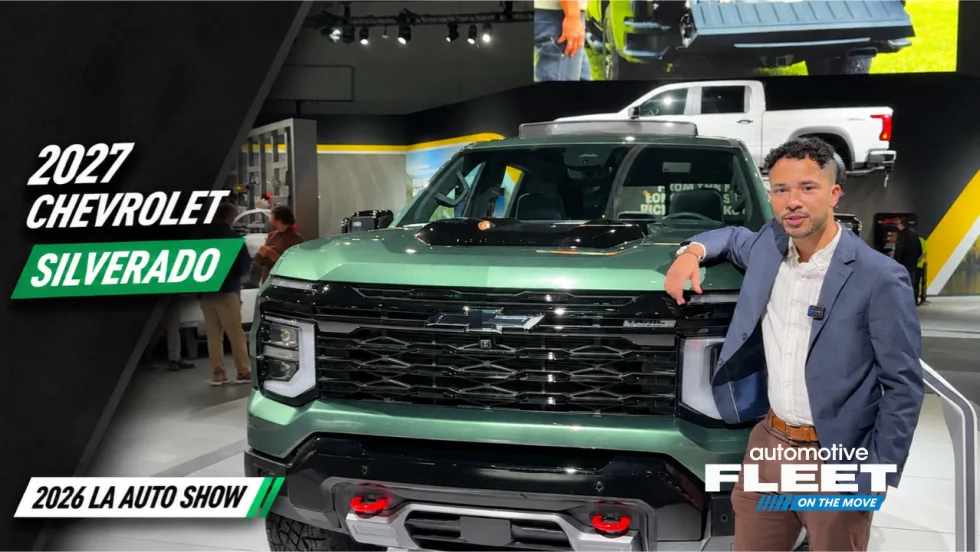
More Muscle! Up Close With the 2027 Chevrolet Silverado 1500
Automotive Fleet got a firsthand look at the redesigned 2027 Chevrolet Silverado 1500, featuring new V-8 engines, a 13,700-pound towing capacity, and hands-free trailering tech.

Company Vehicle or Reimbursement? Plus Fleet News | AF News Recap
Get the latest news from last week.
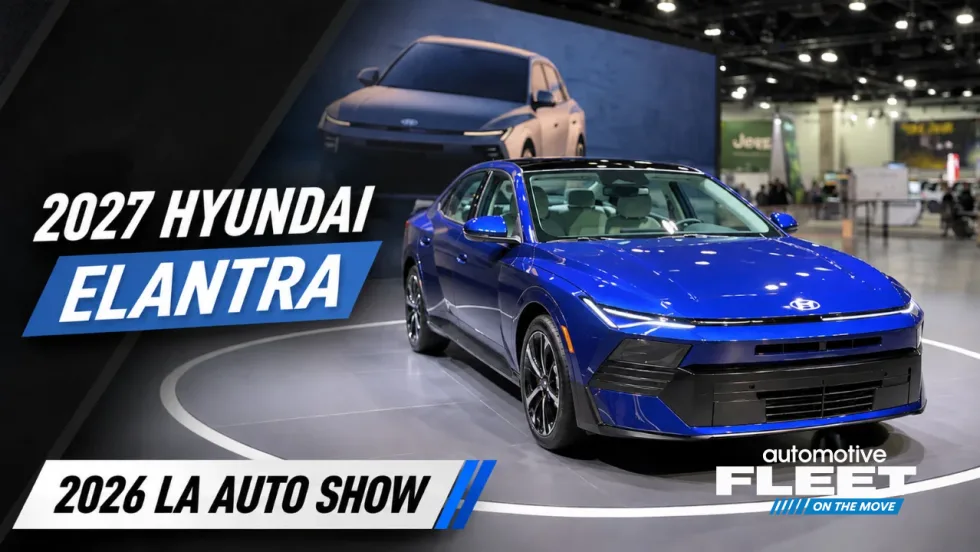
Redesign Alert! First Look at the 2027 Hyundai Elantra
Automotive Fleet previews the newly redesigned Elantra, including its hybrid powertrain, design language, and initial specs.

Introducing the 2027 Fleet Fact Book
Automotive Fleet, Government Fleet, Work Truck, and Heavy Duty Trucking present the 2027 Fleet Fact Book, bringing together data and research from commercial, government, vocational, and heavy-duty fleets in one edition.

Can AEB Really Prevent Intersection Crashes? | AF News Recap
This week we covered the latest AEB test from AAA, a new scholarship opportunity, and Holman's huge leadership change.

Holman Announces Fleet Leadership Changes as Bob White Retires
Nick Caller will become president of Fleet, while Mark Bryan will take on the role of executive vice president and chief operating officer of Fleet, effective Jan. 1, 2027.
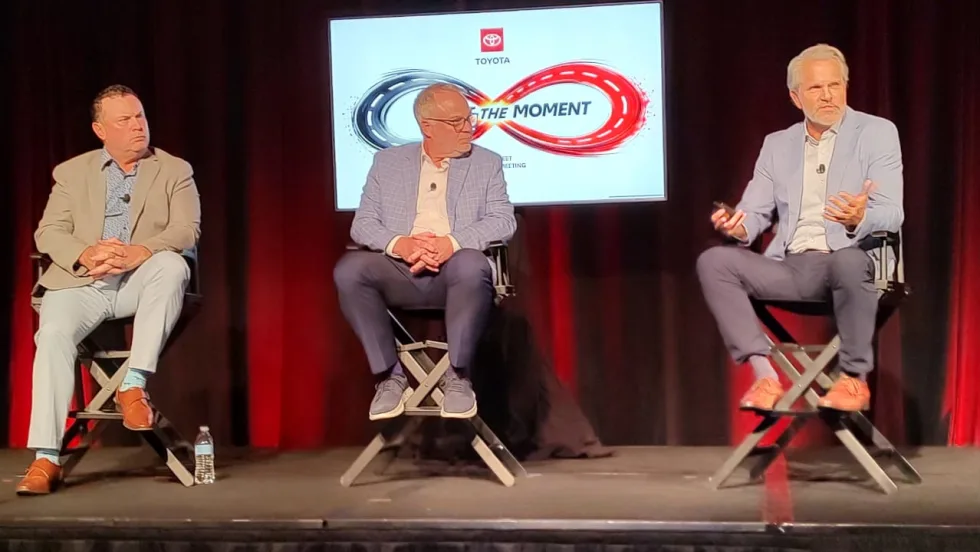
Toyota Fleet Briefs Fleet Leaders on Rapidly Growing Fleet Service Program, Successes of Hybrids, and Supply
During the annual Toyota Fleet Executive Meeting, fleet leaders learned about Toyota’s legacy of driving fuel efficiency with hybrids, its investments in U.S. production, the early success of Toyota Fleet Service Advantage, and much more.

NAFA Launches CAFM Scholarship Program for Fleet Professionals
The new program will award up to four scholarships annually to help eligible fleet professionals cover the cost of Certified Automotive Fleet Manager certification.

Your Fleet Experience Deserves a Vote in the 2027 Fleet Awards
Cars, trucks, vans, SUVs, and upfits. Help choose the 2027 fleet award winners and unlock early-access resources for voters. Ballots close December 31.
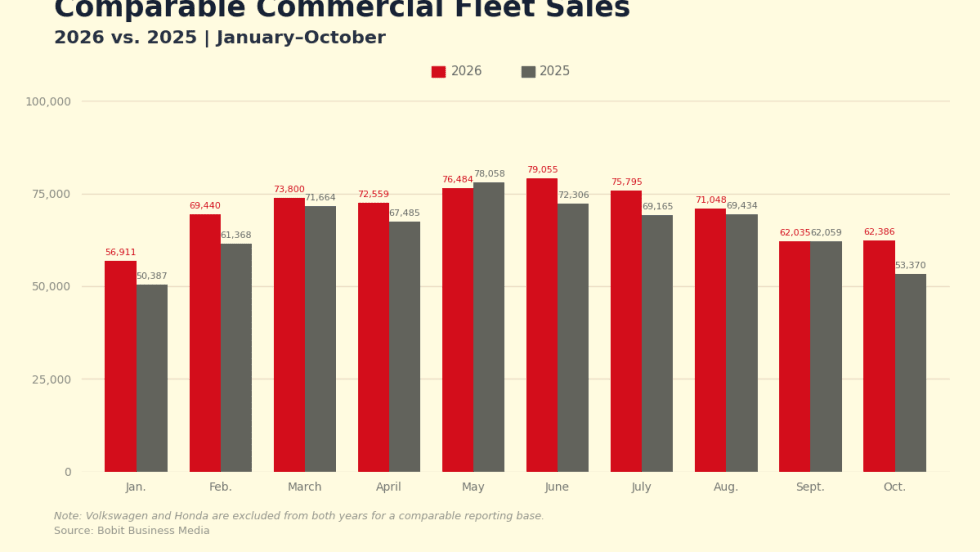
Commercial Fleet Sales Rebound 16.9% Through October
October's stronger results lifted commercial fleet sales growth to 6.7% through the first 10 months of 2026.