




Chevrolet Impala Earns Back-to-Back Fleet Car of the Year Awards
From a record field of 61 domestic and import-badged models, fleet professionals chose the 2007 mid-size sedan as the industry’s most popular car for the second year in a row in AF’s annual match-up.

One year after the completely redesigned 2006 Chevrolet Impala captured the Fleet Car of the Year award, the 2007 Impala again was chosen the industry’s most popular car, in an annual award program sponsored by Automotive Fleet and Business Fleet magazines. Fleet professionals selected the mid-size sedan from a record field of 61 domestic and import-badged nominees. Votes were cast online via AF’s Web site, www.fleet-central.com.
“Repeating as Car of the Year is a great reflection on the GM men and women who design, build, and sell the Impala,” said Brian McVeigh, general manager of GM Fleet & Commercial Operations. “But just as important, sales of Impalas to our commercial and fleet customers translate into more than 32,000 jobs for people in North America. Every fleet manager who buys Impalas can feel good about that.”
“We’re thrilled that customers think the Impala is worthy of Fleet Car of the Year,” added Rob Minton, communications manager for GM Fleet & Commercial Operations. “The fact it won for the second year in a row against more-recently launched competition is even more significant. This award validates the Impala as an excellent choice for the fleet customer.”
The Impala is the choice for Bristol-Myers Squibb, according to Joe LaRosa, associate director, worldwide fleet administration for the pharmaceutical company.
“Drivers love them for their reliability and gas mileage; they ask for them,” said LaRosa. “We ordered the Impalas with the E-85-capable engine. They are especially attractive for our people in the Midwest.” LaRosa also cited the Impala’s comfort and utility for its popularity with the Bristol-Myers sales fleet. “It’s big enough for cargo and supplies.” The Bristol-Myers fleet currently includes more than 2,000 Impalas.
Fleet-Friendly Features Offered
Chief among the Impala’s fleet-popular attributes are flexibility, safety features, interior roominess, “timeless” design, engine selection, and the driving experience, according to Minton. “In addition to the flexibility of eight seat configurations, a feature that sets Impala apart from competitors is the flip-and-fold seat.”
A standard feature on the LTZ and SS models and available on the LT version, the rear seats fold flat into the floor, providing 18.6 cubic feet of cargo room. Extra storage space is available underneath the rear seat cushions. “It’s a key feature for commercial customers, providing great flexibility for fleets in accommodating passengers or hauling cargo,” said Minton. A generous pass-through from the trunk can be created by flipping the seat bottoms forward and the seat backs flat.
With an interior volume of 123.1 cubit feet, the Impala offers a “big-car roominess in a mid-size car, any way you want to measure it,” noted Minton. “And its classically timeless design provides a refined and professional style, important from a fleet perspective.”
Fuel Saving Technology with V-6
New for 2007, a 3.9L V-6 engine features GM’s first application of Active Fuel Management on a six-cylinder engine. Active Fuel Management seamlessly allows the vehicle to run on half its cylinders in low-demand situations, improving fuel economy by up to 8 percent. “Now, more than ever, customers are paying attention to fuel economy,” said Minton. “The ability to go from six to three cylinders on the 3.9L V-6 certainly assists in that effort.”
The 3.9L engine is standard on the LTZ and available on the LT. A 3.5L V-6 is standard on Impala LS and LT models. A FlexFuel version of the 3.5L engine is compatible with E-85 ethanol fuel.
Five-Star Ratings Enhance Safety
The Impala offers several safety and security features, including front dualstage and side-curtain airbags. The 2007 Impala received Five-Star ratings from the National Highway Traffic Safety Administration for frontal- and side-impact crashes.
The fleet manager of an international manufacturing services company cited safety features as one reason the Impala is the single standard car selection for the company’s sales fleet. “I had a few drivers total their cars recently, and they all walked away from the crashes. One of them thanked me for putting the Impala on our fleet sector,” she said.
The Impala’s strengthened safety cage allows improved energy dissipation to absorb impact upon collision. The ABS brake system with Electronic Brake Force Distribution, standard on LTZ and SS models and available on LS and LT versions, helps provide improved steering control while braking and optimum braking regardless of load, traction, or braking speed.
New in 2007 models, the tire-pressure monitoring system is standard on all Impala models. The 2007 Impala is equipped with OnStar capability, and new this year is the available 7.0 Generation OnStar with Turn-by-Turn navigation, which provides audio route directions to the driver. The General Motors Advanced Automatic Crash Notification system, another OnStar service, is also available on the 2007 Impala.
Redesigned for Smooth Drive
The 2006 redesign improved the Impala’s “smooth and refined” ride and handling. For fleet drivers who spend most of their day in their vehicle, “it’s all about the driving experience,” said Minton. “The Impala is a captivating car in how it drives, a product of what went into its redesign last year. It feels more solid on the road. And details, such as the dual piston front caliper brakes, reinforces the driver’s sense of confidence on the road.”
More Operations
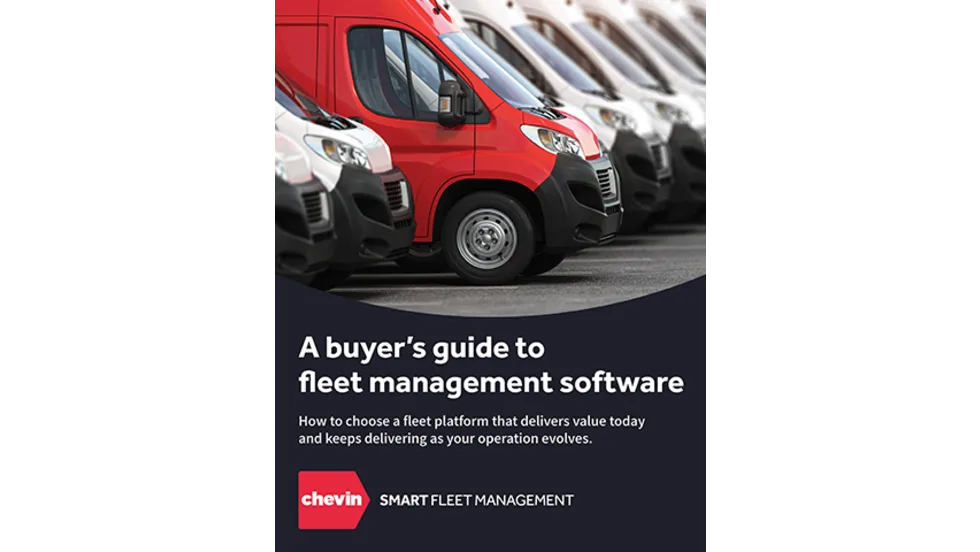
A buyer's guide to fleet management software in 2027
Buying fleet management software in 2027 means looking beyond features and price. As fleet operations, technology and expectations evolve, this guide explores what today’s fleet professionals should consider when choosing a system that can deliver value now and adapt to what comes next.
Read More →
What Will Shape the Next Era of Fleet Management?
EVs, AI, and autonomous vehicles are reshaping fleet management. Discover what’s ahead—and how fleet leaders can prepare for the next era.
Read More →
How Fleets Can Recruit and Train Veterans for Technician Roles
Here's how the technician shortage has affected uptime for fleets, and what to do about it.
Read More →

Avis Budget Group Deploys Neology Toll Management Technology Across Major Brands
Neology’s neoFleet platform will manage toll transactions and toll-authority operations for vehicles across Avis, Budget, Payless, Budget Truck and Zipcar.
Read More →
Fleet Personal-Use Charges Edge Higher in 2026
Nearly eight in 10 surveyed fleets allow personal use of company vehicles, while just over half of respondents report charging employees for the privilege.
Read More →
The Future of Fleet + What’s Changing Right Now | AF News Recap
Could developments overseas offer a preview of what’s coming for U.S. fleets? This week, we’re looking at the future of AI, autonomy, and electrification, plus Ford Pro’s new certified pre-owned program, smarter vehicle offboarding, and a new way for fleets to manage toll expenses.
Read More →
How to Handle Vehicle Offboarding
What do fleet managers need to do when a driver leaves?
Read More →
Fleet Manager’s Ultimate Playbook: Navigating the New Standard in OEM Connectivity
Rising operating costs, driver safety concerns, and unplanned downtime are putting unprecedented pressure on modern fleets. Discover how fleet managers use embedded OEM connectivity and real-time vehicle data to cut TCO, prevent downtime, and protect drivers without aftermarket telematics hardware.
Read More →
U.S. Bank Adds Verra Mobility Toll Management to Voyager Fleet Platform
The integration allows U.S. Bank Voyager fleet customers to manage toll payments and violations alongside fuel, EV charging and maintenance expenses.
Read More →
ADAS Prevents Crashes. But Repairs Cost More | AF News Recap
ADAS-equipped vehicles may crash less often, but they can cost more when they do. This week, we’re breaking down what that tradeoff means for fleets, plus Subaru’s first Forester Wilderness Hybrid, Nissan’s new e-POWER Rogue, and why Calstart has become Catalyst Mobility.
Read More →