




Related: What’s Happening to Carsharing?
Carsharing Has a New Mission — Will it Stick Post Pandemic?
Carsharing networks are providing wheels to essential workers. After the coronavirus pandemic subsides, this could usher in a new era of “shared mobility for fleets 2.0” for other business-to-business use cases.
by Staff
April 28, 2020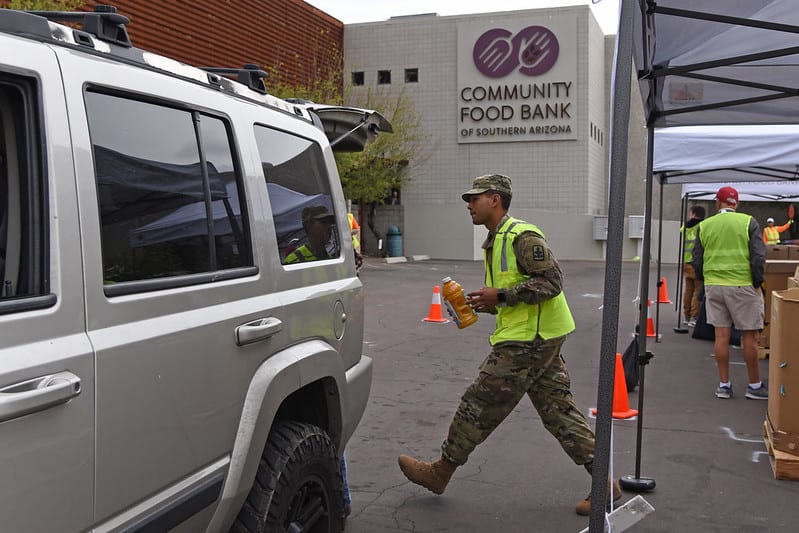
But what happens when the coronavirus pandemic is over? Will these connections with new user bases provide lasting partnerships? Will carsharing itself, which has struggled to find its footing in the U.S., reach its growth potential in a new business-to-business realm?
Photo via The National Guard/Flickr.
5 min to read
In just a few weeks during the coronavirus pandemic, carsharing has pivoted to a new business model to serve essential workers in healthcare, food service, and deliveries who don’t have reliable wheels or want to avoid the health risk of public transportation.
It’s a global initiative: Share Now has been rebranded as Care Now serving eight European countries. The British Columbia Club’s (BCAA) carshare subsidiary, EVO, is providing cars to the provincial health care authority, which will in turn distribute the cars to healthcare and frontline workers.
Zipcar, which provides members exclusive use of a vehicle Monday through Friday for essential travel, expanded its Dedicated Zipcar program to 24 U.S. cities. Via transformed its on-demand shared ride service in Berlin into a dynamic public transit service for essential healthcare workers. In D.C., Via partnered with a school district to deliver meal kits.
The new offerings are primarily born out of necessity, as carsharing is not immune to the shock of this global pandemic. Newer services looking to gain a foothold — such as Penske Dash — and unprofitable services that were proving grounds for new mobility models — GM’s Maven — have been shuttered as parent companies refocus on core services.
These new services shift from carsharing’s fractional usage and multiple daily renters to provisioning cars to single users (limiting virus spread) for a week, month, or longer.
There is now a global platform — #WeAllMove — that connects essential service providers with vehicle fleets in over 200 cities and 42 countries.
Started by Germany-based mobility technology company Wunder Mobility in partnership with World Economic Forum, Hertz, and Allianz Insurance, the open platform includes not just carsharing services, but also car rental companies, micromobility (scooters and e-bikes) services, fleet leasing companies, and other ancillary services.
These providers are realizing the opportunity to be of service at a critical time, get vehicles out of parking spaces and onto the road, and realize the benefits of increased visibility.
But what happens when the coronavirus pandemic is over? Will these connections with new user bases provide lasting partnerships? Will carsharing itself, which has struggled to find its footing in the U.S., reach its growth potential in a new business-to-business realm?
Growth Potential
“We were seeing B2B applications before COVID-19,” says Melika Jahangiri, VP and head of U.S. sales at Wunder Mobility and the cocreator of the #WeAllMove initiative.
One of the biggest growth areas, Jahangiri says, is dedicating vehicles to residents and business tenants, spearheaded by services such as Envoy.
“(Wunder Mobility has) had a lot of conversations with developers who want to have their own service onsite, whether it's micromobility or vehicles, which is an incentive to attract residents or office tenants,” she says.
The business model could entail a revenue share with the operator and the property owner, or the operator pays for the parking spaces and takes the revenue.
In the vein of more traditional fleet scenarios, other tie ups are pending:
A national pizza delivery chain is considering a scenario in which “They pay the operator for 50 cars,” Jahangiri says, “versus having to figure out where their drivers are going to get their next cars to make deliveries.”
A tire company is evaluating sourcing a small fleet of trucks from a third party and making them available for deliveries between stores or to customers within a geofenced area.
This isn’t a new concept: Zipcar for Business has been around for seven years. Other services, such as Maven and Ford’s van shuttle service Chariot (defunct as well) provided dedicated vehicles for corporate use such as Amazon.
In the public sector, updating the traditional motor pool with carsharing technology has allowed government fleets to reduce units and increase utilization. (In these instances, the government entity installs the technology in their own fleet.)
However, in the commercial and corporate fleet worlds, shared mobility has been slower to catch on — it’s more difficult for salespeople to logistically share a car to make sales calls, or to transfer specific equipment back and forth between a truck upfitted for specific jobs.
That said, there are plenty of use cases in which a fleet car, truck, or van can be accessed on-demand through a third-party service. What’s holding back greater penetration?
The first forays were saddled by expensive technology and an ill-defined game plan for the fleet. The technology has gotten better and cheaper, and the algorithms to manage utilization have gotten smarter. “Being able to offer access to whoever needs the vehicle in real time makes a huge difference in efficiency,” Jahangiri says.
Another issue is complacency. If the model has worked okay for decades, why change?
Spouting Volcano
This time, the disruption is a spouting volcano, forcing unlikely groups — those with severely underutilized vehicles and those urgently needing transportation — into business partnerships.
“This is just going to accelerate the conversations with corporations and businesses who want to create a private fleet for their own use,” Jahangiri says.
The exact model won’t (and shouldn’t) be the same post pandemic, as taking travelers out of public transportation and putting them in private vehicles isn’t a long-term solution for congestion or the environment’s sake. Post pandemic, a single user for one unit would be better served by a long-term rental or subscription service.
“We're not saying this necessarily has to be the play forever,” she says. “But this is an option in this moment.”
And giving healthcare workers commuting options isn’t necessarily affecting the utilization or budget of a dedicated fleet. But as these new options become part of an institution’s transportation needs, the institution can manage both holistically and more efficiently.
We may not yet be sure how it’ll work, but the B2B connections made now could be the basis for future on-demand models that do make sense. In this “shared mobility for fleets 2.0,” businesses can use vehicles more efficiently, save money on their overall fleet budgets, and allow the carsharing provider to make a profit.
Subscribe to Our Newsletter
More Fleet Forward

Fleet Forward Conference Introduces One-Day Passes for 2026
New one-day registration gives fleet professionals the flexibility to attend Tuesday, Wednesday, or Thursday, with passes available for $199 through Sept. 18.
Read More →
Vibe Coding: When Fleet Managers Become Software Builders
Five fleet professionals — none with programming skills — discuss how they’re using AI to build fleet solutions in-house and in a fraction of the time.
Read More →
Fleet Forward Conference Tackles Fleet Industry’s Growing Leadership Gap
This session will examine succession planning, knowledge transfer, and the skills the next generation of fleet leaders will need as veteran professionals leave the industry.
Read More →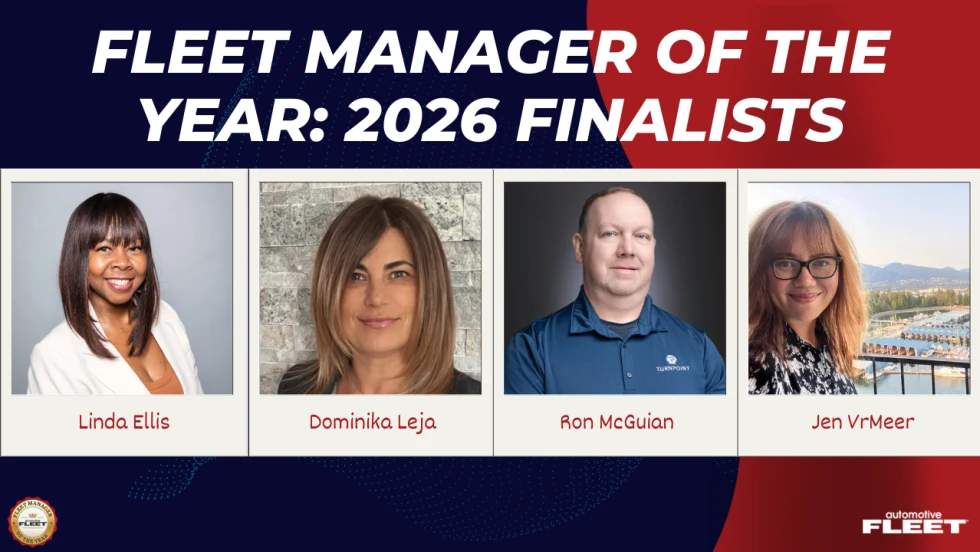
2026 Fleet Manager of the Year Finalists Announced
Who are the 2026 Fleet Manager of the Year finalists?
Read More →
John Rossant to Deliver Opening Keynote at 2026 Fleet Forward Conference
The CoMotion founder will draw on developments across Europe, China, the Middle East, and other international markets to identify trends that could influence how U.S. fleets plan for the coming decade.
Read More →
How to Build Custom Fleet Tools With AI and Vibe Coding [Webinar]
A new Automotive Fleet webinar explores how fleet managers are using AI and vibe coding to automate routine work and create simple operational tools without traditional programming skills.
Read More →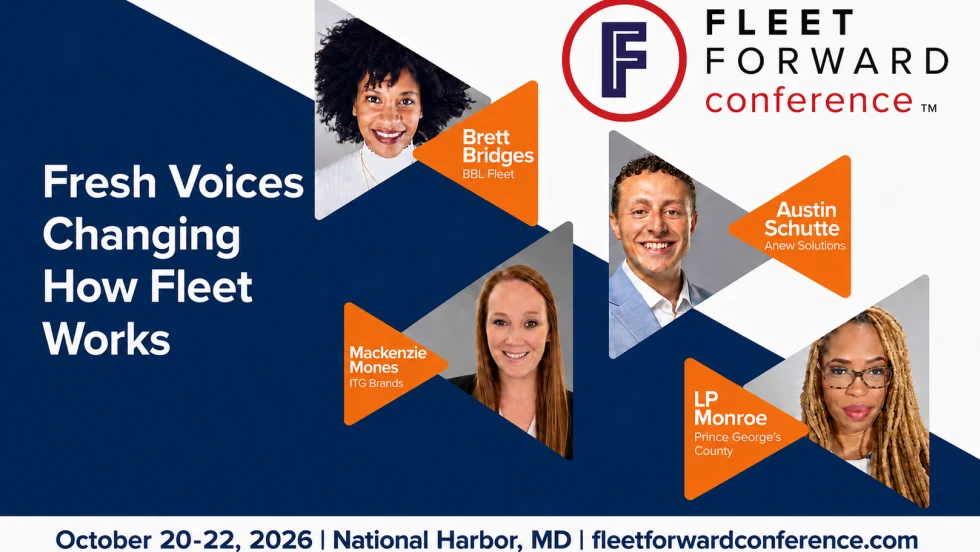
Is Fleet Ready for Its New Disruptors?
Three emerging leaders from a corporate fleet, public fleet, and the automotive supply chain will bring new ideas and a willingness to challenge industry norms to the Fleet Forward Conference stage.
Read More →
NAFA Announces 2026 Fleet Safety Symposium Education Program
Register for NAFA’s Fleet Safety Symposium and save $200 on your Fleet Forward Conference registration.
Read More →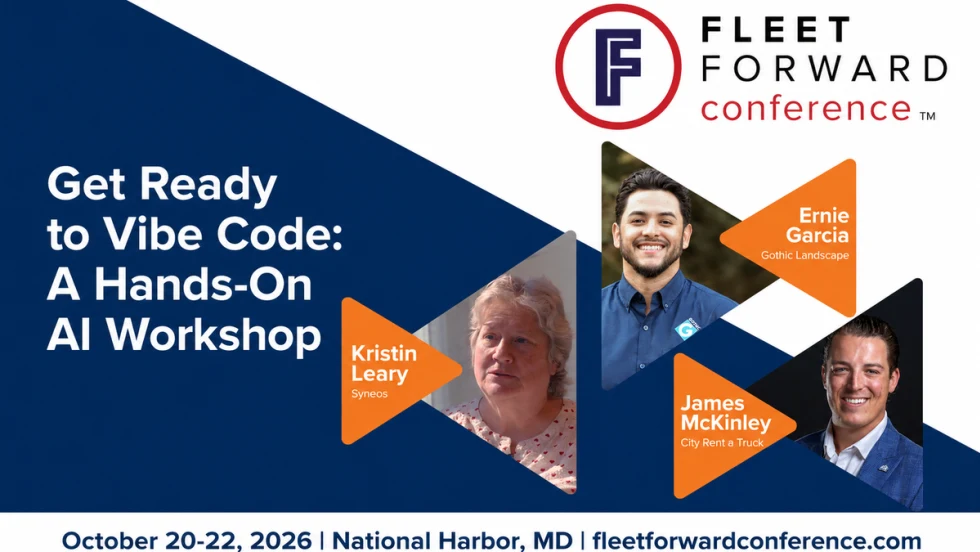
Fleet Managers Take the Lead in Hands-On AI Workshop at FFC
The fleet manager-led session will show how to use “vibe coding” to build practical fleet tools without a traditional programming background.
Read More →
NETS Crash-Cost Data and CoolSys’ 80% Loss Reduction Take Center Stage at FFC
NETS will present findings from its latest Cost of Crashes research, then CoolSys safety leader and author Shawn Martinez will explain how the company built a safer driving culture across 3,500 employees.
Read More →