





Get Productive: Does Your Utility Fleet Need Business Intelligence?
California Water Utility Weighs Leasing
In a push to decrease maintenance costs and increase the fleet’s overall MPG — and with the help of telematics data — this public utility’s fleet manager is putting a proposal together that would move the owned fleet to a full lease program.
July 1, 2014
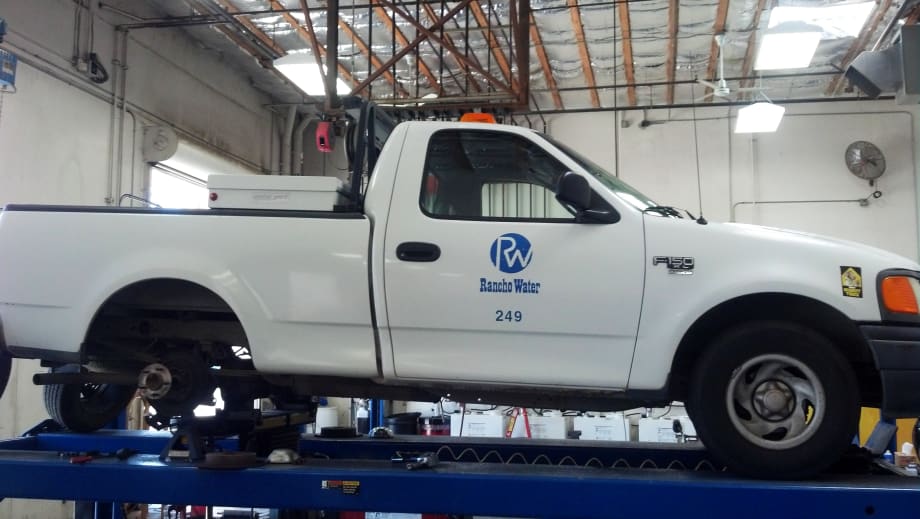
RCWD’s fleet mostly consists of light- and medium-duty vehicles, with a few heavier pieces of equipment for pipeline maintenance as well as a vactor truck.
Photo:Rancho California Water District
6 min to read
With a total fleet count of nearly 90 vehicles, the Rancho California Water District (RCWD) has always owned its fleet, but that could all change as field services manager for meter, facilities and fleet Bill Barnes works on a proposal to transition the fleet to a full lease program.
Serving Temecula, Calif. and other southwest Riverside County communities, RCWD is an independent special district overseen by an elected seven-member board. That means Barnes still has hurdles to face as he plans to present the final proposal to the board by the end of the year. But, his work really began a few years ago, when he started tracking fleet data through Verizon Networkfleet as well as his own data tracking and analyzing it — from fuel efficiency to fleet utilization and maintenance costs.
An Aging Fleet
RCWD’s fleet mostly consists of light- and medium-duty vehicles, with a few heavier pieces of equipment for pipeline maintenance as well as a vactor truck. The utility’s current fleet replacement guidelines call for a vehicle to be 12 years old and have at least 150,000 miles on the odometer. Having an older fleet, though, can mean higher maintenance costs as warranties expire and vehicles are more prone to breakdowns.
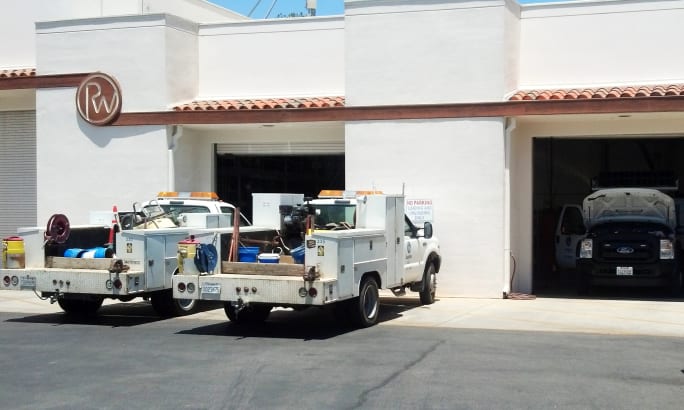
Aside from rising maintenance costs, Barnes says that increasing the fleet’s overall MPG is also a goal in switching to a lease program.
Photo:Rancho California Water District
The utility does in-house maintenance and one of the two mechanics has been there for 26 years — and is getting ready to retire.
Taking maintenance out of an in-house operation, or at least not full time, is partly what kick-started RCWD’s leasing considerations. But Barnes quickly realized by looking at maintenance records that with an older fleet, this would prove difficult. “What started this conversation was ‘how can we move away from having an in-house full-time mechanic on staff when our current mechanic retires?’” Barnes says. “But with an aging fleet, I need a full-time mechanic just to take care of the corrective issues on vehicles.”
Through leasing, the vehicles would be replaced every five years. “I would just have an annual lease cost on that vehicle, and all the preventive maintenance would be rolled in,” Barnes says.
So, Barnes contacted a fleet management and leasing company, Enterprise Fleet Management, which he has now met with at least half a dozen times over the last six months. He’s currently looking through all the numbers and options they’ve proposed but is leaning toward a planned rollout of four to five vehicles per year that would be transitioned out and replaced with a leased vehicle. This would increase over the next five years to about 15 vehicles annually until the whole owned fleet (minus the heavy equipment) is retired. “By the end of the five years, the first group that had been leased would then be ready to be turned back in and a new group would come in,” Barnes says.
Technology Is Only Getting Better
Aside from rising maintenance costs, Barnes says that increasing the fleet’s overall MPG is also a goal in switching to a lease program. Since installing Verizon Networkfleet telematics on a majority of the fleet in 2010, RCWD has been able to reduce its fuel consumption, even though its number of service orders has increased by 15%. This is mostly due to better routing, in which the average response time to a service call was 1.5 hours before the system, and now the average response time is under an hour. The fleet’s overall mileage also reflects this since it has dropped about 10-12% since having the system.
“Here in the office, the first thing anyone does now is to see who is closest available to respond, and so it's really helped that way,” Barnes says.
But the telematics data also showed him something he already had an idea about but was a stark reminder — the fleet’s low MPG.
“I’ve got vehicles here that only get 5-6 miles per gallon,” Barnes says. “Whereas newer trucks, the fuel efficiency is double that, but because we have an investment in that older vehicle, it’s hard to argue for selling it to buy a new one.”
Getting higher-MPG vehicles into fleet is another top reason Barnes is pushing for a leasing program.
“Every year better technologies come out,” he says, adding that he’s even discussing getting compressed natural gas (CNG) into fleet through the lease program. “We want to be as green as possible, and if it costs a little extra to do that, I think it's a good idea. I especially think public agencies should do it, and we're in the process of looking at all of that.”
The utility is also hoping that they could get some electric vehicles into fleet as well. Employees are already charging up on-site using facility solar panels — they charge the users a small fee to do so.
“Two or three years is a long time the way technology is moving forward, particularly with electric vehicles,” Barnes says. “By going to a lease, it would allow us to move on that a lot sooner than waiting for our vehicles to get old enough to be replaced.”
Increasing Utilization
Outside of the leasing strategy, Barnes has been setting short-term goals to improve fleet operations. Using the telematics data from Verizon Networkfleet, he was able to keep an eye on fleet utilization. He quickly saw that several vehicles were hardly getting driven.
“We had been assuming that all the vehicles were being used a certain amount, but now I get a weekly utilization report,” Barnes says. “On any given day we had 30% of our vehicles sitting idle in the year, but on another day, we might have only 5%,” Barnes says. So, he looked at those numbers and was able to identify the vehicles being underutilized, and in what ways they could consolidate those vehicle uses into what now operates as a small motor pool program.
Getting Board Approval
In initial conversations with board members, Barnes says that reactions have been across the map. He says that anytime he brings vehicle proposes to the board, they diligently review. “That might be the hardest step to overcome,” he adds.
And because it’s something they’re all familiar with (mostly everyone has bought or leased a car or truck at some point in their life), it can make the opinions even stronger than compared to getting a vote on higher-priced items that are a little more obscure to the general public. “I really have to look at my costs over the last ten years to operate the fleet, and what it would be to lease and the payback,” Barnes says, adding that while he’s still compiling information for the proposal, he feels confident that he’s got the data to back it up.
Barnes’ main focus in the proposal will be fuel efficiency. By looking at vehicles in the fleet from 2004 and other older vehicles, he says that you could make the argument that about 20% of RCWD’s fleet costs would be made up just in fuel savings alone. From there, he will present the yearly corrective maintenance costs on the older vehicles and the cost of replacing owned vehicles every year based on current cycles.
“If I add that to my corrective cost for existing vehicles, it'll pay the lease cost on the new vehicles,” he says.
Topics:UtilizationRiverside CountyEnterprise Fleet ManagementMaintenance FacilitiesMotor PoolsVerizonGlobal Fleet
Originally posted on Work Truck Online
Subscribe to Our Newsletter
More Global Fleet
GeoFencing Adds to Your Truck Security Arsenal
Geofencing is a familiar fleet tool today, but its early adoption marked a major shift in vehicle tracking, route monitoring, and the debate over employee privacy.
Read More →
Holman Takes Full Ownership of ARIZA in Mexico
Holman is bringing its Mexican fleet management operation fully under its own brand after more than 30 years as a joint venture. The change gives multinational fleet customers a single Holman operation across the U.S., Canada, and Mexico.
Read More →
5 Tire Maintenance Tips to Help Prevent Work Truck Downtime
Regular tire checks can do more than extend tread life. These five maintenance practices can help work truck fleets catch problems early, reduce costs, and prevent downtime.
Read More →

Proven Ways to Reduce Work Truck Downtime
The age-old problem of downtime will always be a reality, but with new strategies at hand, fleets have more ways to keep trucks on the road longer.
Read More →


Cameras, Safety and Insurance: From Reactive Claims to Real-Time Prevention (Part 2 of 2)
Part Two: Commercial auto remains one of the most challenging and costly lines of coverage for fleet operators and insurers alike. Continue learning more about how to effectively address these issues from Onur Aksan, Enterprise Business Development Executive, Geotab
Read More →
Cameras, Safety and Insurance: From Reactive Claims to Real-time Prevention
Commercial auto remains one of the most challenging and costly lines of coverage for fleet operators and insurers alike. Learn more about how to effectively address these issues from Onur Aksan, Enterprise Business Development Executive, Geotab.
Read More →
Fleet Costs Are Rising: Here’s How Leaders Are Responding
Fleet leaders are under pressure to reduce costs, adapt to economic uncertainty, and make smarter decisions. See how peers across North America are responding with real data, proven strategies, and forward-looking insights. Download the 2026 Market Pulse Report to benchmark your strategy and uncover where you can gain an edge.
Read More →
Enterprise Fleet Management Surpasses 900,000 Vehicles in U.S. & Canada
Enterprise Mobility connects with mobility solutions around the globe
Read More →