





Related: Telematics in Construction Fleets
Best Practices for Asset Management Functions
Best practices in asset management, including truck acquisition, maintenance, and other asset management services can make the difference between a productive, cost-effective fleet and a costly mistake.
January 1, 2008
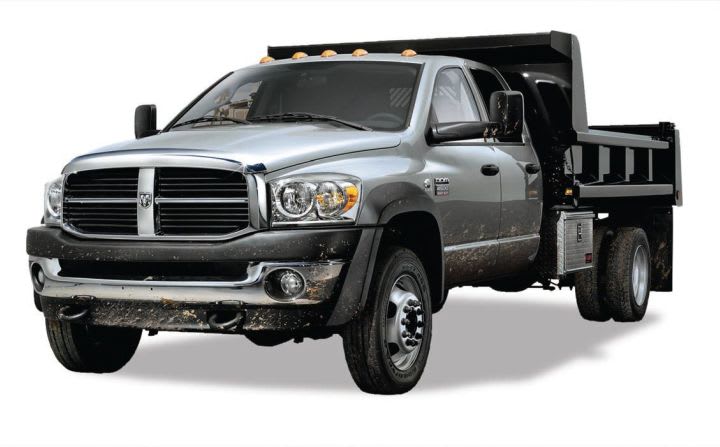
New managed maintenance services provide access to OEM dealer networks, a national network of truck stops, and other independent parts and service suppliers, plus round-the-clock access to ASE-certified truck specialists.
Photo: Dodge Ram
7 min to read
As predicted, the beginning of 2007 was difficult for the trucking industry. As we have transitioned to new trucks with a new generation of engines, we witnessed a change in the overall fleet market. Skepticism of new emission standards and uncertainty about the effect of EPA 2007-compliant engines on residuals spurred many fleets to forgo expected lifecycles, fueling a pre-buy blitz. As a result, new-truck sales have declined and operational costs continue to increase, prompting a general market slowdown.
Other factors that contributed to the slowdown were actions the Federal Reserve took to raise interest rates, as well as the steep decline in subprime mortgage lending. With a decline in industrial and durable goods production, these factors negatively impacted trucking and shipping industries. Fortunately, anticipated growth in the gross domestic product and the Fed’s recent decision to cut interest rates point to a more stable, if not strengthening, economy. Still, it could take as long as three to four quarters to realize the positive effect of interest rate stability on our industry.
Balancing Operational Costs
While the American Trucking Associations (ATA) annual freight transportation forecast points to a strengthening economy, carriers in 2007 had to manage costs better and smarter than in the past. Overall, fleets have had to focus more on operational costs, including the most costly trio — procurement, maintenance, and risk — in an effort to sustain profitability.
With more EPA emission regulations coming down the pike in 2010, we need to embrace our social responsibility to become more environmentally conscious. When it comes to idling reduction technology, auxiliary power units (APUs) have been an effective green initiative, capable of reducing a long-haul tractor’s fuel usage by an estimated 1,900 gallons, and greenhouse gas emissions by 42,000 lbs. (19 metric tons) per year. Auxiliary power units have led this decrease in fuel usage and emissions at an estimated cost between $6,000 to $10,000 per unit.
However, with hybrids being introduced to the Class 8 market and the introduction of urea and advanced emission technologies expected to further increase retail and maintenance costs, many of these environmentally sound practices will only add to an already dizzying array of cost pressures.
In the quest to become increasingly green, we need to strike a balance between environmentally friendly and cost-effective measures. We also need to explore additional cost-cutting strategies that will allow us to reduce our impact on the environment while retaining profitability.
As we attempt to become more environmentally friendly, we must carefully balance overall costs with increases in industry-mandated regulatory and operational costs. Opportunely, a variety of industry services now can help do just that. Financing, engineering, and information management systems can offset increases and better manage the costs of doing business by optimizing a fleet’s lifecycle.
The most effective asset management programs are currently supplemented with the objective expertise of an outside industry consultant. With 52 percent of fleet managers indicating they have considered outsourcing maintenance and safety compliance to a consultant, a new crop of third-party sources are stepping up to the plate.
Applying Best Practices
Applying best practices in asset management, including truck financing, fleet consulting, and other asset management services can make the difference between a productive, cost-effective fleet and a costly mistake. The following are expected to be key areas of focus in 2008.
1. Which truck best fits the application?
One size does not fit all and new doesn’t necessarily mean better, as evidenced by PHH FirstFleet’s recent study of senior fleet operations managers. Reminiscent of the 2002 pre-buy, many fleet managers in late 2006 and early 2007 were unsure of the effect of new emissions-compliant engines on operating and maintenance costs. With nearly 63 percent of fleet managers delaying the purchase of post-2007 engines, preferring to stock up on the more familiar 2006 engines, many fleet managers procured trucks based on class size, order-to-delivery times, or OEM inventory.
Moving forward to 2010, when even more uncertainty will impact purchasing decisions, fleet managers should first consult with acquisition specialists to determine which truck best suits their application, rather than simply focusing on price. Industry consultants bring vast experience to the table and work with fleets to identify unique needs and offer viable, cost-effective solutions.
Dedicated to understanding a truck’s unique application and identifying a particular specification that best suits a fleet’s needs, acquisition consultants offer an effective ordering cycle with flexible financing that enables fleets to select a specific make, model, and specifications package to maximize a truck’s residual market value. Acquisition specialists can coordinate manufacturers and suppliers on an individual basis and negotiate discounts and incentives. They are, in a sense, strategic partners that assist in managing government compliance and help fleets get the right trucks and equipment at the right cost, at the right time.
2. Take a holistic approach
Fleet managers interested in getting the most value from their trucks and equipment take a holistic approach to costs in 2008. When it comes to maintenance, it all boils down to effectively managing a truck’s lifecycle according to your vehicles’ components and operational requirements.
New managed maintenance services provide access to OEM dealer networks, a national network of truck stops, and other independent parts and service suppliers, plus round-the-clock access to ASE-certified truck specialists.
Best practices for maintaining trucks combine effective policy management with engineering expertise to ensure vehicle assets are operating efficiently and effectively. Enhanced managed maintenance programs provide a variety of cost management capabilities, enabling fleet managers to track maintenance purchases, repair costs, repair status, and preventive maintenance schedules. This information also can be used to determine the optimal cost-per-mile strategy.
3. Predictive analytics help prevent crashes
Accidents have an estimated $35 to $40 billion annual impact on the trucking industry. So, it comes as no surprise that 85 percent of North America’s fleet operators have expressed an immediate need to curtail accident-related costs. The problem is that current industry-accepted driver safety analysis and training programs employ conventional, reactionary methods. These methods include, for example, reviewing past driving behavior and targeting drivers who have already been involved in an accident and are identified as "high-risk."
A revolutionary approach to truck risk and safety is predictive analytics. Predictive analytics applies smart technology and data modeling programs to driver habits, which helps forecast which drivers are likely to have collisions, empowering fleets to prevent accidents from happening.
With the integration of information about drivers, GPS, telematics, and preventive maintenance data, fleet managers are now equipped to proactively develop intelligent driver safety models specific to their business needs, operations, and systems. By leveraging and analyzing data to provide insight into truck-tractor usage, driver behavior, and fleet productivity schedules, predictive models allow the industry to maximize investments and realize benefits beyond driver safety.
4. Telematics provide proactive tools
Private truck fleets are increasingly employing telematics to help drive down the cost of doing business and assist in implementing environmentally sound practices. As one of the newest assets in the fight to curtail soaring prices that impact fleet profit margins, telematics data help fleets better understand fuel consumption, the effects of new engine emissions standards, and driver behavior.
The prevalence of GPS, telematics, and ECM data-capturing devices have afforded us a rich set of metrics and much more intelligent information to consider when making qualified decisions. By taking a holistic approach to acquisition and leasing, data-centric solutions such as managed maintenance and driver risk reduction programs, as well as industry consulting services, fleet owners and managers can proactively take action and make educated decisions that positively impact their businesses.
Armed with such data-rich information, the entire industry can begin to realize the ability to lessen the impact that adverse economic conditions, rising OEM pricing, and fuel and other operating costs have on our businesses.
Preparing for the Future
So, what did we learn from 2007 to help us best prepare for the next phase of the trucking industry’s evolution? Some cost increases we experienced in 2007 were by necessity, such as fuel and equipment purchasing. Others, including improved driver recruitment or boosting vehicle productivity, were voluntary, but no less important in maximizing our investment. As green initiatives continue to move forward, savvy fleets will have a choice: embrace change and continue to invest in green technologies, or resist the up-front costs with retrofitting and suffer long-term operational and financial headaches.
Moving forward, we must implement cost-cutting strategies by placing a greater focus on utilization and shifting our capacity to make more informed and forward-thinking decisions in response to the ever-changing environment.
Embracing emerging best practices in asset management — including acquisition and leasing, maintenance, and fuel, as well as risk and information management services — will allow us to more effectively manage assets, increase fleet productivity, lower operating costs, and better prepare for 2010.
Originally posted on Work Truck Online
Subscribe to Our Newsletter
More Global Fleet
GeoFencing Adds to Your Truck Security Arsenal
Geofencing is a familiar fleet tool today, but its early adoption marked a major shift in vehicle tracking, route monitoring, and the debate over employee privacy.
Read More →
Holman Takes Full Ownership of ARIZA in Mexico
Holman is bringing its Mexican fleet management operation fully under its own brand after more than 30 years as a joint venture. The change gives multinational fleet customers a single Holman operation across the U.S., Canada, and Mexico.
Read More →
5 Tire Maintenance Tips to Help Prevent Work Truck Downtime
Regular tire checks can do more than extend tread life. These five maintenance practices can help work truck fleets catch problems early, reduce costs, and prevent downtime.
Read More →

Proven Ways to Reduce Work Truck Downtime
The age-old problem of downtime will always be a reality, but with new strategies at hand, fleets have more ways to keep trucks on the road longer.
Read More →


Cameras, Safety and Insurance: From Reactive Claims to Real-Time Prevention (Part 2 of 2)
Part Two: Commercial auto remains one of the most challenging and costly lines of coverage for fleet operators and insurers alike. Continue learning more about how to effectively address these issues from Onur Aksan, Enterprise Business Development Executive, Geotab
Read More →
Cameras, Safety and Insurance: From Reactive Claims to Real-time Prevention
Commercial auto remains one of the most challenging and costly lines of coverage for fleet operators and insurers alike. Learn more about how to effectively address these issues from Onur Aksan, Enterprise Business Development Executive, Geotab.
Read More →
Fleet Costs Are Rising: Here’s How Leaders Are Responding
Fleet leaders are under pressure to reduce costs, adapt to economic uncertainty, and make smarter decisions. See how peers across North America are responding with real data, proven strategies, and forward-looking insights. Download the 2026 Market Pulse Report to benchmark your strategy and uncover where you can gain an edge.
Read More →
Enterprise Fleet Management Surpasses 900,000 Vehicles in U.S. & Canada
Enterprise Mobility connects with mobility solutions around the globe
Read More →