


About the Author
Mark Mackey is corporate counsel for The Hertz Corporation.
 MENU
MENU SEARCH
To date, the car rental industry has been mostly left out of the picture regarding autonomous vehicles and liability. It's time to consider these issues well before autonomous vehicles are deployed.
In the last issue, we outlined the landscape for autonomous vehicles as it relates to liability and car rental’s place in this picture. In this issue, we present potential autonomous vehicle liability risks specific to car rental companies (RACs) and strategies to mitigate them.
These guidelines concern two areas of risk: vehicles designated as semi-autonomous vehicles (SAVs), requiring some degree of manual driver control and awareness, and vehicles designated as fully autonomous vehicles (FAVs), requiring no user input and potentially excluding steering wheels, gas and brake pedals.
- Disclose risks.
Once SAVs (and in the future, FAVs) are available for rent, RACs should consider informing customers of features and risks at the time of reservation, or at least time of rental. As SAVs continue to include more and more new tools, some of which might be confusing to drivers, RACs may be held liable if they fail to warn renters of the risks of relying on (or misusing) SAV features.
Once both SAVs and FAVs are simultaneously available, RACs should be aware of potential claims that if a renter is allowed manual driving capabilities, this would be a foreseeable proximate cause of an accident.
- Provide instructions.
This warrants providing clear instructions (likely provided by the OEM) as to proper use. The list of capabilities and instructions will likely differ by make and model, so RACs must ensure exact associations between vehicles and applicable materials. Renters should sign separate language that they understand these risks and instructions and will comply with applicable laws.
- Allow choice.
RACs should also allow renters to decide whether they want an SAV (with varying degrees of SAV capabilities such as lane-keeping assist) or FAV, until such technology and accompanying consumer comfort becomes pervasive.
- Allocate responsibility.
Rental contracts should expressly allocate responsibility to the renter as opposed to the OEM in the event of a renter-caused accident. Likewise, the rental contracts should also inform renters that they will still be liable for a failure to act when an SAV requires driver input.
- Update fleets.
If SAVs prove to significantly reduce the risks of accidents (or at least serious ones) RACs should consider updating fleets to keep up with technology, lest they are seen as providing renters with comparatively dangerous vehicles.
RACs should pay close attention to the systems utilized by particular makes and models of SAVs and FAVs, as well as any accompanying ratings or reviews. There may be some risk based on selection of specific equipment or vehicles known to have less effective systems than others.
- Make tracking transparent.
While location monitoring is a privacy issue, it can likely be overcome by transparent notice and renter consent.
- Strengthen verification.
The ability for a renter to request an FAV rental car that picks them up carries Graves Amendment and fraud implications with it. RACs should look to utilize tools in consumer mobile devices or use in-car technology to overcome the hurdle of not being able to check a driver’s identification.
- Verify license requirements.
Likewise, RACs should inform potential renters of any SAV-specific license requirements and verify that an SAV renter meets such requirements. The ability for underage or unlicensed individuals to use FAVs may eventually become an issue, and RACs will have to update policies accordingly.
- Require safety options.
Once a technological capability is proven to reduce the risk of accidents, RACs should consider requiring renters to use that capability on SAVs where such use is at the driver’s discretion. Driver adherence could eventually be monitored via telematics.
An example would be the relatively near-future capability of some SAVs to automatically control the vehicle on highways, requiring little to no driver input until highway departure is necessary or in certain emergency events. This feature is expected to reduce the number of accidents significantly, and, once proven, it could become a requirement of rental car highway use.
Many unique liability situations will result from increasing autonomous vehicle capabilities, most of which have not yet been fully fleshed out. RACs should make sure to keep up with developments in technology and applicable laws to ensure that they can adequately account for and mitigate risks.
Originally posted on Auto Rental News
Holman is bringing its Mexican fleet management operation fully under its own brand after more than 30 years as a joint venture. The change gives multinational fleet customers a single Holman operation across the U.S., Canada, and Mexico.
Read More →
The age-old problem of downtime will always be a reality, but with new strategies at hand, fleets have more ways to keep trucks on the road longer.
Read More →
The Top 300 Commercial Fleets: See the List
Read More →

Part Two: Commercial auto remains one of the most challenging and costly lines of coverage for fleet operators and insurers alike. Continue learning more about how to effectively address these issues from Onur Aksan, Enterprise Business Development Executive, Geotab
Read More →
Commercial auto remains one of the most challenging and costly lines of coverage for fleet operators and insurers alike. Learn more about how to effectively address these issues from Onur Aksan, Enterprise Business Development Executive, Geotab.
Read More →
Fleet leaders are under pressure to reduce costs, adapt to economic uncertainty, and make smarter decisions. See how peers across North America are responding with real data, proven strategies, and forward-looking insights. Download the 2026 Market Pulse Report to benchmark your strategy and uncover where you can gain an edge.
Read More →
Enterprise Mobility connects with mobility solutions around the globe
Read More →
Unlock the secrets to a successful transition to electric fleets with Automotive Fleet's comprehensive Fleet Electrification Guide!
Read More →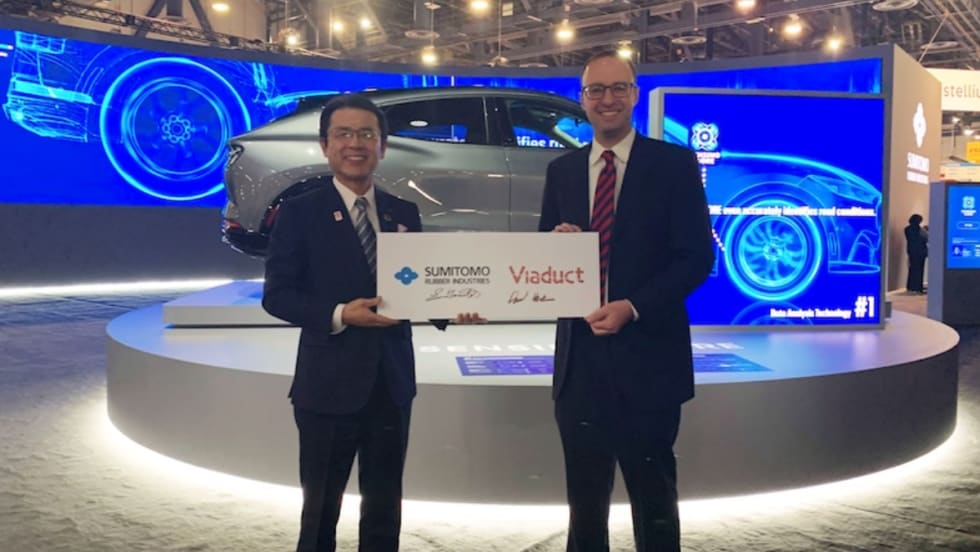
Viaduct will join Sumitomo as an independent subsidiary. Partnership strengthens global reach and accelerates AI-driven innovation for fleets and manufacturing.
Read More →