




Aramark Reinvents its Uniform and Career Apparel Fleet
The company’s Uniform and Career Apparel service arm began a fleet operations realignment in 2006 in an effort to utilize people, processes, and technology. Management has streamlined operations, enhanced consistency, and improved cost efficiencies.

A leader in professional services, Aramark provides award-winning food services, facilities management, and uniform and career apparel to healthcare institutions, universities and school districts, stadiums and arenas, and businesses around the world.
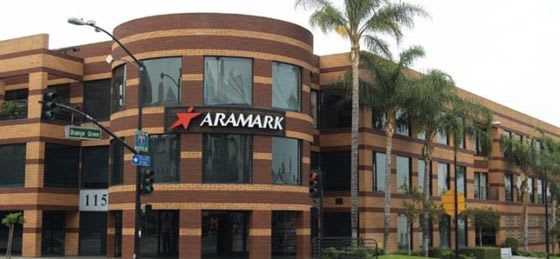
In Fortune magazine's 2008 list of "America's Most Admired Companies," Aramark was ranked number one in its industry, and since 1998, has been consistently evaluated by peers and analysts as one of the three most-admired companies in its industry.
Aramark's success stems from its mission to focus on customer service. Headquartered in Philadelphia, Aramark has approximately 250,000 employees serving clients in 19 countries.
One of Aramark's three service arms — Aramark Uniform and Career Apparel (AUCA) — began a realignment of its fleet in 2006. The initiative's primary goal: leverage people, processes, and technology to streamline operations, enhance process consistency across the organization, and improve fleet cost efficiencies.
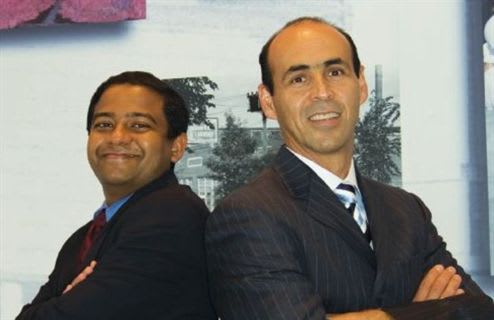
"We operate in a very competitive environment," said Satish Natarajan, senior director of fleet operations for AUCA, based in Burbank, Calif. "Our main objective in fleet is to provide adequate capacity to increase vehicle uptime and keep fleet costs down."
Through a fleet of 6,000 vehicles — including 3,500 stepvans and 1,000 other vehicle types — AUCA provides uniform rental and uniform leasing services to more than 200,000 customer accounts nationwide from more than 200 service locations and distribution centers across the United States. Aramark's full-service employee uniform solution includes design, sourcing and manufacturing, customization, cleaning, maintenance, and delivery.
The organization's fleet operations includes four areas: field operations, support staff, compliance, and analysts and project management. The groups partner to handle everything from procurement and fleet maintenance to fleet policy and compliance. The division relies on numerous in-house garages and more than 95 fleet managers and mechanics to help run operations nationwide.
[PAGEBREAK]
Dispersed across the country near Aramark's production plants, the company's garages manage all vehicles. Multiple locations are serviced by a garage in the area. However, some smaller locations at a distance from a local shop are serviced by partners such as Ryder or Penske.
A majority of the company's vehicles are managed and maintained at AUCA's in-house shops; the remaining vehicles rely on vendors for service. The department is moving toward centralization.
"Part of our strategy was to centralize and move away from local shops in order to standardize and get better consistency, metrics reporting, and pricing," Natarajan said. "This has been a big priority."
Each garage shop manager reports to a group fleet manager, responsible to a regional manager. Natarajan coordinates operations with regional managers and reports to Manuel Nieto, VP of operations support and engineering.
These relationships are critical to the success of the company's fleet organization. Nieto and Natarajan collaborate on the vision of AUCA's fleet strategy and benchmarking, frequently discussing the "whats" and "whys." It's up to Natarajan to handle the "how."
During the reorganization, the fleet strategy to invest in people, processes, and technology (PPT) allowed an opportunity to right-size the fleet while providing enough fleet capacity for growth.
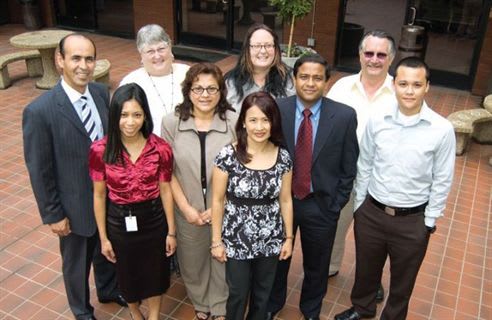
"The processes that worked when we were a fraction of the size we are today weren't working any more and strategic change was necessary," Nieto said. "Appointing Satish to run the organization, even though he was from a nonfleet background, brought in a fresh, operational perspective."
Natarajan had prior experience in operations management and brought leadership and management skills to develop and execute a PPT strategy to help transform the fleet organization. He holds a master's degree in industrial engineering with a background in operations and management consulting. He was involved in process improvement within Aramark before moving to fleet more than two years ago.
[PAGEBREAK]
"We wanted to move from a maintenance mindset to a PPT focus," Nieto said. "We brought Satish into the role by design. We took a fresh approach to fleet, looking to move to a process- and systems-focused organization versus just focusing on specs and maintenance. On the people side, we were looking to hire for skill and train for knowledge instead of following the traditional experience model."
"Our goal was to simplify, standardize, and automate," Natarajan said. "I broke it down, determined how to streamline, and began to roll out the best processes and take advantage of the best technology. It was vital that we put systems in place to standardize operations."
The restructuring's main goals were to develop the best way of operating, train the entire organization, and automate the new process. The realignment included hiring new talent; upgrading skill sets through training and knowledge-sharing; streamlining operations by measuring and managing; and benchmarking to industry best practices. Right-sizing vehicles and implementing a fleet management system, diagnostic and compliance tools, and a telematics pilot were also key areas of change.
"We look for the best people, and we want to execute efficient processes and invest in our facilities," Nieto said. "Our decentralized structure requires standardized processes that enable our field organization to focus on getting things done and not on how to do them."
Natarajan's fleet team is balanced with subject matter experts with more than 30 years of experience and project managers.
"Senior management understands that we are hiring for skill and adding knowledge afterward through training and partnering," Natarajan said.
During the realignment, the fleet team crafted a competency model to develop the fleet department's "bench strength." Goals included:
Defining skill set requirements for positions from entry-level technicians to skilled head technicians.
Categorizing fleet personnel into job levels based on interviews and skills assessment.
Developing a training program to help the workforce advance through OEM, upfitter, parts, and vendor training programs.
"We also established quarterly in-house training programs and ongoing computer-based training (CBT) for all fleet personnel," according to Natarajan.
"Training focuses on both technical and basic management and leadership skills development. The regional fleet managers, Bill Kindler, Tom Orr, and Bob Fisher, play a key role in developing the curriculum and providing training for field fleet managers," Natarajan added.
[PAGEBREAK]
Executing its new strategy proved challenging for management and included a multistep process. To better facilitate the reinvention process, Nieto and Natarajan set a roadmap to guide progress. The steps included:
Continual learning and growth initiatives for fleet managers.
Implementing more effective shop diagnostic tools.
Centralizing, consolidating, and automating systems.
Designing a better truck.
Continuous benchmarking against the best-in-class.
"Our process philosophy was to make our operations repeatable, reliable, and scalable," Natarajan said. "And over the past several months, we have embarked on several initiatives aimed at standardizing and improving our internal business processes."
Nieto and Natarajan continually re-emphasized the department's new mantra during the restructuring: simplify, standardize, and automate. Benchmarking was key to finding the right processes and practices.
"As we develop plans and processes for initiatives such as fleet maintenance and vehicle design, we benchmark and study against world-class fleet organizations, such as Frito-Lay, PepsiCo, Penske, FedEx, and GE," Natarajan said.
AUCA's fleet team looks at best-in-class companies before developing and implementing fleet policies and programs, including preventive maintenance.
"Early in the program, a few years back, we decided that rather than starting from scratch, we would benchmark with some of the best fleet organizations out there," Nieto said. "We took stock of what they were doing and what they're planning to do. We are fortunate to have some great partnerships with companies that have helped us continually improve and get better."
Benchmarked processes and items during the reorganization included:
Vehicle design and specification review.
Maintenance systems and diagnostics tools.
Driver training.
Fleet metrics and key performance indicators.
Fleet transactional processes (procurement, disposals, asset lifecycle management, etc.).
Vendor partnerships and contract negotiations, diagnostics and in-house upgrading through investments in shop tools and training for fleet personnel, and warranty work and campaigns have already generated savings for AUCA.
"Benchmarking allowed us to see what was going on in the fleet industry and what made sense for our business," Nieto said. "We incorporated much of the best practices out there into our fleet, saving us time because we didn't have to reinvent the wheel and generating many long-term benefits."
"We've looked for the best available technology, processes, and people and then invested in these areas," Nieto said.
[PAGEBREAK]
Moving into the future, AUCA continues to focus proactively on several ongoing initiatives, including implementing the following:
Web-based preventive maintenance program that includes vehicle scheduling, maintenance tracking, parts management, and reporting.
Pilot program to track and control fleet costs through cost-per-mile analysis, vehicle miles-per-gallon tracking, diagnostics codes, and vehicle utilization tracking.
Pilot program to incorporate hybrid and CNG vehicles into the company's truck fleet.
The new fleet asset management system consolidates all vehicle and driver information into a single integrated application, allowing online order forms and electronic requisitions, real-time order tracking and history, and integrated process and data storage.
"Our goal was to make everything Web-based because our fleet is so transaction intensive," Natarajan said. "The new system, managed by our analyst team of Ginno Carcereny and Micaela Cabral, provides real-time updates to fleet vehicle data, reconciles information from different sources, and serves as a consolidated repository of our vehicle asset information."
Other important fleet initiatives include moving toward alternative-fuel vehicles, as well as improved fuel cost tracking and management.
AUCA has begun two pilot alt-fuel programs. The first focuses on the use of CNG trucks. Natarajan placed orders for several CNG trucks and will evaluate their effectiveness.
The second pilot includes operating a demo hybrid-gas truck. Depending on the unit's performance, additional vehicles could be added to the fleet.
Aramark also plans to partner with the EPA and its SmartWay program.
"AUCA fleet is taking the lead role in green fleet initiatives in our industry," Natarajan said.
Fuel management and tracking was another area targeted for improvement. Previously AUCA used multiple fuel vendors, complicating the process. Natarajan rolled out a single, consolidated fuel program through one vendor and converted to online invoicing and centralized controls.
"Now we can project gallons by type of fuel for a particular location and use for business planning purposes," he said.
Other fuel cost initiatives include:
Designing changes to AUCA trucks, including reducing door weight and streamlining windshield angles.
Implementing an idle-control and shut-down system.
Piloting a telematics program to help fuel management.
Working with upfitters and OEMs to promote use of vehicle weight-reducing composite materials.
Another primary goal was optimizing AUCA's fleet size and age.
"We have streamlined to make a flat procurement cycle, negotiated with vendors to take advantage of our volume and get better pricing, and centralized the procurement process here in Burbank," said Natarajan. "Now, compliance, measurement, and management allow us to operate a more efficient fleet."
[PAGEBREAK]
To date, progress has been made on AUCA's fleet reorganization.
"Much of what we accomplished is because of the support of the senior leadership team. To scale-up was important, and to do that, we needed to deploy the right assets, technology, and skill sets," said Natarajan.
Although the AUCA fleet has come a long way in efforts to reinvent itself, "our quest for continuous improvement is always ongoing," Natarajan said.
More Operations

90% Use Telematics. Are Fleets Getting Safer? | AF News Recap
This week, we're breaking down which industries have the highest rates, how Jamie McKay manages 2,400 vehicles, what's happening with the 2027 fleet awards, and why software-defined vehicles could introduce new costs.
Read More →
What's Best Handled by an FMC, and What's Better Done Directly?
Fleet managers continue to rely on FMCs for essential services but are taking a closer look at where working directly with suppliers can improve efficiency and responsiveness.
Read More →
Fleet Meets: Erin Gilchrist
Meet Erin Gilchrist, the inaugural Mike Antich Spirit of Fleet Award winner, as she shares insights on leadership, mentorship, the power of industry connections, and why people remain at the heart of fleet's future.
Read More →

How 2026 Fleet Visionary Jamie McKay Manages 2,400 Vehicles Across 37 States
How do you keep 2,400 vehicles running across 37 states? Fleet Visionary Award winner Jamie McKay shares how collaboration, flexibility, and a few simple strategies help her tackle fleet management challenges at Aptive Pest Control.
Read More →
Managing Fleet Costs in an Era of Permanent Volatility
Fleet operating costs have risen more than 20% since 2020, raising a key question: When does extending a vehicle's service life stop making financial sense?
Read More →
The Next Evolution of Fleet Management: Autonomous Operations
This opening keynote session at the Fleet Forward Conference highlights the future of autonomous driving for fleets.
Read More →
How to Reduce the Total Cost of Risk From Catalytic Converter Theft
A stolen catalytic converter can cost fleets far more in downtime and lost productivity than in repairs. A total-cost-of-risk approach can help fleet managers quantify their exposure and prioritize theft prevention.
Read More →
Personal-Use Charges Rise as Vehicle Values Fall | AF News Recap
Personal-use charges are climbing, wholesale used-vehicle values are declining, and commercial fleet sales growth is slowing. This week, we're breaking down the latest fleet data, plus how Element Fleet Management is helping Waymo prepare for its first Canadian robotaxi market.
Read More →
Here's When You Should Make an Exception to Fleet Policy
Fleet policies are designed to create consistency, but not every driver or situation fits neatly within standard rules.
Read More →
AI-Native or AI-Acquired: What Should Fleet Managers Look for in an AI Platform?
Six questions can help fleet managers look beyond AI marketing claims to evaluate integration, data access, and real-world operational performance.
Read More →