




AFLA's Mini-MBA for Fleet Professionals
The Automotive Fleet & Leasing Association has partnered with Bentley University to create a compelling new educational opportunity for the next generation of fleet industry leaders.

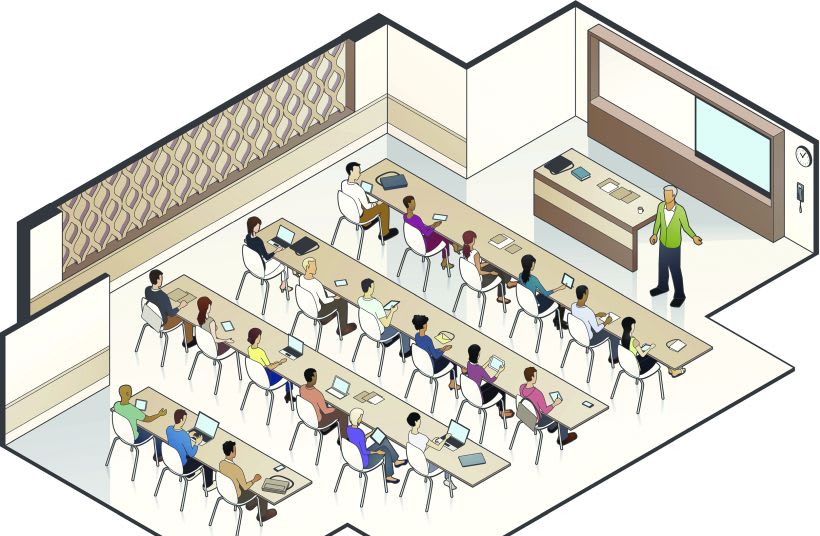
The Automotive Fleet & Leasing Association's Mini-MBA program for fleet professionals will be held at Bentley University.
Photo via Getty Images.
On a picturesque suburban campus nine miles west of Boston sits Bentley University, a small but formidable institution that ranks No. 2 on U.S. News & World Report’s regional list of the Top 10 master’s degree programs. Starting next summer, the Waltham, Mass., school will play host to the Automotive Fleet & Leasing Association (AFLA)’s “mini-MBA” program. For five straight days, a select group of “high-potential” fleet professionals will be immersed in an educational experience designed to enhance their career skills while forming lasting bonds with their classmates and instructors.
Led by AFLA Past President Michael Bieger, Executive Director Bill Elliott, and President Mary Sticha, and with the help of Bentley’s administrators and faculty, the program has been taking shape since early last year. But the idea was first hatched in June 2015, when Bieger and Elliott attended a CEO symposium for association leaders in Washington, D.C., as an incoming AFLA officer. Struck by the effectiveness of the format and content, Bieger’s mind began to race.
“My thinking morphed from ‘This is a terrific educational opportunity for an ALFA president’ to ‘Can we do anything like this for our members?’” Bieger recalled. By the time Bieger assumed the presidency for the 2016–17 term, planning — along with the search for a suitable facility and an inaugural class — had begun in earnest.
Initial Steps of Building a Mini-MBA
The exploratory phase of the mini-MBA program included extensive workshopping with AFLA leadership and a cross-section of association members. Bieger pitched it as an investment that would pay off in the short term for students and in the long term for AFLA, and he found willing allies in Elliott and Sticha.
“I thought it was a fabulous idea,” Elliott said. “I had heard of other associations doing a similar thing. There’s a real thirst for leadership development. People want to build careers and understand why businesses work the way they do.”
The executives met with members in hopes of securing enough commitments to form an inaugural class of 20 to 25 students. They just had to convince them the high-potential associates they select will find the program, the cost, and the time away from work worthwhile.
Those meetings generated enough excitement and energy to keep the effort going, and the process accelerated when AFLA member Glen Villano, then the CEO of Merchants Fleet Management, became an advocate.
“It’s probably fair to say that, when Glen stepped in, he was a perfect fit to help lead the charge,” Elliott said, noting that Villano had built a similar program for another association he had worked with in partnership with the University of North Carolina at Chapel Hill, which became an early contender to host the AFLA program. “When Michael became past president and took over as task force chair, we were ready to rock and roll.”
Selecting a University
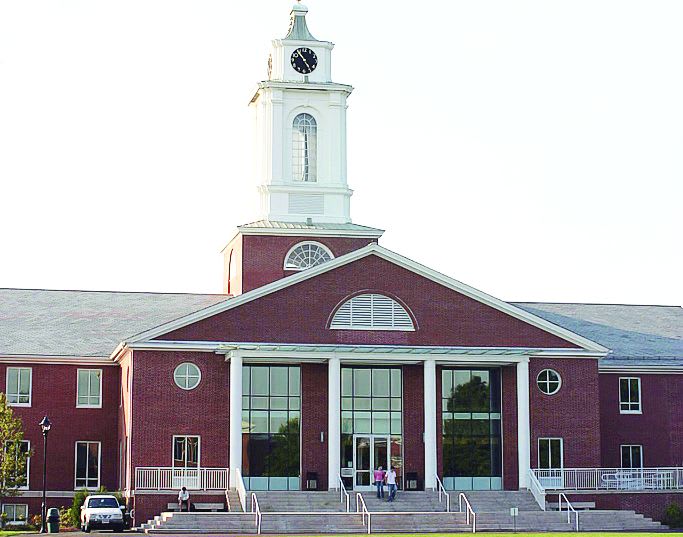
Photo via Wikimedia Commons.
The search for an educational partner would ultimately include 26 colleges and universities. Bieger said the task force scored potential partners based on independent research and rankings and shortlisted such “name” schools as Harvard, Princeton, and Penn State. After excluding Penn State and several other candidates not located near a major airport, the group reached out to 18 finalists. Most responded with curricula the team used to narrow their ideal course selection.
“Once we categorized them into high-level ‘buckets,’ it was easy to see which courses stood out. The first was leadership, followed by negotiation, innovation, and finance,” said Bieger, who convened a curriculum committee that included AFLA supporters of varying educational backgrounds. “From there, we went into subheadings — under leadership, for example, we included leadership of remote teams — and took all that back to the universities.”
Related: How to Master-Plan and Set Goals
t was in that round that Bentley emerged as the favorite. Bieger was impressed by the caliber of the school’s faculty and the interest administrators showed in the fleet industry. Elliott thought the school’s reputation as a technology-focused business academy and the lure of the Boston area would help draw interest to the program.
“People expect a professional experience. We took that to heart,” Elliott said. “We were really going for two things: academic quality and atmosphere.”
Bentley’s leadership was just as impressed with AFLA, said Debra Kennedy, director of executive education for the Graduate School of Business.
“They’re a really interesting group. They represent such a large segment, not just in fleet management, but the whole auto industry,” said Kennedy, who has helped build comparable programs for disciplines ranging from dentistry to human resources. “These types of groups have a real need for excellence and a desire to provide things for their constituents, and universities can be great partners for that. We’re thrilled that they’ll be coming to Boston.”
Kennedy noted that faculty members each will bring applicable real-world experience to the program. “I think that’s a differentiator for Bentley University. We really focus on teaching in a way that can be applied immediately to business.” The coursework will include theoretical and practical exercises, including computer simulations. “They will use a set of tools to work through a set of exercises. Outcomes can be debriefed, and they will identify leadership behaviors and communication gaps.”
Expected Results of AFLA's Mini-MBA
Bieger remains focused on finalizing the curriculum and selecting the first class, but he holds long-term aspirations for AFLA’s mini-MBA as well. He wants the program to become a perpetual academic and financial success that helps drive the fleet industry forward.
“It’s not just going to benefit the first and second class but the industry as a whole,” he said. “With all the disruptors coming into the market, you have to be able to understand new challenges, and you have to be agile enough to change how you do business.”
In addition to the accomplishment of completing a rigorous week of training, Bieger predicts participants will form lifelong bonds with fellow students who will one day become co-workers, collaborators, and competitors. “They’re going to be locked away for five days, all in this unique educational experience together. It’s going to be an automotive Skull and Bones: You can reach out to anyone who has been through it throughout your career. It’s going to be a good thing for the industry.”
“I evaluate my success on whether AFLA is successful or not, and we’re not going to be successful if we just keep doing the same thing,” Elliott said. “This is one of the bigger programs I’ve been involved in with AFLA. It solidifies our position as the place to be for seasoned fleet professionals.”
Related: 2018 Fleet Hall of Fame Nominees Named
More Operations

What Will Shape the Next Era of Fleet Management?
EVs, AI, and autonomous vehicles are reshaping fleet management. Discover what’s ahead—and how fleet leaders can prepare for the next era.
Read More →
How Fleets Can Recruit and Train Veterans for Technician Roles
Here's how the technician shortage has affected uptime for fleets, and what to do about it.
Read More →
Avis Budget Group Deploys Neology Toll Management Technology Across Major Brands
Neology’s neoFleet platform will manage toll transactions and toll-authority operations for vehicles across Avis, Budget, Payless, Budget Truck and Zipcar.
Read More →

Fleet Personal-Use Charges Edge Higher in 2026
Nearly eight in 10 surveyed fleets allow personal use of company vehicles, while just over half of respondents report charging employees for the privilege.
Read More →
The Future of Fleet + What’s Changing Right Now | AF News Recap
Could developments overseas offer a preview of what’s coming for U.S. fleets? This week, we’re looking at the future of AI, autonomy, and electrification, plus Ford Pro’s new certified pre-owned program, smarter vehicle offboarding, and a new way for fleets to manage toll expenses.
Read More →
How to Handle Vehicle Offboarding
What do fleet managers need to do when a driver leaves?
Read More →
Fleet Manager’s Ultimate Playbook: Navigating the New Standard in OEM Connectivity
Rising operating costs, driver safety concerns, and unplanned downtime are putting unprecedented pressure on modern fleets. Discover how fleet managers use embedded OEM connectivity and real-time vehicle data to cut TCO, prevent downtime, and protect drivers without aftermarket telematics hardware.
Read More →
U.S. Bank Adds Verra Mobility Toll Management to Voyager Fleet Platform
The integration allows U.S. Bank Voyager fleet customers to manage toll payments and violations alongside fuel, EV charging and maintenance expenses.
Read More →
ADAS Prevents Crashes. But Repairs Cost More | AF News Recap
ADAS-equipped vehicles may crash less often, but they can cost more when they do. This week, we’re breaking down what that tradeoff means for fleets, plus Subaru’s first Forester Wilderness Hybrid, Nissan’s new e-POWER Rogue, and why Calstart has become Catalyst Mobility.
Read More →
Moventum Fleet Management Names Mark Iorillo Head of Sales
Iorillo brings nearly 20 years of fleet management and sales experience to the role, including previous positions at Element Fleet Management, CEI, Donlen and Ryder.
Read More →