




Achieve a Green Fleet Without the Range Anxiety of Electric Vehicles
A hybridized work truck fleet provides a cost-effective, eco-conscious way for organizations to achieve an idle-free green fleet without sacrificing range.
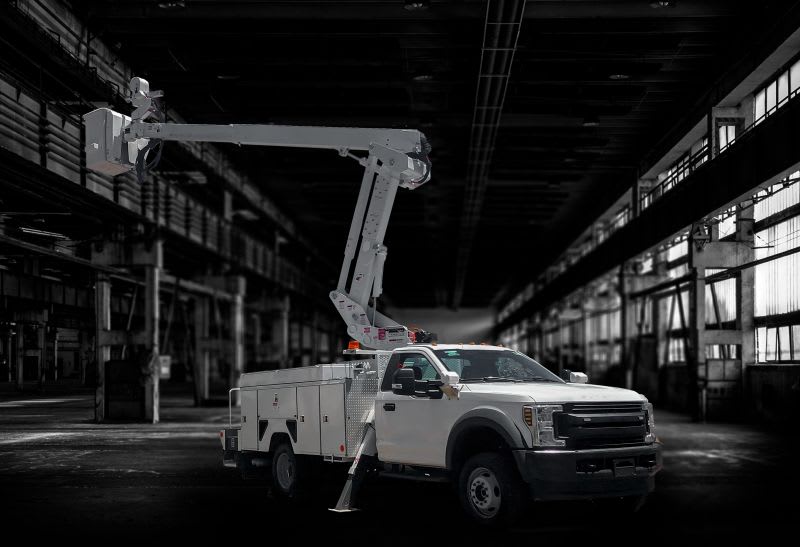
Organizations don’t have to choose between traditional diesel work vehicles and fully-electric ones and instead can integrate the best aspects of both with hybrid auxiliary power systems.
Photo: Volta Power Systems
With increasing environmental awareness and anti-idling laws for heavy-duty vehicles on the rise, municipalities and private enterprises are now weighing the pros and cons of implementing fully-electric vehicles (EVs) into their work truck fleets. These vehicles are appealing for their positive environmental impact. Still, many organizations struggle to bring their eco-conscious aspirations to fruition because they are limited by cost, sufficient infrastructure, trained personnel and range.
Fully-electric work trucks can cost nearly twice the price of a diesel work truck, and that high price tag is often the first barrier. However, even if an organization has the budget for one of these pricey models, the limitation of range becomes the next barrier for utility companies covering broad service areas.
Range Anxiety
“Range anxiety” describes the limited distance electric vehicles can support and the resulting uncertainty that the operator can reach their destination and return before running out of power.
In the case of electric work trucks, operators experience intensified range anxiety in situations where the stakes are higher. More than reaching their destination and returning on one charge, their jobs require greater power needs beyond merely driving. Operators also need adequate power to complete their work at remote job sites, necessitating higher energy levels and enough capacity to provide for hydraulics, power tools, and other appliances all day long.
While the driving range of EVs continues to improve, the issue of range anxiety is exacerbated by the lack of publicly-available EV charging stations in many parts of the U.S., very few of which can accommodate a commercial work truck. What’s more, safe charging is slow (compared to filling up a diesel tank), so even as the number of charge stations increases, the problem of time remains.
Though organizations and municipalities are working to change this, the lack of charging infrastructure ultimately limits how long operators can work before stopping to preserve charge. Fully-electric work vehicles place limitations on workers that put them at risk for being stranded at a job site with inadequate power to complete their work, or insufficient energy to travel to the nearest vehicle charging station.
In rural or remote areas, this also presents a risk during natural disasters. Fires, floods and inclement weather all have the potential to change the landscape in a way that requires additional range and time for utility workers to make their way safely back. Going electric on a fleet would mean those vehicles aren’t available for essential safety work.
Hybrid Auxiliary Power
Luckily, organizations don’t have to choose between traditional diesel work vehicles and fully-electric ones and instead can integrate the best aspects of both with hybrid auxiliary power systems. Unlike a full-electric or even a hybrid drivetrain vehicle, these trucks have the reliable range of their full-diesel counterparts. But instead, a new breed of hybrids use an advanced lithium-ion power system for auxiliary work power to eliminate idling emissions and noise.
Drop-in consumer-grade 12-volt lithium iron phosphate (LFP) systems have been on the market for some time. Since their introduction, more advanced technology has emerged on the energy-storage scene. New access to nickel manganese cobalt (NMC) li-ion technology, the same tech used by automakers like Chevy and Tesla, offers higher energy density and reliability critical for utility operators. NMC can store over 60 percent more energy in the same amount of space than most LFP systems and 500 percent more energy than lead-acid. This equates to all-day power for hydraulics, compressors and power tools.
In 2018 Volta Power Systems, a producer of NMC-based li-ion power systems, partnered with ETI to provide Oklahoma Gas & Electric (OG&E) with the first-ever hybrid bucket work truck using Volta’s proprietary li-ion technology. OG&E’s goal was to “green their fleet,” completely eliminating bucket truck idling while in use.
The implementation of a Volta system allowed OG&E’s bucket truck to drive to a job site, completely shut off the engine and still have more than enough power to operate the hydraulic lift, pneumatic tools and exportable 120V power for electric power tools. Plus, by eliminating the need to idle or use a generator, truck operators could work a quiet third shift without disturbing neighborhood residents with a noisy engine.
The power systems recharge via alternator while driving from one job site to another, reducing and, in some cases, eliminating the need for vehicle charging stations. There’s more than enough power capacity for fleet vehicles to run power tools, hydraulics, air conditioning, micro-grid and more at the push of a button. Plus, the systems are compatible with any chassis and can be standardized to outfit an entire truck fleet.
All this to say, it’s possible to completely hybridize an existing work truck fleet for far less than replacing it with a fully-electric fleet. Hybridized power systems, such as those offered by Volta, can be easily retrofitted to current fleet vehicles and pre-installed in newly-purchased vehicles, eliminating the need to start from scratch while rapidly implementing an environmentally-conscious initiative.
Implementing hybridized power systems into a work truck fleet is a cost-effective solution in response to anti-idling regulations without the range anxiety of fully-electric vehicles. It opens up opportunities for green fleet incentives and grants. The technology is proven, the power is reliable, and the results are undeniable: organizations don’t have to shell out the big bucks for an eco-conscious fleet solution.
About the Author: Jack Johnson is the founder and CEO of Volta Power Systems. He has 16 years experience with Johnson Control providing leadership in advanced material science, new technology launches and structured turn arounds on an international level. In 2009 Johnson was asked to lead the launch of Johnson Control-Saft joint venture where he was responsible for $250M capital development for the first large-format automotive-focus lithium-ion plant. In 2014 Johnson decided to apply the knowledge gained regarding advanced lithium-ion and start his own company focused on supporting smaller OEM’s wishing to pursue advanced energy deployment.
Originally posted on Work Truck Online
More Green Fleet

Merchants Fleet Reports 290M EV Miles as Fleets Navigate Changing Electrification Market
From millions in operating savings to hundreds of millions of EV miles, Merchants Fleet’s latest report reveals what’s working and what’s changing in fleet electrification.
Read More →
The EV Breakdown Nobody's Talking About: Why Most Electric Vehicle Roadside Calls Aren't Mechanical Failures
Here's why EV breakdowns are widely misunderstood.
Read More →
ChargePoint Now Available in Energy Pass
ChargePoint and additional planned charging network integrations were added to GM's Energy Pass.
Read More →
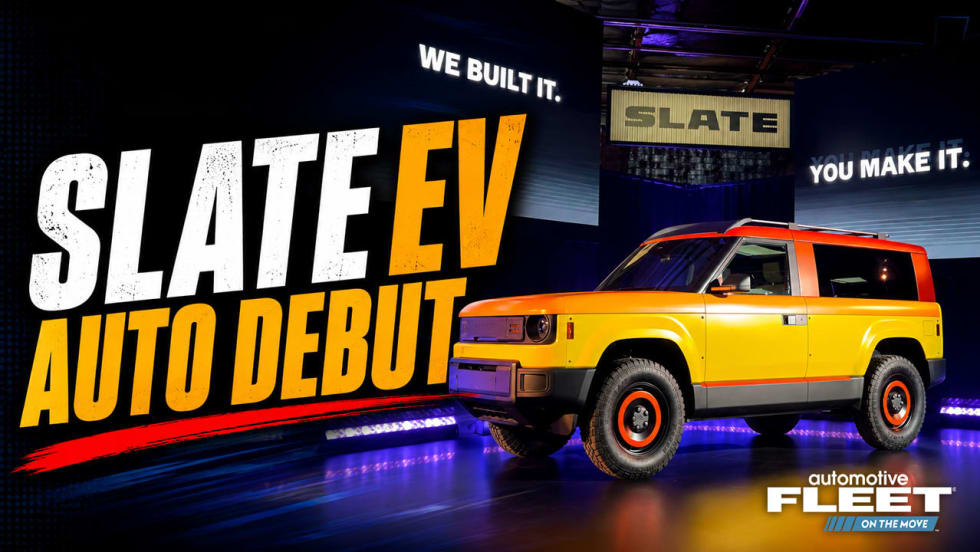
First Look: Slate Auto's Electric Fleet Pickup
Could an affordable, modular EV pickup make electrification more practical for fleets?
Read More →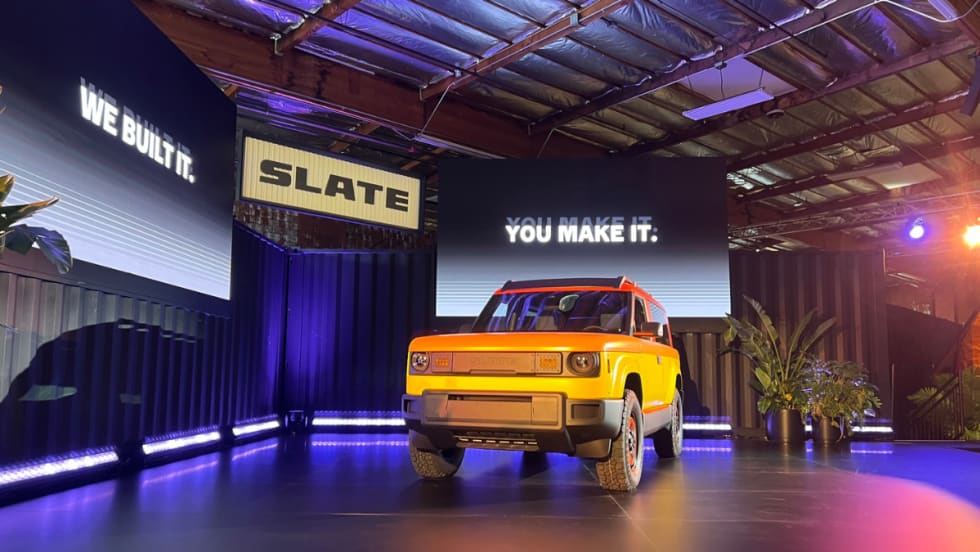
Slate Debuts Colorful, Unique EV Models
A recent media and client event, studded with electric vehicles dressed up on platforms, planted a new position for the manufacturer in the wider EV market. Fleets will find cost-saving advantages.
Read More →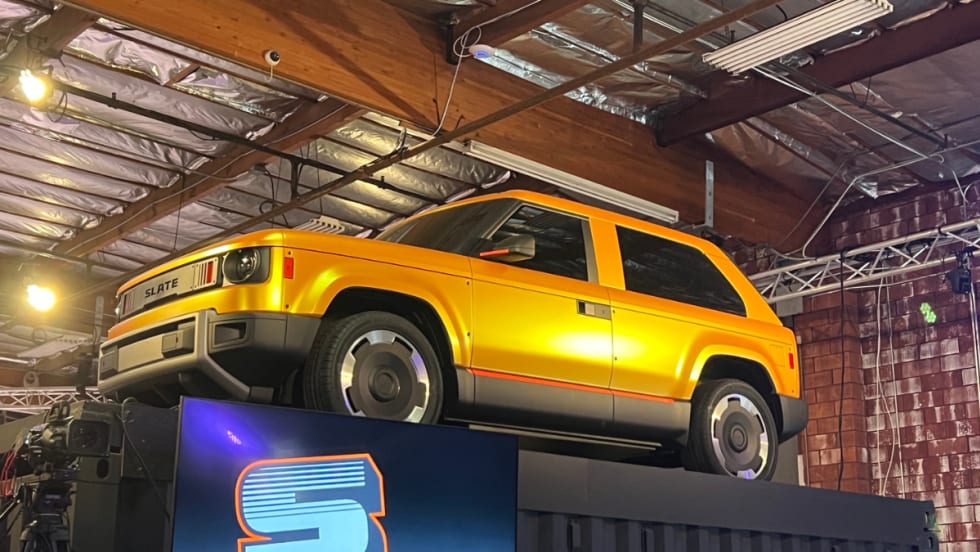
Slate Electric SUV, Pickup Switchable Model Aims For Light-Duty Fleets
Everything about this EV is counterintuitive and understated, making it stand out from the crowd.
Read More →
Inspiration Mobility Acquires Key Electrada Assets
Inspiration Mobility Group has acquired select assets of Electrada, adding the fleet electrification provider's team, technology, and charging infrastructure development capabilities to its energy management business.
Read More →
Turning Connected Vehicle Data Into Decisions That Matter
Fleet leaders have more data than ever, but turning that data into clear, actionable decisions remains a challenge. This white paper shows how leading organizations are using connected vehicle data to improve safety, reduce costs, and optimize fleet performance. Learn how to turn insight into action across your fleet.
Read More →
Are You Tracking Your Fleet's True Total Cost of Ownership?
Bobit Business Media surveyed 190 fleet professionals and found that while most fleets are tracking costs, fragmented systems and data gaps are keeping true TCO visibility out of reach. With rising pressure to control spend in an increasingly volatile environment, the gap between what fleets think they know and what the data actually shows is wider than you might expect. See how your peers are managing costs today and where the industry still has room to improve.
Read More →