




Want to Keep Reading? How To Improve Dual Physical-Digital Auction Operations
A Plug-In Hybrid Works for My Dad, But Won’t for Your Fleet
What works for one disciplined commuter doesn’t scale across commercial operations.
by Adam Siefert
July 3, 2025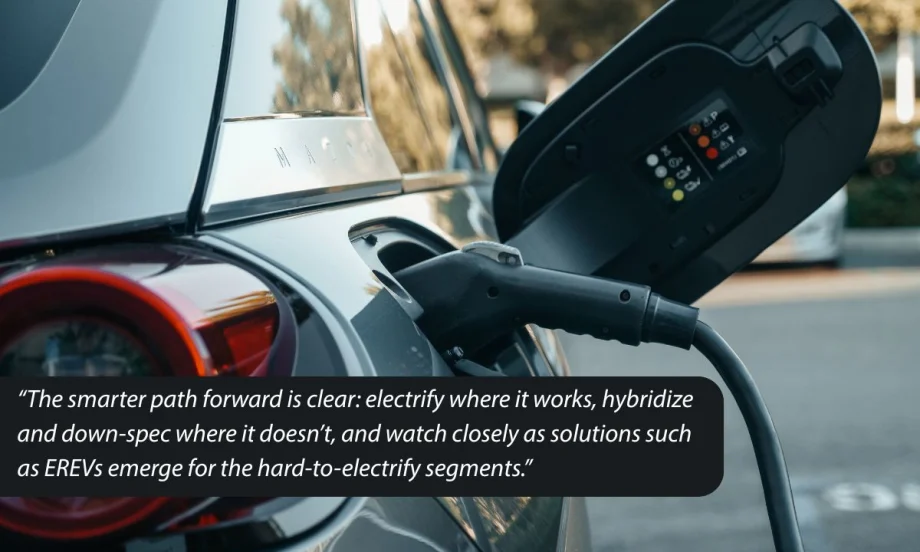
Fleets are faced with a decision when it comes to plug-in hybrids: what works best?
Photo: Bobit
6 min to read
The opinions and ideas expressed in this article are those of the author. They do not reflect the opinions or views of Automotive Fleet.
My Dad’s 1,200 MPG Commuter Car
My dad loves his 2018 Honda Clarity Plug-In Hybrid — a car you might not know existed, but one that he’d proudly sell you on in the church parking lot. He test drove it as a company demo, fell in love with the battery performance and efficiency, and when offered a choice between a second demo or a car allowance, he bought it out. Clarity even runs in the family, as he sold my uncle in Florida to get one, too.
He drives 12 miles to work and 12 miles home every day, with occasional detours to the grocery store or to see his grandkids. The car has a 47-mile electric range, which for him means the gas engine barely ever turns on. He plugs it in every night, occasionally at work too, and proudly reports that he fills up the gas tank — all six gallons — maybe once every couple of months.
He once calculated that when charging at work, he gets the equivalent of 1,200 miles per gallon. I didn’t believe him, but after checking the math… he’s actually right.
It’s hard to imagine a more perfect use case for a plug-in hybrid. Short trips, consistent access to charging, and a driver who plugs in without fail. He gets the upside of electric driving without the perceived risk of running out of charge. It’s convenient, reliable, and as he puts it, "absolutely” what he’d buy again — if he didn’t already plan to keep this one forever. But here’s the thing: my dad is not your driver.
He’s not hauling tools. He’s not making 20 stops. He’s not clocking 150 miles a day in unpredictable weather. He doesn’t share his car with rotating drivers who may or may not remember to plug it in. He’s not running a fleet.
And what works beautifully for one thoughtful, routine-driven almost retiree in a South Jersey suburb… completely falls apart in the hands of a real-world fleet.
The Bridge That Went Nowhere
Plug-in hybrids were once hailed as the perfect bridge between ICE to electric vehicles, combining a zero-emission promise with the peace-of-mind safety net of gasoline. In theory, they were the ideal steppingstone.
In practice? They’ve become one of the most expensive detours a fleet can take.
Let’s start with how they’re designed. A PHEV gives you:
• A small electric battery, often good for just 20 to 40 miles of range, and
• A full internal combustion engine, including transmission and exhaust systems, covers anything beyond that.
That’s two power trains to maintain, one of which may be rarely used, but still carries the same age-related costs. That redundancy is part of why PHEVs now have the worst total cost of ownership (TCO) of any powertrain, according to a recent Automotive Fleet analysis.
The data showed:
• Higher depreciation costs due to greater upfront cost and weak resale value,
• Increased maintenance and repair costs because of dual powertrains, and
• Minimal operational savings, since most drivers don’t plug in.
This last point is critical. For fleets, charging compliance is a known challenge, and most PHEVs are simply not plugged in regularly. That means the electric portion of the vehicle — the part meant to save you money — just adds dead weight. It drags down the fuel economy. It does nothing to reduce emissions. Multiply this across 50 or 5,000 vehicles, and the math breaks fast.
Even the driving experience suffers. My dad noticed the gas engine feels “underpowered” when it kicks in.
Now imagine that setup in a fully loaded service van or pickup. You’re not just compromising fuel economy — you’re compromising performance too.
For most fleets, it’s not a steppingstone — it’s a step backward.
So, What Should Fleets Do Instead?
If plug-in hybrids are off the table, what is the path forward? In our work advising commercial fleets of all shapes and sizes, we’ve seen three practical strategies emerge — depending on your operation, your assets, and your long-term goals.
1. Lean into BEVs — Where They Make Sense
For most light-duty applications, full battery-electric vehicles are no longer a future solution — they’re a real opportunity. This is due to:
More Models, More Range: New BEV pickups, vans, and SUVs now regularly deliver 250–300+ miles of real-world range. These aren’t compliance cars — they’re workhorses.
Proven Uptime and TCO: Data from real fleets shows reliability and lifetime cost savings, especially on consistent high-mileage routes. EVs have less maintenance required and significantly lower fuel costs.
Improved Driver Experience: IIHS safety scores for EVs are strong, and driver feedback is overwhelmingly positive — smoother ride, less noise, and no fumes. Drivers are becoming advocates, not obstacles.
In short: BEVs are no longer “new tech.” They’re just another — and often better — option in the selector.
2. Rethink the Spec: Downsize and Hybridize
If full electrification is out of reach for certain asset types or routes, consider the vehicle's specs and/or operational changes.
Questions to ask your field:
• Why are we defaulting to full-size pickups?
• Could a small pickup with a hybrid powertrain do the job?
• Are we carrying tools or equipment that could be stored elsewhere or modularized?
• Are we designing routes aligned with our future growth or decentralization plans?
In many cases, right-sizing the vehicle or switching to a standard hybrid (not plug-in) provides a cost-effective and low-friction path to reducing emissions and improving efficiency. It’s not flashy, but it’s smart. And more importantly, it creates operational momentum: a shift in mindset, not just a shift in drivetrain.
3. Stay Smart on Future Technology
Some vehicle use cases just aren’t a fit for today’s BEVs or hybrids, especially heavier light-duty and smaller medium-duty vehicles that need a long range, carry large payloads, or have high route variability. But choosing to delay a switch doesn’t mean you’re stuck.
Enter the extended-range EV (EREV) — a platform that blends full electric drivetrains with gas-powered range extenders. Think: the opposite of a PHEV. The battery does the real work, and the small engine recharges it only when needed.
While there’s still limited fleet data available today, several promising OEMs and powertrain developers are targeting this space specifically for hard-to-electrify commercial applications. If the early specs hold, EREVs could become the most viable option for fleets with:
• High mileage and inconsistent charging access,
• Rugged terrain or climate variation,
• Operational demands that prevent right-sizing.
(Add in horizon timeline of technology to look out for? Fast charging in 5 minutes, sodium ion batteries, but also EREVs. Several callouts with estimated years for commercialized solutions). We’re watching this segment closely. It’s not ready for wide-scale deployment yet — but it’s absolutely one to have in your three to five-year strategy horizon.
Back to Dad — and a Smarter Road Ahead
My dad still loves his Honda Clarity and wants to keep it forever. But even he recently admitted: “I don’t think a plug-in hybrid makes sense anymore.”
And he’s right. What works beautifully for one routine-driven almost-retiree doesn’t scale to real-world fleets. Today, the smarter path forward is clear: electrify where it works, hybridize and down-spec where it doesn’t, and watch closely as solutions such as EREVs emerge for the hard-to-electrify segments. The bridge is behind us — now it’s time to build better roads.
Subscribe to Our Newsletter
More Vehicle Research
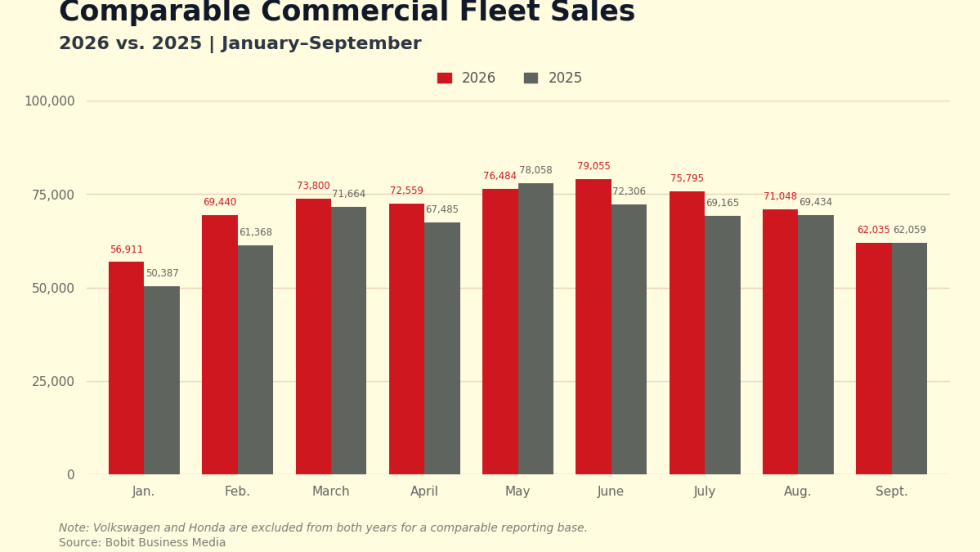
Commercial Fleet Sales Rise 5.8% Through September 2026
September commercial fleet sales were essentially unchanged from a year earlier, slowing year-to-date growth while keeping volume ahead of 2025.
Read More →
Hall of Fame Inductee: John Dmochowsky
The longtime Mondelēz International fleet executive joins the Automotive Fleet Hall of Fame.
Read More →
Hall of Fame Inductee: Lee Miller
After more than four decades at Boehringer Ingelheim, Lee Miller leaves a legacy built on fleet expertise.
Read More →
Hall of Fame Inductee: Mark F. Petersen
From managing fleets of thousands of vehicles to advancing safety and mentoring fellow professionals, Mark F. Petersen made his mark across both the corporate and supplier sides of fleet.
Read More →
When Charger Downtime Becomes a Fleet Availability Problem
As EV deployments move beyond pilot programs, charger reliability can directly affect vehicle readiness, driver productivity and route scheduling.
Read More →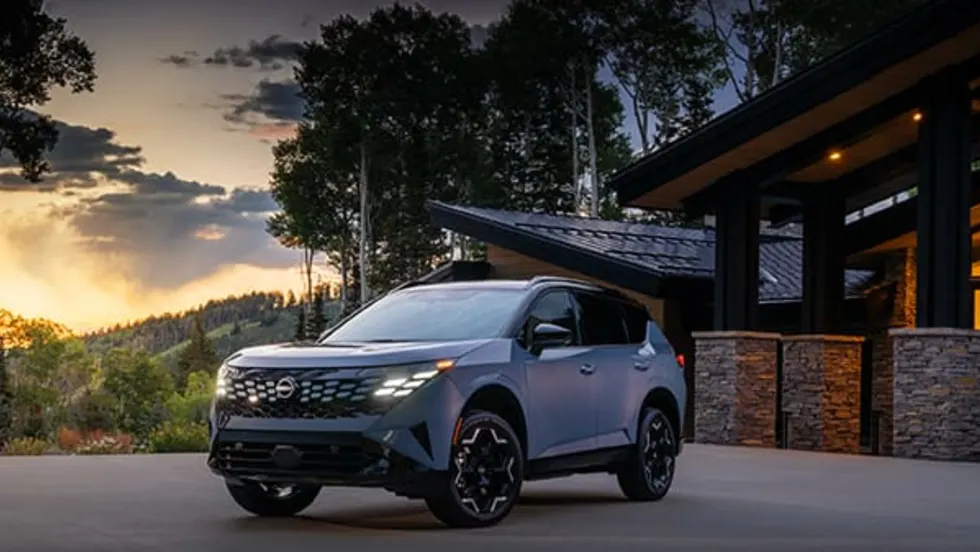
2027 Nissan Rogue Hybrid Adds e-POWER, Standard AWD
The new Rogue Hybrid uses Nissan’s e-POWER system with dual electric motors, offers an estimated 40 mpg and starts at $35,490.
Read More →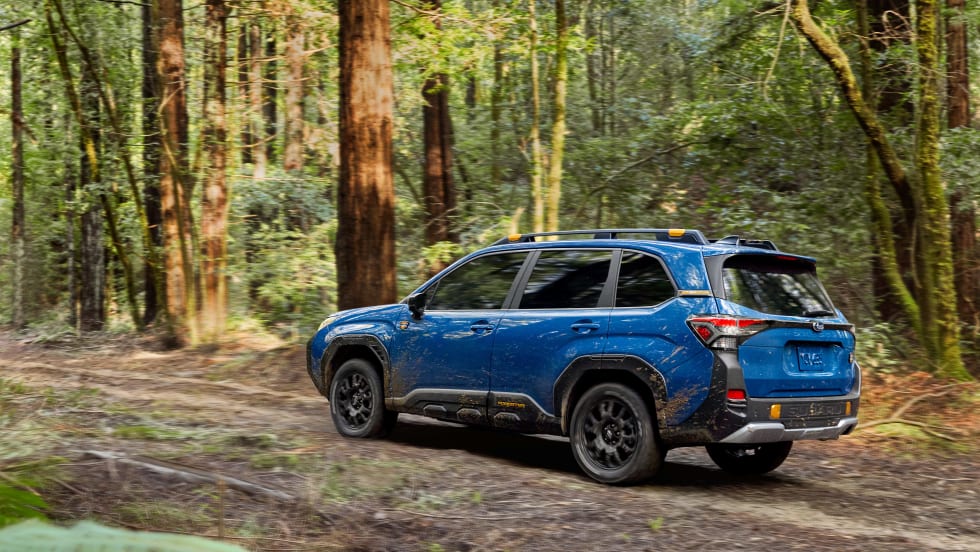
2027 Subaru Forester Adds First Wilderness Hybrid
The 2027 Forester lineup starts at $29,995 and adds a Wilderness Hybrid with 194 combined horsepower and 9.3 inches of ground clearance.
Read More →
EV Realty Names Henrik Holland President as Charging Platform Expands
The former Prologis Mobility and Shell executive will help expand EV Realty’s truck charging business and move its power-first infrastructure model into autonomous vehicle depots and other fleet sectors.
Read More →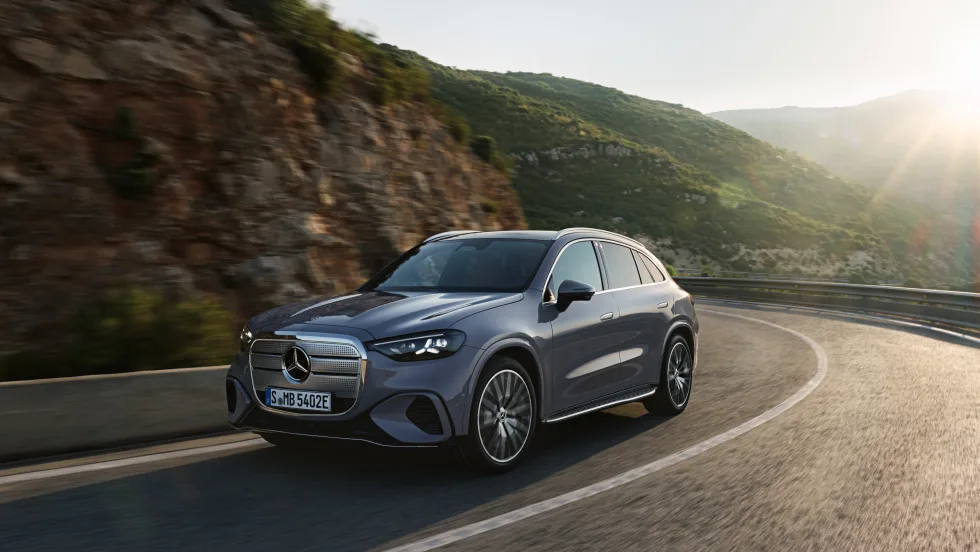
Mercedes-Benz Introduces Electric GLC With Up to 350 Miles of Range
The GLC 400 4MATIC Electric features an 800-volt architecture, 330-kW DC fast charging and a 94-kWh battery, along with Mercedes-Benz's new MB.OS operating system.
Read More →
Fleet Has a Talent Pipeline Problem, not a Talent Problem
Where will the next generation of fleet leaders come from, and what does the industry need to do differently to find them?
Read More →