




3 Reasons AV Fleets Will Proliferate Private Sites First
Autonomous vehicles may first deploy in planned communities, campuses, government facilities, and industrial sites because they offer lower risk, fewer regulations, and clearer business models than public environments.
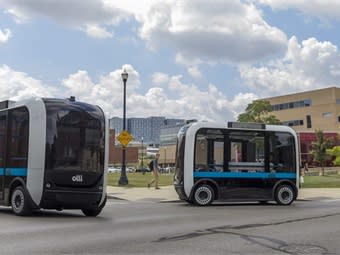
The City of Rancho Cordova ran a three-month pilot project featuring Olli, a 3D printed, self-driving shuttle developed by Local Motors.
Photo via Local Motors.
The widespread availability of self-driving cars for public use seems to be farther and farther off. That doesn’t mean you won’t be riding one soon, depending on where you live or work. While autonomous shuttles have been deployed on public streets in limited form in the U.S. and Europe, there is growing recognition of advantages they offer private sites, and adoption is picking up.
Uses cases for autonomous vehicles (AVs) on private properties include providing rides in planned communities, university campuses, government facilities, and industrial sites. There are plenty of applications for them that explain why AVs are enjoying significant adoption on private sites while we wait for mass deployment on public streets.
There are three reasons why private applications are taking off: safety, regulations, and business models.
It’s Safer
Private sites are much lower-risk because they feature lower traffic densities in controlled environments, and because the vehicles run at low speeds. This is happening in places like Lake Nona, Florida, a privately owned planned community where service provider Beep plans to ferry people around the community’s private roads from homes to businesses, restaurants, and shops. The company is creating a blueprint to use on similar cities in Florida.
Anywhere-to-anywhere services on public roads at high speeds in congested cities with pedestrians, bicycles, and other vehicles introduce many more safety risks.
Fewer Regulations
The regulations involved in getting driverless vehicles on public streets are dense and differ from country to country, state to state, and city to city. There is no unified framework for the testing and implementation of self-driving vehicles making it hard for developers to create systems that could be approved in multiple markets. This is a major barrier to adoption for mobility providers, and private property owners have more control over their roadways and don’t always need city or state approval.
In California, Paradise Valley Estates, a gated retirement community, will offer autonomous shuttle rides for residents around the property. The 300-acre Brooklyn Navy Yard will use autonomous vehicles to shuttle employees around the campus.
The Business Models are Clearer
The business model for public autonomous is in flux. Car makers like Ford and Daimler are developing their own AV technologies for their own vehicles, while tech companies like Waymo and Uber are developing AV tech for third-party vehicles. Who will operate the services, and how the service providers, vehicle manufacturers, and tech companies will share the financial pie are questions that have yet to be resolved.
For private fleets operating on owned facilities, it’s not so complex. Today most use cases are for non-rate-paying services that are designed to reduce operating costs, increase business efficiency, for increase customer satisfaction. Service providers offer the vehicles and service on behalf of the property owner.
For example, COAST Autonomous announced an agreement with Union Pacific to supply rail car repair facilities with autonomous vehicles that provide staff transportation, supply and equipment deliveries, and perimeter.
While companies like Waymo, GM, Ford, Lyft, Uber, Baidu, Tesla, and others continue testing self-driving vehicles and technology on public streets, others are focusing efforts away from personal transit options and seeing how autonomous tech can move people in controlled settings on private sites. Autonomous vehicles are a great fit for situations where the environment is well-understood and is operation is less complex than dense urban areas.
“People always ask me when driverless vehicles will be on the road," Continental head of self-driving Andree Hohm told Automotive News, "and I tell them the answer is 'today.' If you have a very specific application area, for example like a private road, and want to travel at low velocity, you can buy such a vehicle." Many are doing so.
Raphaël Gindrat is a cofounder and CEO of Bestmile. He is a pioneer in the world of autonomous mobility and is active in many global industry organizations including the World Economic Forum’s Tech Pioneers.
More Fleet Forward

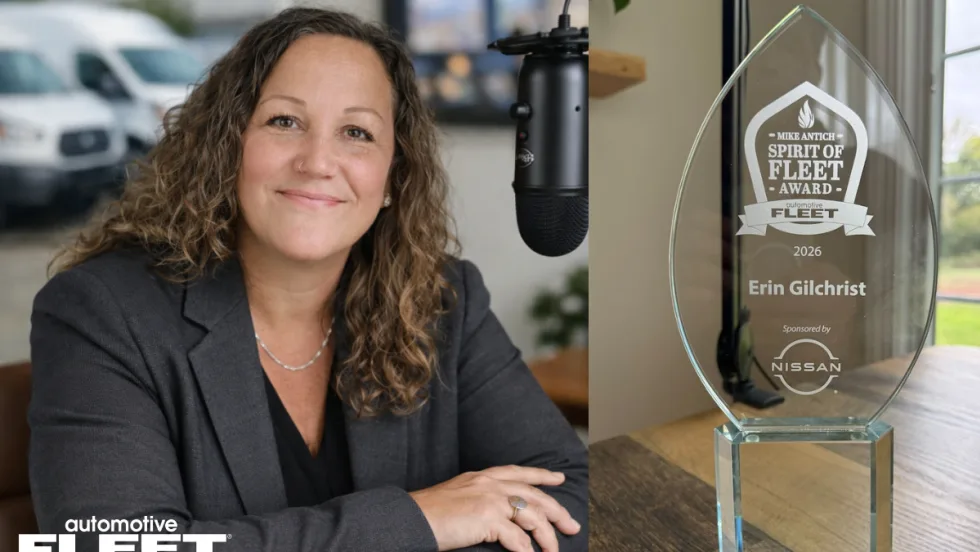
Erin Gilchrist Receives Mike Antich Spirit of Fleet Award
Last week at AFLA in Vegas, Erin Gilchrist received the inaugural, brand-new Spirit of Fleet Award.
Read More →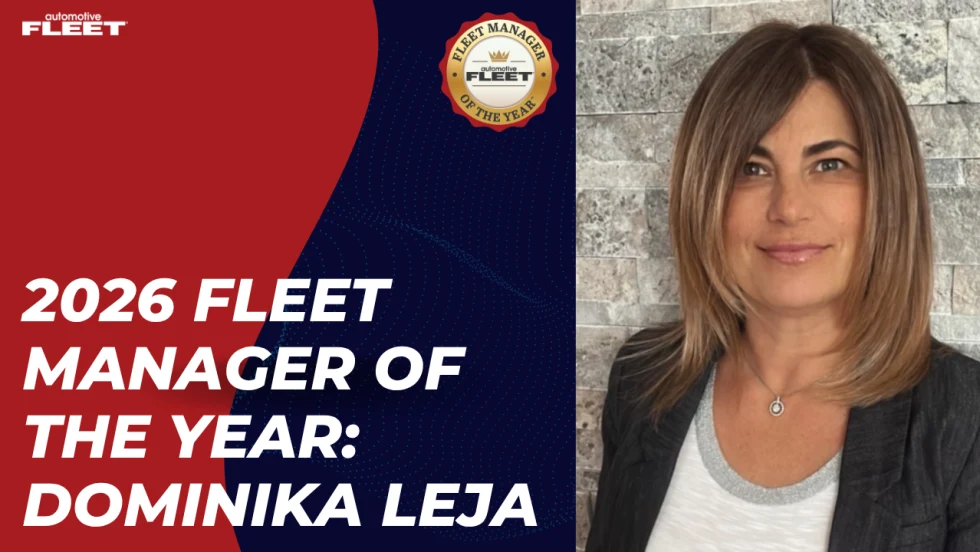
Dominika Leja Named the 2026 Fleet Manager of the Year
The AstraZeneca associate director of fleet was recognized for her leadership in fleet electrification, cost savings, and operational transformation.
Read More →
Jamie McKay Named the 2026 Fleet Visionary Award Winner
The Aptive Pest Control fleet manager was recognized for her approach to operations, data, lifecycle management, and driver needs.
Read More →
Fleet Forward Conference Introduces One-Day Passes for 2026
New one-day registration gives fleet professionals the flexibility to attend Tuesday, Wednesday, or Thursday, with passes available for $199 through Sept. 18.
Read More →
Vibe Coding: When Fleet Managers Become Software Builders
Five fleet professionals — none with programming skills — discuss how they’re using AI to build fleet solutions in-house and in a fraction of the time.
Read More →
Fleet Forward Conference Tackles Fleet Industry’s Growing Leadership Gap
This session will examine succession planning, knowledge transfer, and the skills the next generation of fleet leaders will need as veteran professionals leave the industry.
Read More →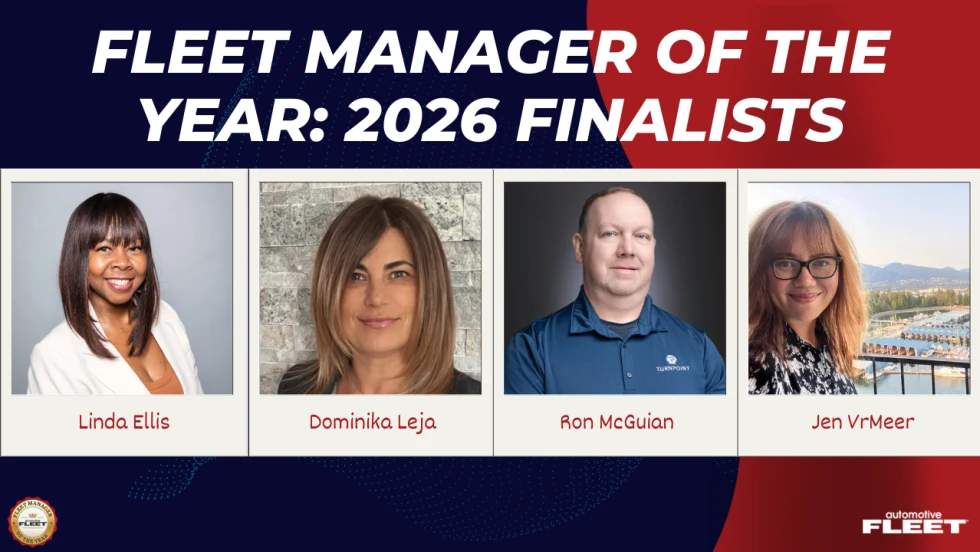
2026 Fleet Manager of the Year Finalists Announced
Who are the 2026 Fleet Manager of the Year finalists?
Read More →
John Rossant to Deliver Opening Keynote at 2026 Fleet Forward Conference
The CoMotion founder will draw on developments across Europe, China, the Middle East, and other international markets to identify trends that could influence how U.S. fleets plan for the coming decade.
Read More →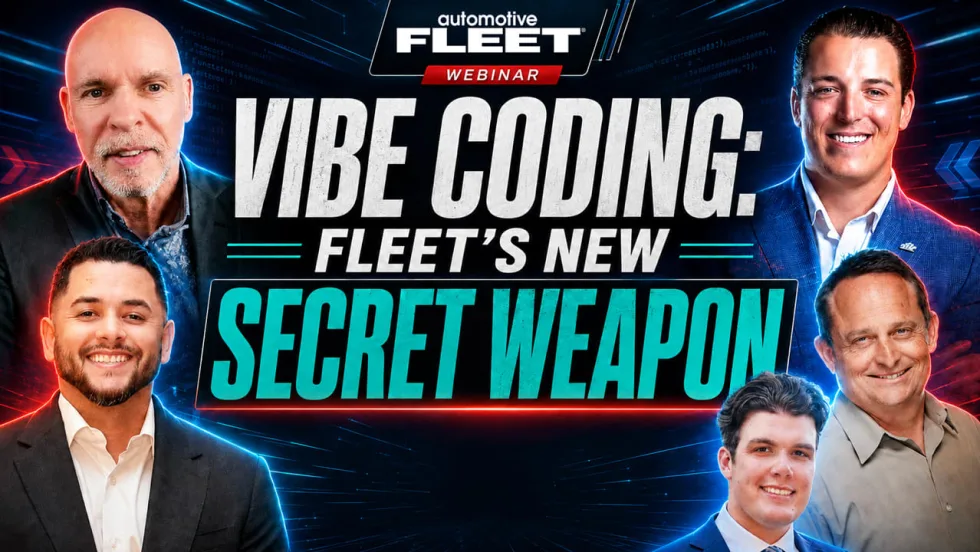
How to Build Custom Fleet Tools With AI and Vibe Coding [Webinar]
A new Automotive Fleet webinar explores how fleet managers are using AI and vibe coding to automate routine work and create simple operational tools without traditional programming skills.
Read More →