




24 Takeaways from the Inaugural Data-Driven Fleet Experience
The virtual conference presented deep dives on how data is fostering intelligent fleets. The seminars, panel discussions, and networking sessions covered connected cars, electrification suitability, OEM-embedded modems, telematics market trends, the rise of third-party data integrators, the migration to 5G, and video telematics.


Ed Peper, head General Motors Fleet, and Michelle Calloway, director of OnStar Business Solutions, delivered a keynote discussion on “The Future of Connected Vehicles and a Data-Driven Fleet.” The pair provided insights on OEM-embedded telematics devices, the evolving TSP (telematics service provider) relationship with OEMs, and what the connected car means to fleet.
Screen capture courtesy of General Motors.
Remember when you got your first iPhone, and you were amazed that you could also use it as a flashlight? That was just a baby step into the world of apps and functionality that has made the smartphone an integral part of our daily lives. When it comes to connected cars, it feels like we’re back at MacWorld on Jan. 9, 2007 when Steve Jobs pulled out the first iPhone. The revolution is coming, though it’s hard yet to conceive all that it will be.
The inaugural Data-Driven Fleet Experience (DDFE), which convened virtually April 19-23, offered an analysis of how fleets will benefit from this revolution. While much of the connected car’s promise is forward thinking, the conference’s intent is to foster intelligent fleets right now. In the keynote addresses, panel seminars, and networking sessions, attendees gain valuable insights on how to harness data to improve safety and efficiency, determine fleet suitability for EVs, migrate to 5G, create a data-driven workforce, assimilate video telematics, lower fleets’ total costs of ownership, and more.
Here’s a summary of the event’s key takeaways — though this is, admittedly, an incomplete list. (If you missed DDFE, the seminars are available on demand.)
In the U.S. today, over 16 million GPS and wireless devices monitor fleet vehicles, drivers, field service workers and assets in the field, doubling from 8 million units in 2015. Revenues in this mobile resource management (MRM) market are projected to grow from $4.6 billion in 2018 to nearly $6.1 billion by the end of 2022.
Almost all installations of GPS fleet tracking devices today operate on 4G LTE, though there are still numerous 3G units in the field. Fleets with AT&T’s 3G units will need to replace them by February 2022, while Verizon will sunset its 3G functionality on Jan. 1, 2023. For fleets in this replacement phase, the shortage of microchips is having a significant impact on telematics device availability. Major suppliers don’t expect supply shortages to be rectified until the first or second quarter of 2022.
Telematics market growth continues in most sectors, with new growth in government fleets. However, increasing penetration is slowing growth. For some larger telematic service providers (TSPs), replacement sales now equal or exceed sales to new buyers. Small and midsized TSPs continue to be acquisition targets for larger players.
As market penetration increases, the path to revenue growth will be through value-added services, which are essential to stay competitive. While the ELD mandate had brought tremendous growth to the trucking sector, video telematics is arguably the hottest telematics trend in telematics and is bringing incremental revenue opportunities to all sectors.
Some TSPs, notably Geotab and Fleet Complete, reach customers primarily — or almost exclusively — through authorized resellers. Some resellers have as many as 50,000 to 100,000 units in service, more than many sizable TSPs.
Fleet data is being pulled from increasingly disparate sources, and the connected cloud is becoming the essential hub. But as collecting data uses cellular data bandwidth, organizing the data you need most and modulating its frequency will be essential.
Fleets’ bandwidth needs are growing. A fleet device on a 2G network might’ve required one megabyte a month; that quickly grew to 10 megabytes a month. Today, 1 gigabyte per month is a starting point, particularly if you’re into video telematics — which has driven a 200%-to-500% increase in data bandwidth needs per month. With the ubiquity of sensors for everything from tire temperature and onboard truck scales to trailer’s electronic braking system, fleets’ data needs are “quantum leaps” from where they were just five years ago.
5G is essentially one hundred times faster than 4G with one-hundredth the latency, enabling a massively larger data pipeline and the ability to simultaneously connect hundreds more devices than 4G. The benefit of this exponentially increased bandwidth will be a much greater real-time visibility of fleet activity, which turns decision making from reactive to predictive.
More than 80% of new vehicles have OEM-embedded modems, and the data opportunity is rich. But organizations are not in the business of using their IT departments to amalgamate that data. New third-party data aggregators such as Otonomo and Motorq pull and “normalize” data from a myriad of makes and models and send the data to dashboards managed by TSPs, fleet management companies, and fleet management information systems.
Vehicle data pulled from embedded and aftermarket modems is also being aggregated into ecosystems — or marketplaces — hosted by larger TSPs such as Geotab, Verizon Connect, and Samsara. Roadz offers an independent marketplace. These pre-integrated solutions use vehicle, driver, and fleet data to offer plug-ins for diverse areas of fleet management such as routing, diagnostics, maintenance, cameras, DOT compliance, fuel management, and more.
“There’s an API for that.” Just as APIs (Application Programming Interfaces) facilitate our daily digital lives, they have also opened a pipeline to connected car data. New API-based platforms such as Smartcar’s allow third-party solutions providers to offer apps to fleets that can verify a car’s mileage, share a virtual key, charge an EV, monitor fuel tank levels, inspect tire pressure, check the engine oil life, and more.
The migration of previously siloed data into central hubs or dashboards is particularly urgent for fleet safety, with a goal to create a “holistic” solution that pulls data from motor vehicle records, accident history, and driver behaviors. Today these dashboards often just provide links back to the original provider. The next step is to use AI and machine learning to automatically collate and analyze different data sets for deeper insights and a richer driver scorecard that helps organizations use predictive behaviors to mitigate risk.
Assessing driver behaviors from telematics data has traditionally been used to increase fleet safety. But driving behavior data is also showing strong correlations with other cost areas such as fuel spend, repairs, maintenance, and vehicle utilization. In conjunction with pulling this data, a well-defined fleet policy is essential. This helps to set clear expectations for the driver around vehicle assignment, personal use, risk management, fuel purchasing rules, and safety requirements and will divert negative consequences before they happen.
Do automakers want to enter the telematics market to compete with established TSPs? With the reality of multi-branded fleets, most automakers are content to integrate with established providers. However, as automakers are sitting on rich data from their vehicles, they’re creating proprietary dashboards and apps that may not have the same high level of TSP sophistication, yet they address specific fleet needs such as geolocation, diagnostic trouble codes (DTCs), fuel data, driver performance, and electric vehicle information. Some OEMs (such as GM/OnStar) are piloting solutions that combine data from other automakers’ makes and models.
Cameras and video were first employed to exonerate drivers of non-fault crashes and that’s still the case. Today’s camera technology uses telematics, AI, and computer vision to identify risky behaviors and then collate them into leading indicators that can be acted upon — through coaching and real-time in-cab alerts — to mitigate crashes before they happen.
Connecting to and gaining data from electric vehicles is critical to fleeting EVs successfully. Vehicle data provides context around state of charge, energy consumption, charging rates, driver behaviors, and routing, as well as alerting users as to whether the EV is preconditioned, forgot to be charged, or how long until a full charge is reached. Manage operating costs without these connected vehicle insights will negatively impact EV ownership costs.
Based on a study of telematics-enabled vehicles in Enterprise Fleet Management’s fleet — including passenger cars to light- and medium-duty trucks and vans — about 13% of 92,000 units studied were deemed feasible to electrify today. This analysis was based on macroeconomic inputs and operational components as well as battery compatibility, duty cycles, access to charging locations, and peak and off-peak charging demands. That percentage soared to 45% based on new commercial EV and electric pickup models coming to market in the next three to five years.
In an analysis of one last-mile delivery fleet of Ford Transit vans with hybrid/electric powertrain conversions by XL Fleet, the sweet spot for realizing higher MPG was trip distances of 20 to 50 miles; ambient temperatures under 104 degrees; average speeds of 35 to 45 mph; lower acceleration ranges; and idling of less than 15% per trip. Duty cycles with high idling show a higher-than-expected negative effect on overall efficiency and sustainability performance.
Fleet managers first must consider where they will electrify their fleets. The U.S. now has more than 30,000 electric vehicle charging stations compared to about 200,000 gas stations. Fleet managers must consider the number of miles on average they will put on EVs and the availability of the local network of charging stations.
It’s relatively easy to get good lifecycle cost data on EVs for budgeting purposes. But what needs to be considered more closely upfront, particularly for commercial EVs, is the cost to install and maintain the charging infrastructure. It’s a long-term capital investment that’s handled differently in accounting. Because there is no capital outlay for gas or diesel infrastructure, EV infrastructure must be amortized to pencil a true ROI for fleet EVs.
Based on observed studies, the savings on operating and maintenance costs for EVs can range from 45% to 75%, with the sweet spot at 50% to 60%. One challenge for EV operators will be the availability of nearby qualified repair technicians who can fix vehicles and have the capacity to minimize downtime.
In a Bobit Business Media survey conducted for DDFE, fleet professionals cited their biggest challenges to managing data and using it effectively: 1) managing the sheer volume of data; 2) integrating data for multiple sources; 3) interpreting data for effective use. “Inability to access data” was the lowest cited challenge.
In the same survey, fleet professionals cited their top five challenges for 2021: 1) driver hiring/retention; 2) dealing with vehicle supply constraints; 3) fleet rightsizing; 4) hiring and retaining qualified technicians; and 5) driver safety/distracted driving. Near the bottom of the list were reducing unauthorized vehicle use and lack of personnel to manage fleet.
In the same survey, respondents viewed their staff’s data literacy as “somewhat data literate” in a clear plurality, and almost a majority (48%) of the five choices. Regarding approaches to prioritize to improve staff’s data literacy further, “staff training” was the number one choice of 64% of respondents.
As the flow of data increases exponentially, these trends will evolve just as rapidly. Join us next year at Data-Driven Fleet Experience to stay current on how data is revolutionizing the world of fleet.
More Fleet Forward
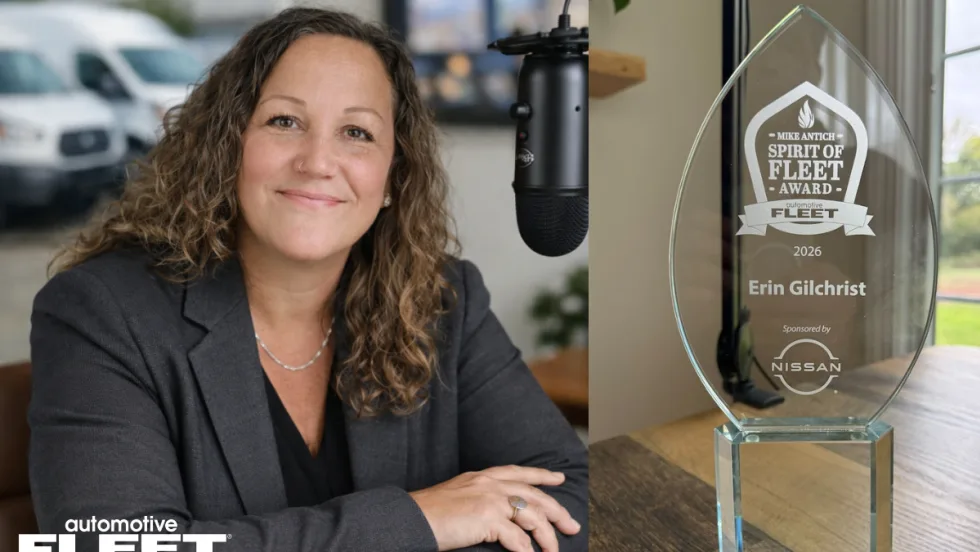
Erin Gilchrist Receives Mike Antich Spirit of Fleet Award
Last week at AFLA in Vegas, Erin Gilchrist received the inaugural, brand-new Spirit of Fleet Award.
Read More →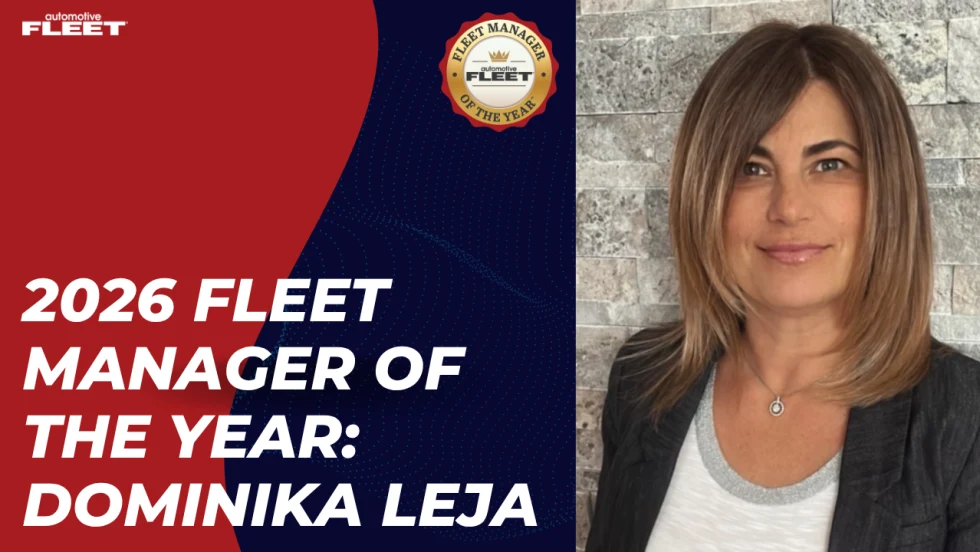
Dominika Leja Named the 2026 Fleet Manager of the Year
The AstraZeneca associate director of fleet was recognized for her leadership in fleet electrification, cost savings, and operational transformation.
Read More →
Jamie McKay Named the 2026 Fleet Visionary Award Winner
The Aptive Pest Control fleet manager was recognized for her approach to operations, data, lifecycle management, and driver needs.
Read More →
Fleet Forward Conference Introduces One-Day Passes for 2026
New one-day registration gives fleet professionals the flexibility to attend Tuesday, Wednesday, or Thursday, with passes available for $199 through Sept. 18.
Read More →
Vibe Coding: When Fleet Managers Become Software Builders
Five fleet professionals — none with programming skills — discuss how they’re using AI to build fleet solutions in-house and in a fraction of the time.
Read More →
Fleet Forward Conference Tackles Fleet Industry’s Growing Leadership Gap
This session will examine succession planning, knowledge transfer, and the skills the next generation of fleet leaders will need as veteran professionals leave the industry.
Read More →
2026 Fleet Manager of the Year Finalists Announced
Who are the 2026 Fleet Manager of the Year finalists?
Read More →
John Rossant to Deliver Opening Keynote at 2026 Fleet Forward Conference
The CoMotion founder will draw on developments across Europe, China, the Middle East, and other international markets to identify trends that could influence how U.S. fleets plan for the coming decade.
Read More →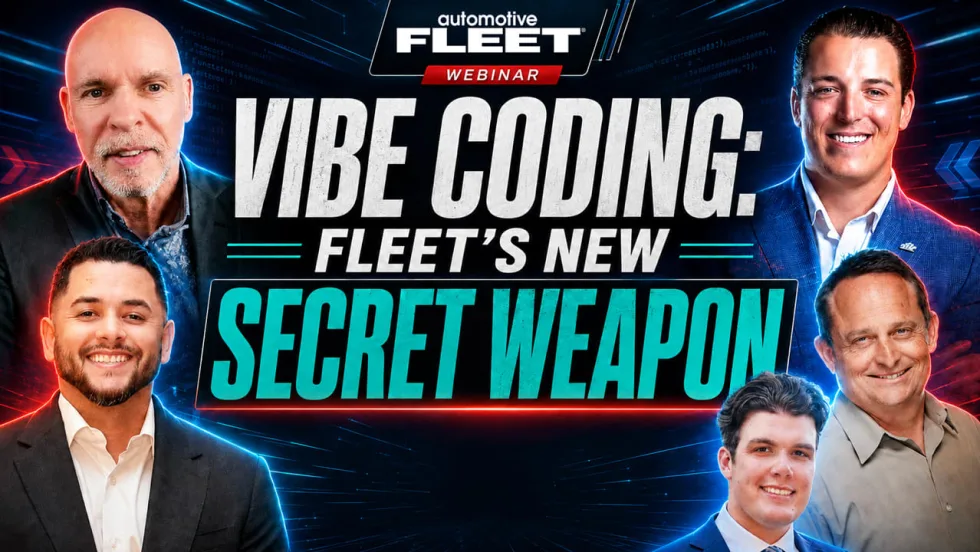
How to Build Custom Fleet Tools With AI and Vibe Coding [Webinar]
A new Automotive Fleet webinar explores how fleet managers are using AI and vibe coding to automate routine work and create simple operational tools without traditional programming skills.
Read More →