Reaction Time Twice as Slow When Texting According to New Study
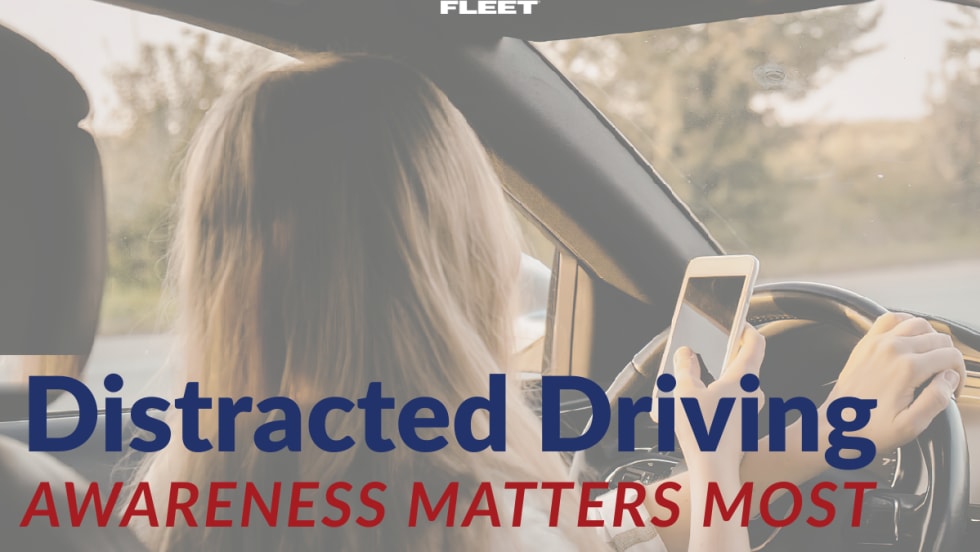
Researchers at the Texas Transportation Institute (TTI) have found that it takes a driver twice as long to react when he or she is distracted by reading or sending a text message.
by Staff
October 11, 2011
2 min to read
COLLEGE STATION, TEXAS – Researchers at the Texas Transportation Institute (TTI) have found that it takes a driver twice as long to react when he or she is distracted by reading or sending a text message.
The study consisted of three stages. First, participants typed a story of their choice (usually a simple fairy tale) and also read and answered questions related to another story, both on a smart phone in a laboratory setting. Second, each participant navigated a test-track course involving both an open section and a section lined by construction barrels. Drivers first drove the course without texting, then repeated both lab tasks separately while driving through the course again. Throughout the test-track exercise, each participant’s reaction time to a periodic flashing light was recorded.
Ad Loading...
Reaction times with no texting activity were typically between one and two seconds. Reaction times while texting were at least three to four seconds.
The study, sponsored by the Southwest Region University Transportation Center, was managed by Christine Yager, an associate transportation researcher in TTI’s Center for Transportation Safety. 42 drivers between the ages of 16 and 54 participated in the research.
Researchers also measured each driver’s ability to maintain proper lane position and a constant speed. They found drivers were less able to safely maintain their position in the driving lane when they were texting. Drivers swerved more frequently in the open sections of the course than in the section with barrels.
Drivers were also unable to maintain a constant speed while texting. They tended to slow down to reduce the demand from trying to manage multiple tasks. By slowing down, a driver gains more time to correct for driving errors (such as the tendency to swerve while texting). Speed variance was also greater for texting drivers than for non-texting drivers, according to TTI.
Federal statistics suggest that distracted driving contributes to as much as 20 percent of all fatal crashes, according to TTI. Cell phones constitute the primary source of driver distraction, TTI said federal statistics show. Researchers point to two numbers to illustrate the problem: an estimated 5 billion text messages are sent each day in the United States, and at least 20 percent of all drivers have admitted to texting while driving.
Ad Loading...
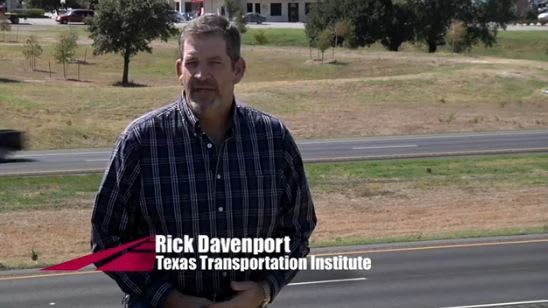
TTI also produced a video (shown below) that you can share with your drivers and colleagues.
Fleet drivers face constant visual, cognitive, and environmental interruptions the moment they hit the road. From roadside chaos to mental fatigue and digital overload, today’s biggest driving risks often come from outside the vehicle itself.
FLASH Weather AI has launched a first-of-its-kind hail prediction model capable of forecasting hail size and arrival time at 1-kilometer resolution up to 55 minutes ahead, giving fleets and insurers critical time to prepare for severe storms.
As litigation risk rises, vehicles are increasingly targeted. This Coca-Cola bottler shares how it’s reducing exposure through driver training, technology, and a proactive risk management approach.
From identity management to third-party certifications, the right technology partner should make security easier to manage. Here are the three building blocks that fleet managers need to stay in control as connected systems scale.
Distracted driving remains one of the most persistent risks in fleet operations. New approaches focus on removing mobile device use entirely while adding real-time safety support.
As distraction risks evolve, fleets are turning to smarter, more connected technologies to better understand what’s happening behind the wheel. Part 2 explores how these tools are helping identify risky behaviors and improve visibility across operations.
Distracted driving is often measured by what we can see—phones in hand, eyes off the road. But what about the distractions we can’t? A recent incident raises a bigger question about awareness, attention, and why subtle risks so often go unnoticed.