




Ford Unveils 2012 Police Interceptor
LAS VEGAS - The Ford Motor Co. unveiled its new Taurus-based police interceptor in Las Vegas today and provided initial details about the patrol car that will replace the aging "Crown Vic" in late 2011.
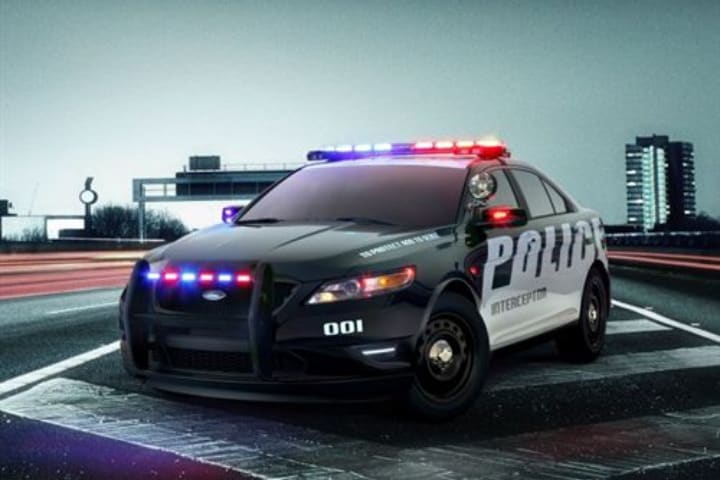
Ford Police Interceptor
LAS VEGAS - The Ford Motor Co. unveiled its new Taurus-based police interceptor in Las Vegas today and provided initial details about the patrol car that will replace the aging "Crown Vic" in late 2011.
Ford also confirmed it has begun production on a second new police interceptor that will be a utility vehicle and will share some parts to help agencies save on maintenance costs. Ford will release details about that vehicle later this year.
The automaker relied on input from the law enforcement fleet managers with purchasing influence on the automaker's police advisory board.
"We've created a new Police Interceptor built to do the job by those on the job," said Mark Fields, Ford's president of the Americas.
Like the civilian version of the 2010 Taurus, the new full-sized patrol car will arrive in all-wheel and front-wheel drive versions and a pair of powertrain configurations.
The V-6 engines will deliver better performance than many current V-8s, according to Ford.
The base model arrives with a 3.5-liter, V-6 that delivers 263 hp, E85 fuel compatibility, and is 25 percent more efficient than the 4.6-liter Single Overhead Cam (SOHC) V-8 offered in the current Crown Victoria Police Interceptor.
Ford will also offer the 3.5-liter EcoBoost, V-6 twin-turbocharged, direct-injection engine that will deliver 365 hp and 350 ft.-lb. of torque across a broad rpm range.
The vehicle also offers several new safety and ergonomic features for officers.
"Safety, space, comfort and functionality must seamlessly come together," said Scott Tobin, Ford's vehicle line director for cars and crossovers. "It's an ideal balance between mobile office and mobile jail."
Like its CVPI predecessor, the new Police Interceptor passed the 75-mph rear-end crash test. It will also feature Ford's Safety Canopy side-curtain air-bag system that slips between the occupant and the side window during a rollover or side-impact crash.
The cockpit includes a column shifter to free up the center console area, which now includes a "media bin" to charge cellphones and USB devices.
Seats have been redesigned; the lower bolster is removed to add room for an officer's duty belt. The driver- and passenger-side seats include anti-stab plates, and the rear doors hinge open an additional 10 degrees.
Additional features include a blind-spot detection system that uses radar sensors in the rear quarter panels to detect vehicles in surrounding lanes, a cross-traffic warning system for backing out of driveways, a rearview camera system for reversing, electronic stability control and the Ford SYNC hands-free telematics system with steering-wheel controls that can be re-mapped. The radar sensors and back-up camera are expected to be offered as options.
The patrol car arrives as Ford faces increasing competition from its rivals who are also offering new options to law enforcement agencies. Ford now maintains more than 70 percent of the patrol-car market, according to the company.
General Motors is re-introducing the Chevrolet Caprice patrol car in 2011, and Carbon Motors executives have said they've taken 12,000 pre-orders for the E7 clean-diesel patrol vehicle. Also, Chrysler executives say they'd like to see their Dodge Charger reach 40 percent of the patrol-car market.
The new Police Interceptor will be built at Ford's Chicago plant and will be submitted to the Michigan State Police and Los Angeles Sheriff's Department in the fall for evaluation.
More Operations

90% Use Telematics. Are Fleets Getting Safer? | AF News Recap
This week, we're breaking down which industries have the highest rates, how Jamie McKay manages 2,400 vehicles, what's happening with the 2027 fleet awards, and why software-defined vehicles could introduce new costs.
Read More →
What's Best Handled by an FMC, and What's Better Done Directly?
Fleet managers continue to rely on FMCs for essential services but are taking a closer look at where working directly with suppliers can improve efficiency and responsiveness.
Read More →
Fleet Meets: Erin Gilchrist
Meet Erin Gilchrist, the inaugural Mike Antich Spirit of Fleet Award winner, as she shares insights on leadership, mentorship, the power of industry connections, and why people remain at the heart of fleet's future.
Read More →

How 2026 Fleet Visionary Jamie McKay Manages 2,400 Vehicles Across 37 States
How do you keep 2,400 vehicles running across 37 states? Fleet Visionary Award winner Jamie McKay shares how collaboration, flexibility, and a few simple strategies help her tackle fleet management challenges at Aptive Pest Control.
Read More →
Managing Fleet Costs in an Era of Permanent Volatility
Fleet operating costs have risen more than 20% since 2020, raising a key question: When does extending a vehicle's service life stop making financial sense?
Read More →
The Next Evolution of Fleet Management: Autonomous Operations
This opening keynote session at the Fleet Forward Conference highlights the future of autonomous driving for fleets.
Read More →
How to Reduce the Total Cost of Risk From Catalytic Converter Theft
A stolen catalytic converter can cost fleets far more in downtime and lost productivity than in repairs. A total-cost-of-risk approach can help fleet managers quantify their exposure and prioritize theft prevention.
Read More →
Personal-Use Charges Rise as Vehicle Values Fall | AF News Recap
Personal-use charges are climbing, wholesale used-vehicle values are declining, and commercial fleet sales growth is slowing. This week, we're breaking down the latest fleet data, plus how Element Fleet Management is helping Waymo prepare for its first Canadian robotaxi market.
Read More →
Here's When You Should Make an Exception to Fleet Policy
Fleet policies are designed to create consistency, but not every driver or situation fits neatly within standard rules.
Read More →
AI-Native or AI-Acquired: What Should Fleet Managers Look for in an AI Platform?
Six questions can help fleet managers look beyond AI marketing claims to evaluate integration, data access, and real-world operational performance.
Read More →