




Responding to vehicle crashes quickly and efficiently can mean the difference between life and death. General Motors announced on September 16 that its Advanced Automatic Crash Notification (AACN) system is available on a dozen new 2005 GM models equipped with OnStar's in-vehicle safety and communications system. AACN, an industry first, makes emergency information available to 911 centers so that they can send the appropriate life-saving personnel and equipment to crash scenes faster. Using a collection of sensors, AACN automatically calls an OnStar advisor if the vehicle is involved in a qualified frontal, rear or side-impact crash, regardless of air bag deployment. AACN provides crash severity information to OnStar advisors, who relay it to 911 dispatchers. AACN systems can determine the severity of crash, direction of impact, air bags deployed, multiple impacts and rollover (if equipped with appropriate sensors). GM's AACN system is available on a broad range of OnStar-equipped GM vehicles ranging from small sedans through sport/utility and luxury series vehicles, including the 2005 Buick Rainier; Cadillac STS; Chevrolet Malibu, Malibu Maxx, Cobalt, TrailBlazer and TrailBlazer EXT; GMC Envoy, Envoy XUV and Envoy XL; Pontiac G6; and the Saab 9-7X. GM will continue to roll out AACN on additional GM models in the coming years. OnStar receives approximately 700 air bag notifications each month. "We know that shortening the time to treatment by EMS and trauma physicians can make a big difference in survival and recovery," said Jeffrey W. Runge, M.D., administrator of the National Highway Traffic Safety Administration. "This technology should result in better response times after a crash when traveling in less populated areas, and more accurate information to EMS dispatchers even in the city." Traffic safety and emergency medical experts say AACN may be especially important in rural areas, where there may not be a passerby to report a crash and few local hospitals equipped to treat the kinds of injuries sustained in severe crashes. Sixty percent of the nation's fatalities are in rural areas, even though rural areas account for only 20 percent of the total annual crashes. OnStar, with more than 2.7 million subscribers, is available on more than 50 models from General Motors and is the nation's leading provider of in-vehicle safety, security and information services using the Global Positioning System (GPS) satellite network and wireless technology.
GM and OnStar Advanced Automatic Crash Notification Now Available on 12 2005 Models
Responding to vehicle crashes quickly and efficiently can mean the difference between life and death. General Motors announced on September 16 that its Advanced Automatic Crash Notification (AACN) system is available on a dozen new 2005 GM models equipped with OnStar's in-vehicle safety and communications system.
More Operations
Lytx Introduces New AI Fleet Technologies at Protect 2026
The company introduced new AI-driven fleet safety and operations technologies during its annual user conference.
Read More →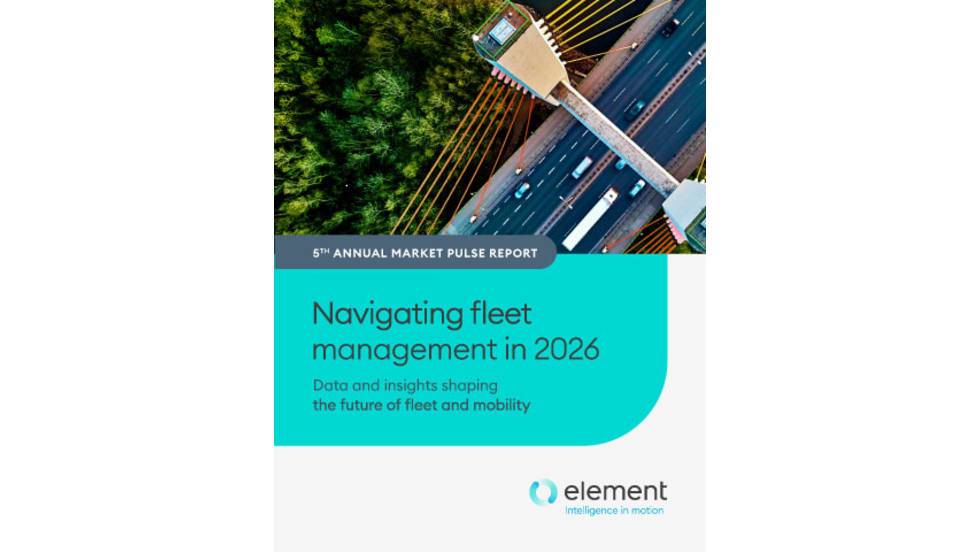
Fleet Costs Are Rising: Here’s How Leaders Are Responding
Fleet leaders are under pressure to reduce costs, adapt to economic uncertainty, and make smarter decisions. See how peers across North America are responding with real data, proven strategies, and forward-looking insights. Download the 2026 Market Pulse Report to benchmark your strategy and uncover where you can gain an edge.
Read More →
From Waffle House to AI: Fleet Trends You Need to Know
In this AF news recap, host Faith Howell covers how Waffle House stepped up during disaster response and new AI tech on the market.
Read More →
Fleet Operations in the Age of AI: Navigating Ethical and Legal Challenges
AI is no longer a future concept for fleets—it’s already embedded in the tools, data, and decisions that operators rely on every day. In this episode of the Fleet Forward Podcast, recorded live at Fleet Forward, industry leaders take the conversation beyond hype to examine what responsible AI adoption really looks like in fleet operations.
Read More →
Factory Installed vs. Aftermarket: Choosing the Right Telematics Path & Managing the Data
As fleets rethink how they capture, manage, and act on vehicle data, telematics is at a major inflection point. In this episode of the Fleet Forward Podcast, we dive deep into one of the most pressing questions facing fleet leaders today: Should you rely on OEM factory-installed connectivity, aftermarket devices, or a hybrid of both?
Read More →
What Real-Time Data Reveals About EV Cost, Performance, and Scalability
Experts from telematics analytics, fleet-as-a-service operations, and national EV benchmarking share how real-time data is reshaping fleet strategy—dispelling assumptions, validating best practices, and exposing costly missteps.
Read More →
Planning Through Policy Shifts: What Fleets Must Track in 2026
A powerhouse panel featuring experts from the American Automotive Leasing Association, CalSTART, and municipal fleet leadership dives into the realities of navigating shifting emissions rules, regulatory waivers, federal agency actions, the future of the EPA’s endangerment finding, and the push for unified standards. They also examine the impacts of tariffs, autonomous vehicle policy, battery innovation, and the accelerating global EV market.
Read More →
Managing Market Turbulence with Strategic Fleet Insights
This episode kicks off with a deep dive into the technologies and market forces reshaping today’s fleet landscape. Host Chris Brown is joined by Laolu Adeola (Leke Services), Tyson Jomini (J.D. Power), and Richard Hall (ZappiRide) to break down real-world data, shifting incentives, and practical strategies fleet leaders can use right now.
Read More →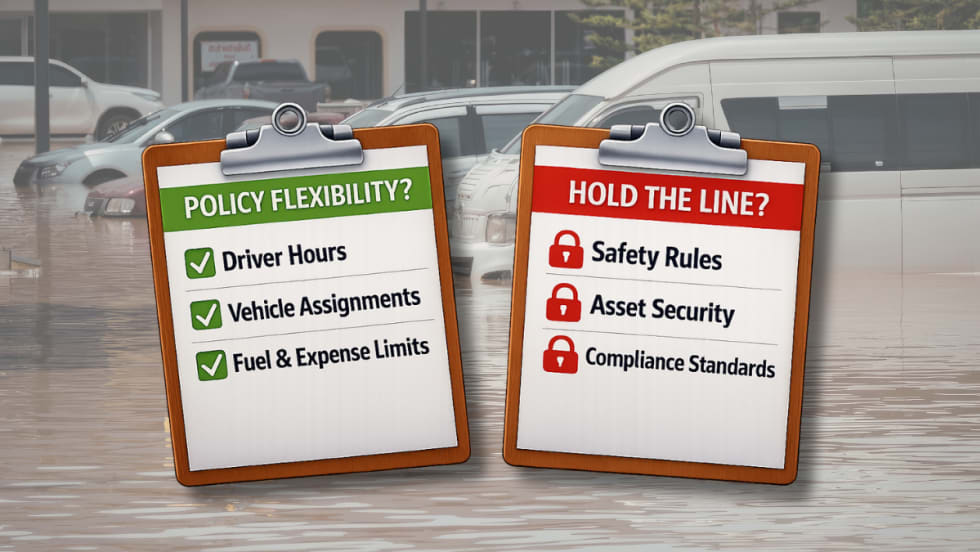
Adapting Fleet Policy When Disasters Strike
In the middle of natural disasters fleet managers must shift priorities to protect people and assets. What policy items should be loosened, and when should the line be held?
Read More →
EV Reality Check: How Fleets Are Managing Policy Shifts, Safety, and Scaling Challenges
In this episode, fleet leaders from municipal, university, and private-sector organizations share a candid EV reality check. From infrastructure setbacks and policy whiplash to grant funding, total cost of ownership, and charging resiliency, this conversation dives into what it actually takes to scale electrification in the real world.
Read More →