




Hertz Files for Chapter 11 Bankruptcy
All of Hertz's businesses globally remain open. International operating regions including Europe, Australia, and New Zealand are not included in the bankruptcy, nor are Hertz's franchised locations.

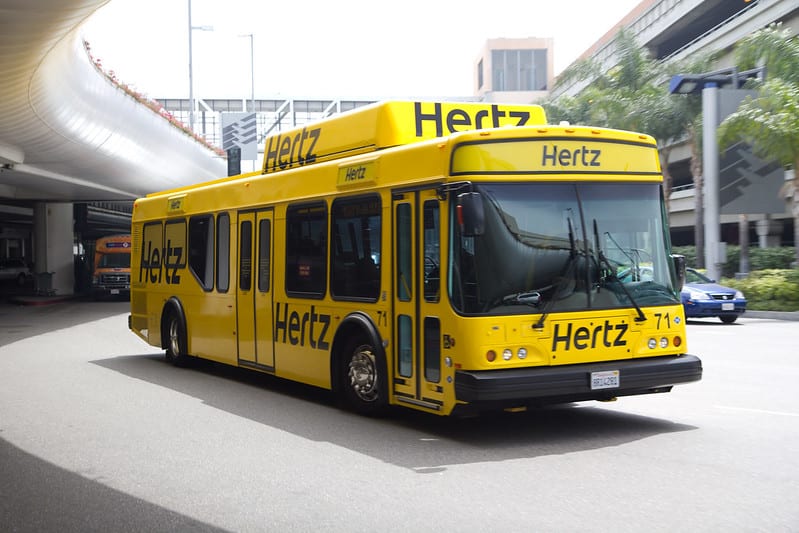
Hertz reported $18.8 billion in debt in its first quarter filing.
Photo via Flickr/Atomic Taco
Hertz Global Holdings announced on May 22 that the company and certain of its U.S. and Canadian subsidiaries have filed for Chapter 11 bankruptcy.
All of Hertz's businesses globally, including its Hertz, Dollar, Thrifty, Firefly, Hertz Car Sales, and Donlen subsidiaries, are open and serving customers, the company said in a statement. The company cited $1 billion in cash on hand to support continuing operations. Hertz reported $18.8 billion in debt in its first quarter filing.
Hertz's principal international operating regions including Europe, Australia, and New Zealand are not included in the bankruptcy, nor are Hertz's franchised locations, which are not owned by the company.
All reservations, promotional offers, vouchers, and customer programs, including rewards points, are expected to continue as usual.
“The impact of COVID-19 on travel demand was sudden and dramatic, causing an abrupt decline in the company's revenue and future bookings,” the company said.
Hertz took actions such as furloughing 20,000 North American employees or half of its workforce, and gaining temporary forbearances on lease payments.
“However, uncertainty remains as to when revenue will return and when the used-car market will fully re-open for sales, which necessitated today's action,” according to the statement.
“The financial reorganization will provide Hertz a path toward a more robust financial structure that best positions the company for the future as it navigates what could be a prolonged travel and overall global economic recovery.”
Originally posted on Auto Rental News
More Operations

Here's When You Should Make an Exception to Fleet Policy
Fleet policies are designed to create consistency, but not every driver or situation fits neatly within standard rules.
Read More →
AI-Native or AI-Acquired: What Should Fleet Managers Look for in an AI Platform?
Six questions can help fleet managers look beyond AI marketing claims to evaluate integration, data access, and real-world operational performance.
Read More →
A buyer's guide to fleet management software in 2027
Buying fleet management software in 2027 means looking beyond features and price. As fleet operations, technology and expectations evolve, this guide explores what today’s fleet professionals should consider when choosing a system that can deliver value now and adapt to what comes next.
Read More →

What Will Shape the Next Era of Fleet Management?
EVs, AI, and autonomous vehicles are reshaping fleet management. Discover what’s ahead—and how fleet leaders can prepare for the next era.
Read More →
How Fleets Can Recruit and Train Veterans for Technician Roles
Here's how the technician shortage has affected uptime for fleets, and what to do about it.
Read More →
Avis Budget Group Deploys Neology Toll Management Technology Across Major Brands
Neology’s neoFleet platform will manage toll transactions and toll-authority operations for vehicles across Avis, Budget, Payless, Budget Truck and Zipcar.
Read More →
Fleet Personal-Use Charges Edge Higher in 2026
Nearly eight in 10 surveyed fleets allow personal use of company vehicles, while just over half of respondents report charging employees for the privilege.
Read More →
The Future of Fleet + What’s Changing Right Now | AF News Recap
Could developments overseas offer a preview of what’s coming for U.S. fleets? This week, we’re looking at the future of AI, autonomy, and electrification, plus Ford Pro’s new certified pre-owned program, smarter vehicle offboarding, and a new way for fleets to manage toll expenses.
Read More →
How to Handle Vehicle Offboarding
What do fleet managers need to do when a driver leaves?
Read More →
Fleet Manager’s Ultimate Playbook: Navigating the New Standard in OEM Connectivity
Rising operating costs, driver safety concerns, and unplanned downtime are putting unprecedented pressure on modern fleets. Discover how fleet managers use embedded OEM connectivity and real-time vehicle data to cut TCO, prevent downtime, and protect drivers without aftermarket telematics hardware.
Read More →