




2020 Mazda CX-30
After driving the 2020 Mazda CX-30 during a media event in early December, it’s clear that the CX-30 should be a vehicle that fleets should consider if they're interested in adding crossovers into their portfolio.

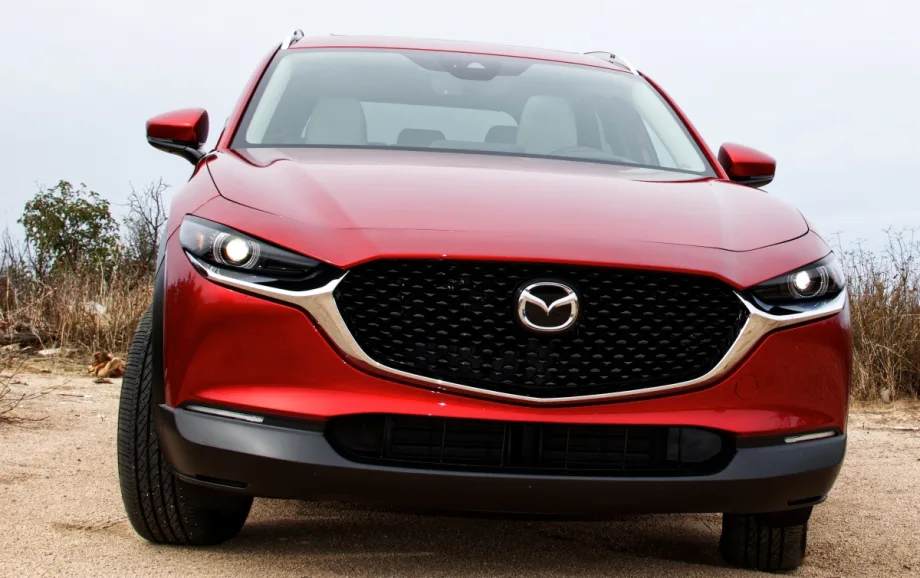
The starting MSRP of $21,900 before incentives and destination charges for the CX-30 is competitive with other vehicles in the segment. Residuals for the CX-30 should also be best-in-class according to ALG data that Mazda shared.
Photo by Eric Gandarilla.
Mazda is entering a very crowded space by releasing the 2020 Mazda CX-30 into the subcompact crossover category.
Manufacturers have released a steady supply of subcompact crossovers in the past few years, and at this year’s L.A. Auto Show most manufacturers announced even more entries into the segment.
Even Mazda itself already has several crossovers that compete in the segment in its portfolio via the CX-3 and CX-5.
But, after driving the 2020 Mazda CX-30 during a media event in early December, it’s clear that the CX-30 will be a strong contender in the field, and that it should be a vehicle that fleets interested in adding crossovers into their portfolio should consider.
The CX-30 presents an in-between option for fleets who looked at the CX-3 and saw a vehicle that as too small, but also looked at the CX-5 and felt like they wanted something just a tad bit smaller. For comparisons sake, the CX-5 provides approximately 30 cubic feet of cargo space, the CX-30 provides approximately 20 cubic feet of cargo space, and the CX-3 provides 12.4 cubic feet of cargo space with seats folded up.
The size of the CX-30 also presents a logical step up for fleets who have been using compact or midsize sedans but want to move up to crossovers.
Looking at it another way, the CX-30 is essentially the Goldilocks of the Mazda compact crossover family.
Cargo space is plentiful, seating area should fit passengers comfortably, and as is Mazda tradition, driving performance has not been forgotten.
The starting MSRP of $21,900 before incentives and destination charges for the CX-30 is also competitive with other vehicles in the segment. Residuals for the CX-30 should also be best-in-class according to ALG data that Mazda shared.
Driving Experience
Driving the 2020 Mazda CX-30 felt very much like driving a Mazda3, and that makes sense since the CX-30 is built on the Mazda3 platform. Acceleration was quick, handling was on point, and driving around windy mountainous roads was simply fun.
Off-the-line performance felt responsive and it never felt like the vehicle struggled to overtake other vehicles on the road.
Mazda focused on improving seating posture on the CX-30 to reduce driver movement from bumps and imperfections on the road. Real-world driving showed that they met that goal, as the CX-30 delivered a smooth and comfortable ride.
The CX-30’s available AWD ensured that the tires gripped the road during fast, tight turns. On the topic of AWD, Mazda has modified the AWD system that will be ship with the CX-30 to make it more fuel efficient than previous generations of its AWD system. The hit to fuel economy that will come with this updated AWD system will be about 1 mpg.
The EPA estimated fuel economy for the CX-30 is 25 mpg city, 33 mpg highway, 28 mpg combined for the base model front-wheel-drive configuration. The all-wheel-drive premium trim will have an estimated 25 mpg city, 33 mpg highway, and 27 mpg combined.
All trims are powered by a 2.5L four-cylinder Skyactiv-G engine mated to an automatic six-speed transmission that produces 186 hp and 186 lb.-ft. of torque.
The Mazda CX-30 will come in four trim levels, a base trim, a select package trim, a preferred package trim, and a premium package trim. All trims will be configurable with FWD or AWD.
Features That Will Benefit Fleet Drivers
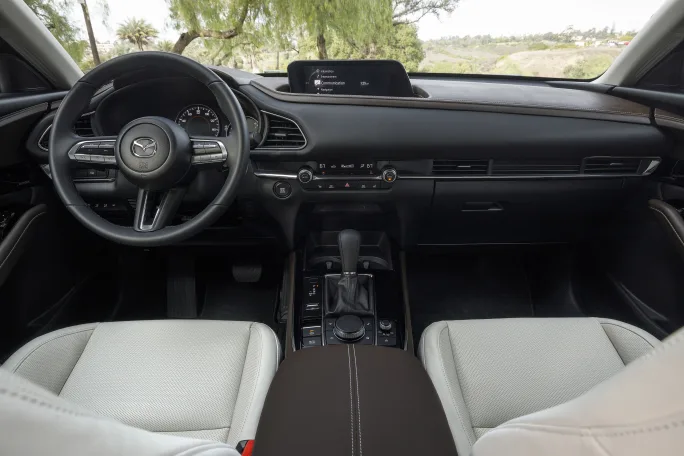
The infotainment system in the CX-30 will lose touch functionality and be completely controlled through dials and buttons that are easily accessible to the driver.
Photo courtesy of Mazda.
Mazda made various decisions when designing the CX-30 to enhance the driver/driving experience, according to their engineers.
One example of this comes from the infotainment system found in the CX-30. This updated iteration of the infotainment system will look like the infotainment system found in older Mazda vehicles, with one major exception, touch capability has been completely removed.
Touch controls were already disabled in Mazda vehicles when the vehicle was in movement with the older infotainment system, so the engineers said that it wasn’t a huge step to remove the capability all together.
The infotainment system will be completely controlled through dials and buttons that are easily accessible to the driver. Part of the reasoning for this change was to minimize the time that drivers would be distracted, fiddling with a touch screen. The infotainment system screen has also been moved farther up in the vehicle, to reduce the time that drivers are looking away from the road.
The CX-30 will also have available safety technology, but some has been tuned differently compared to other manufacturers.
One safety technology that Mazda engineers brought up due to its likelihood to be turned off by drivers is lane departure alert. This safety technology will alert the driver when he or she is exiting a lane and swaying too close to the other side of it.
What often happens with these systems, the engineers noted, is that they’re tuned to be too sensitive, to the point where they go off more than necessary, resulting in many drivers choosing to turn off the system, which inadvertently turns off other safety systems as well.
To counteract this, the lane departure warning in the CX-30 is tuned to go off around the point that the middle of the tire begins to cross the lane markers. This allows drivers to maneuver the vehicle naturally — as there are times in tight city streets where they need to lean slightly into the next lane — without the vehicle alerts going off, hopefully encouraging the driver to keep the safety technology on.
Mazda is also providing three years of complimentary Mazda Connected Services to CX-30 buyers.
This service allows drivers to use a mobile app to perform actions such as lock/unlock doors; remotely start and stop the vehicle; locate the vehicle; view fuel level, oil level, tire pressure, maintenance reminders, and service scheduling; receive alerts when the vehicle is unlocked; send destinations directly to the vehicle’s navigation system; and receive over the air updates for the vehicle’s infotainment system.
Sound dampening has also been improved in the CX-30. This means, that when appropriate, fleet drivers will be able to make calls in their CX-30 with less outside noise entering the vehicle.
2020 Mazda CX-30 Specs
Engine: 2.5L I-4 (186 hp, 186 lb.-ft.)
Transmission: 6-speed automatic
All-wheel drive: Optional AWD on all trims
Cargo Space: 20.2 cu.-ft.
More Blog Posts

Fleet Review: 2026 Outback Is More SUV, Still an Outback
The redesigned Outback trades its station-wagon profile for a roomier, more conventional SUV shape while retaining the comfort and safety technology that give it fleet appeal.
Read More →
Why Should Fleets Choose the 2026 Mercedes-Benz GLC 300 SUV?
The GLC 300 offers corporate fleets attainable luxury, comfort, and practicality that transitions seamlessly to family duty.
Read More →
Fleet Review: Volvo EX90 & the Software-Defined Vehicle
Volvo’s new three-row electric SUV is designed for the corporate (and family) class.
Read More →
Fleet Review: Mercedes-Benz EQB 250+
With a reasonable entry point and the refinement of a Mercedes, The EQB 250+ defines “practical luxury” for fleets.
Read More →
Fleet Review: Volvo XC60 & XC90 PHEVs
Volvo’s XC60 and XC90 plug-in hybrid models are stylish, safe, sustainable — and surprisingly fast.
Read More →
Fleet Review: Volvo XC40 Recharge
The Volvo XC40 Recharge offers fleets the familiar premium Volvo experience, electrified.
Read More →
The 2023 Ford Mustang Mach-E Offers a Smooth Ride for New EV Drivers
A look at the bells and whistles on the car, plus how it drives, from the perspective of someone who’s never driven an EV.
Read More →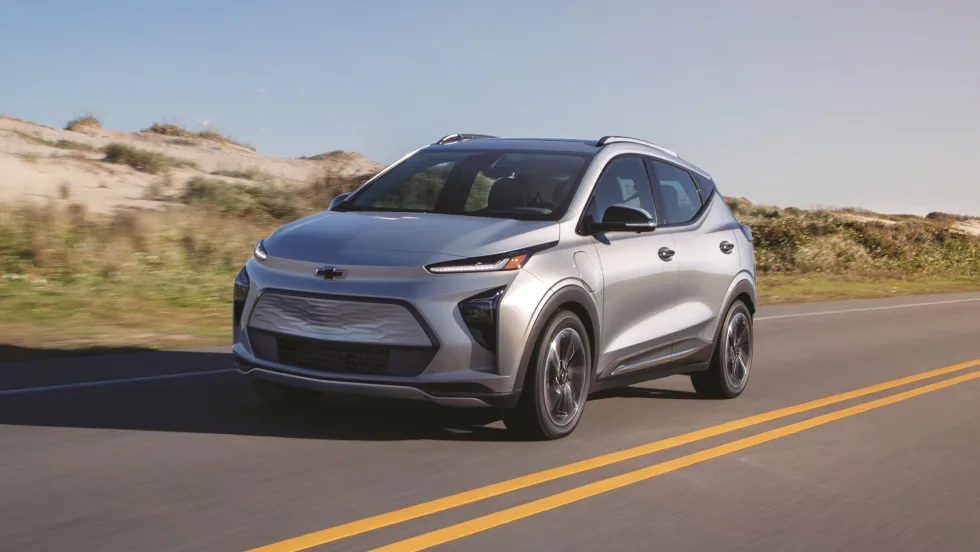
The 2022 Bolt EUV Lowers TCO While Meeting Sustainability Goals
The 2022 Bolt EUV expands Chevrolet’s EV lineup as a utility-type vehicle with a range of 250 miles on a full charge. It will be sold alongside the 2022 Bolt EV model. The Bolt EUV is approximately six inches longer than the Bolt EV.
Read More →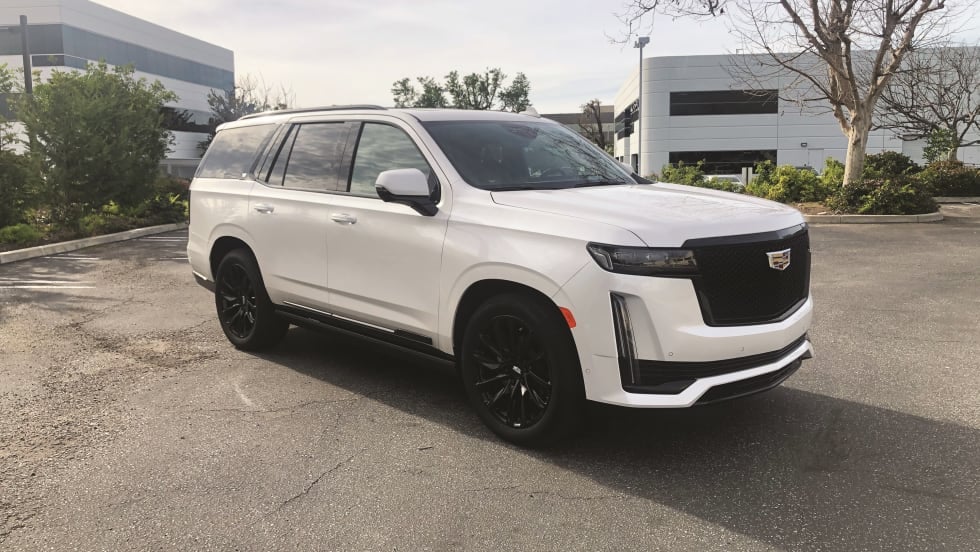
2021 Cadillac Escalade is C-Suite Material
The 2021 Cadillac Escalade 4WD Sport Platinum is the most expensive model sold by General Motors. But its brand cachet makes it the ideal pinnacle fleet vehicle to help retain high-value senior execs with a high-value luxury SUV.
Read More →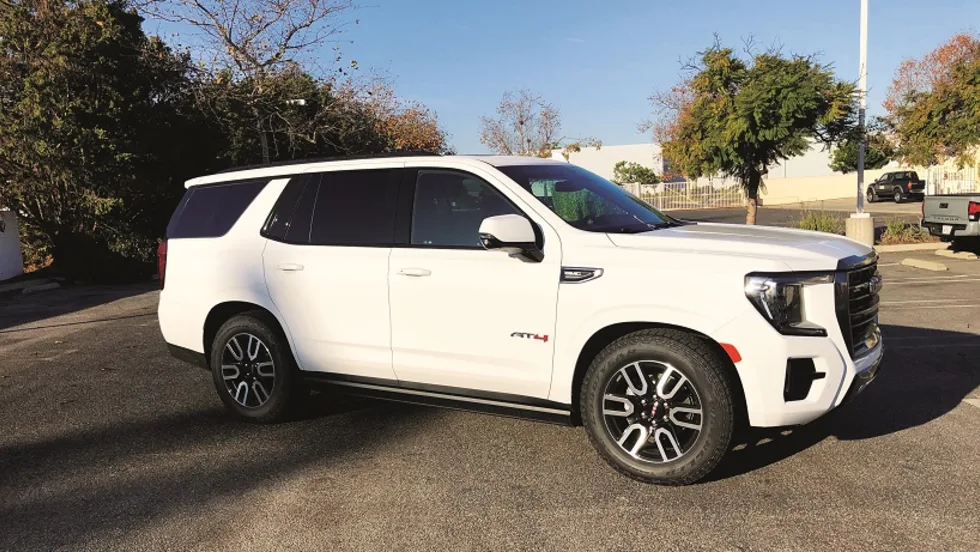
2021 GMC Yukon AT4 Excels as an Off-Road Crew Vehicle
Powered by a 5.3L V-8, generating 355 horsepower and 383 lb.-ft. of torque, the engine is paired to a10-speed automatic transmission. It is ideal for off-road work applications and can transport an eight-person work crew with tools and equipment.
Read More →