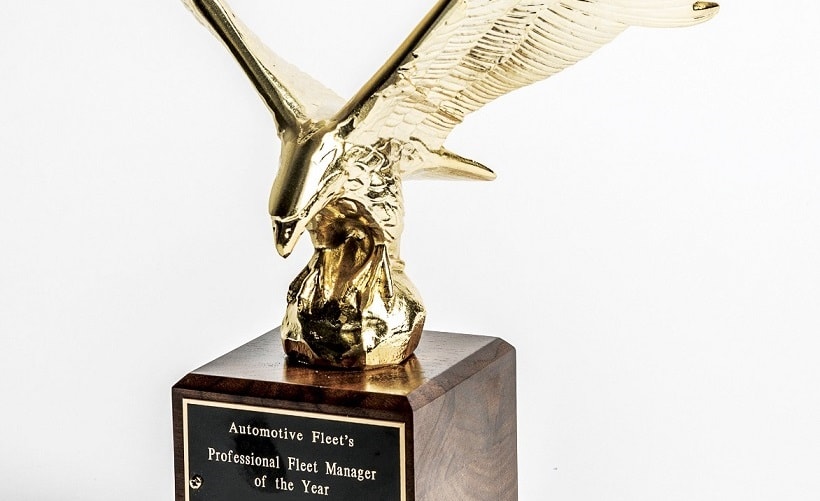
The 2018 Professional Fleet Manager of the Year judging panel was comprised of 34 professionals who represent past winners, dealers, auctions, manufacturers, fleet management companies, and trade media.
Nominees are full-time commercial fleet managers who control a company-owned or leased fleet in excess of 100 cars and light trucks combined, and who are recognized nationally among their peers for their unique abilities and accomplishments are eligible.
File photo
4 min to read
The three finalists for the Professional Fleet Manager of the Year award include Lee Jezek-Pierce, Phil Samuelson, and Erin Gilchrist, Automotive Fleet magazine has announced. A judging panel will decide the winner.
Ad Loading...
Nominees are full-time commercial fleet managers who control a company-owned or leased fleet in excess of 100 cars and light trucks combined, and who are recognized nationally among their peers for their unique abilities and accomplishments are eligible.
Ad Loading...
The winner of the award will be announced during the 2018 Automotive Fleet & Leasing Association (AFLA) Conference at the JW Marriott in Orlando, Fla., on Oct. 1. The award is presented by Automotive Fleet and sponsored by Wheels Inc. and AFLA.
Phil Samuelson, fleet and captial asset manager, USIC
[EMPTY CREDIT]
Phil Samuelson, Fleet and Capital Asset Manager, USIC
Total vehicles: 9,350
Staff supervised: 2
Years with current fleet: 14
Years in industry: 28
Notable Achievements
Phil Samuelson utilizes the latest technologies, telematics offerings, and advanced safety features/programs to bring cost savings and improved safety to USIC’s fleet. The USIC fleet grew by over 4% in 2017 through acquisitions, new business contracts, and increased business volume.
USIC’s service fleet accumulates nearly 184 million miles annually, and has a consistently decreased or maintained an industry low operating cost-per-mile year over year. Deploying an optimal vehicle selection and cycling strategy has allowed USIC to operate below industry benchmarks. Samuelson has strategically overseen cost mitigation that exceeded $1.2 million over the last two years.
Samuelson looks to automation and aggressive safety programs to help bring cost savings and improved safety. The USIC fleet grew by 6% in 2016 and 4% in 2017, through acquisitions, new business contracts, and increased business volume.
Ad Loading...
Erin Gilchrist, director of fleet, Safelite AutoGlass
[EMPTY CREDIT]
Erin Gilchrist, Director of Fleet, Safelite AutoGlass
Total vehicles: 8,200
Staff supervised: 4
Years with current fleet: 12
Years in industry: 12
Notable Achievements
Erin Gilchrist has been instrumental in leading Safelite’s long-term sustainability and innovation strategy with the company’s fleet of more than 8,000 vehicles.
She introduced telematics and driver safety/behavior management to Safelite in 2013 and has since implemented other initiatives like idle reduction, engine calibration technology, CNG and electric hybrid vehicle piloting, significant light-weighting of the box truck fleet which have together yielded more than $8 million in savings and reduced gallons consumption by more than 5 million.
The discovery, review, piloting, and implementation of a telematics program at Safelite has been one of Gilchrist’s top fleet successes.
The program has been successful in the areas of reductions across all KPIs to include fleet cost per mile and mobile customer served, gallons, fleet cost per vehicle, and has improved discipline, innovation, and driver engagement in tangible ways.
Ad Loading...
Lee Jezek-Pierce, global fleet manager, Weatherford International
[EMPTY CREDIT]
Lee Jezek-Pierce, Global Fleet Manager, Weatherford International
Total vehicles: 3,800
Staff supervised: 7
Years with current fleet: 2
Years in industry: 18
Notable Achievements
In early 2016, Lee Jezek-Pierce implemented new programs to address, maintenance, fuel, tolls, registrations, and IFTA/IRP reporting. Created standardized vehicle specs, streamlined process and procedures while bridging the relationship between Fleet and Operations. In her first year, Pierce and her team sold 1,600 leased and company-owned assets resulting in a gain of $14 million, and a global solution to sell heavy equipment.
In addition, she implemented a maintenance program which provided cost savings/avoidance of $150,000 during its first two months of utilization. By creating more transparency for Operations, the results have provided better management of their own P&L.
Leveraging fuel and telematics data to create operational efficiencies within the organization and drive out excess cost, she has transitioned the company’s semi-decentralized fleet into a fully centralized model.
She is a member of the Commercial Sounding board for General Motors.
Ad Loading...
2018 Fleet Manager of the Year Judging Panel
Active Past Winners (Below are their current positions)
Debbie Mize (1995), Hallmark
Susan Miller (1998), Geotab
Patsy Brownson (2001), Consultant
Jim McCarthy (2005), Siemens (Retired)
Lynda Dinwiddie (2007), LabCorp
Joe LaRosa (2008), Consultant
Christy Coyte Meyer (2009), Adient
Mike Sims (2010), Church of Jesus Christ of Latter-day Saints
Theresa Belding (2011), Allergen
Lee Miller (2012), Boehringer Ingelheim
Dick Malcom (2013), State Farm Mutual Automobile Insurance (Retired)
Gage Wagoner (2014), Philips Electronics
Brenda Davis (2015), Baker Hughes, a GE Company
George Survant (2016), NTEA
John Dmochowsky (2017), Mondeléz International
Dealers
Russ Cass, Hawk Fleet
Rick Nicoletti, Napleton Group
Auctions
Tom Kontos, KAR Auction Services
Pierre Pons, ServNet
Manufacturers
Ed Peper, General Motors
Kevin Koswick, Ford
Frank Dankovich, FCA US LLC
Fleet Management Companies
Dan Frank, Wheels Inc.
Bob White, ARI
Kristi Webb, Element Fleet Management
Greg DePace, EMKAY
Tom Callahan, Donlen
Jeff Schlesinger, LeasePlan USA
Robert Singer, Merchants Fleet Management
Wayne Smolda, The CEI Group
Bob Martines, Corporate Claims Management (CCM)
Scott Mawaka, Fleet Response
Ad Loading...
Media
Sherb Brown, Fleet Financials
Mike Antich, Automotive Fleet
Buying fleet management software in 2027 means looking beyond features and price. As fleet operations, technology and expectations evolve, this guide explores what today’s fleet professionals should consider when choosing a system that can deliver value now and adapt to what comes next.
Neology’s neoFleet platform will manage toll transactions and toll-authority operations for vehicles across Avis, Budget, Payless, Budget Truck and Zipcar.
Nearly eight in 10 surveyed fleets allow personal use of company vehicles, while just over half of respondents report charging employees for the privilege.
Could developments overseas offer a preview of what’s coming for U.S. fleets? This week, we’re looking at the future of AI, autonomy, and electrification, plus Ford Pro’s new certified pre-owned program, smarter vehicle offboarding, and a new way for fleets to manage toll expenses.
Rising operating costs, driver safety concerns, and unplanned downtime are putting unprecedented pressure on modern fleets. Discover how fleet managers use embedded OEM connectivity and real-time vehicle data to cut TCO, prevent downtime, and protect drivers without aftermarket telematics hardware.
ADAS-equipped vehicles may crash less often, but they can cost more when they do. This week, we’re breaking down what that tradeoff means for fleets, plus Subaru’s first Forester Wilderness Hybrid, Nissan’s new e-POWER Rogue, and why Calstart has become Catalyst Mobility.