Earthquakes may not be common, but they can strike in every region of the country — and usually without warning. Drivers should know what to do if one hits when they're behind the wheel.
Looking for the latest insights on disaster preparation and response? Check out the Disaster Response Guide today!
Earthquakes may not be common, but they can strike in every region of the country — and usually without warning. Drivers should know what to do if they hit something when they're behind the wheel.
Experts offer the following advice on driving during an earthquake:
Ad Loading...
Slow down, look for an open area, and pull over.
Avoid parking near bridges, overpasses, signs, building overhangs, power lines, trees, or anything that might fall onto your vehicle.
Turn off the engine, put the parking brake on, and keep seat-belted in your car until the earthquake is over.
Listen to your radio for official instructions, updates, warnings, and advice.
Look around for fallen trees and/or power lines. One of the most dangerous situations is when a power line falls on a vehicle. If this happens, stay inside the car and wait for emergency crews to arrive and remove it. In the meantime, do not touch windows, doors, or metal surfaces.
Finally, do not resume driving after an earthquake until authorities have officially cleared road travel.
Driving after an earthquake requires the utmost caution as well. Drivers should expect tremors and aftershocks that can easily dislodge concrete from damaged buildings. Allstate Insurance Company offers the following advice for driving after an earthquake:
Avoid roadways, ramps, and bridges that may have been damaged, even if there isn't any visible damage.
Look out for cracks and breaks in the pavement, and never drive over a fallen power line.
Be aware of traffic light outages and road obstructions.
Stay extra alert for panicked or distracted drivers on the road.
If driving in a mountainous or rocky area, be wary of the potential for landslides onto the road.
To learn more about what to do if you are behind the wheel when an earthquake hits, watch this video from the Southern California Earthquake Center.
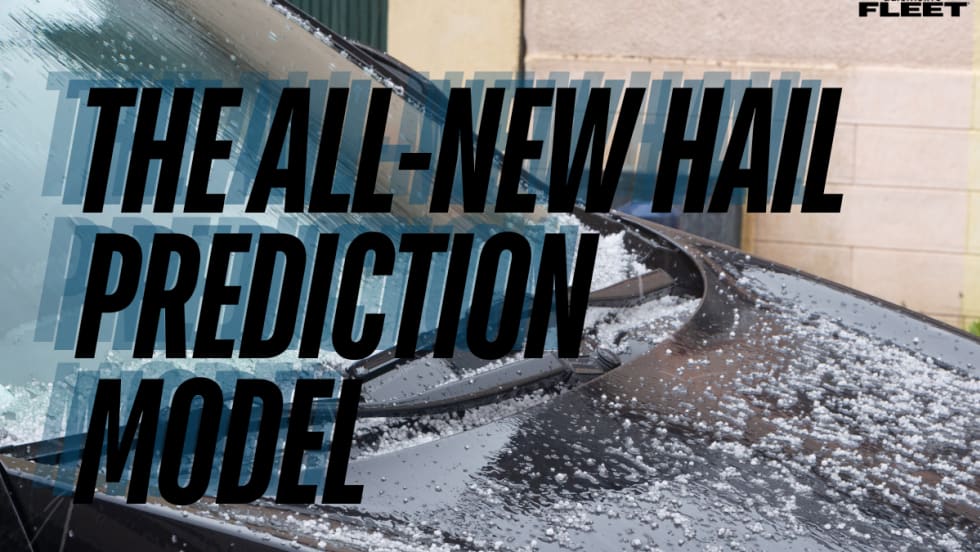
FLASH Weather AI has launched a first-of-its-kind hail prediction model capable of forecasting hail size and arrival time at 1-kilometer resolution up to 55 minutes ahead, giving fleets and insurers critical time to prepare for severe storms.
As litigation risk rises, vehicles are increasingly targeted. This Coca-Cola bottler shares how it’s reducing exposure through driver training, technology, and a proactive risk management approach.
From identity management to third-party certifications, the right technology partner should make security easier to manage. Here are the three building blocks that fleet managers need to stay in control as connected systems scale.
Distracted driving remains one of the most persistent risks in fleet operations. New approaches focus on removing mobile device use entirely while adding real-time safety support.
As distraction risks evolve, fleets are turning to smarter, more connected technologies to better understand what’s happening behind the wheel. Part 2 explores how these tools are helping identify risky behaviors and improve visibility across operations.
Distracted driving is often measured by what we can see—phones in hand, eyes off the road. But what about the distractions we can’t? A recent incident raises a bigger question about awareness, attention, and why subtle risks so often go unnoticed.
Fleets have more driver data than ever, so why isn't behavior changing? Training requires more than reports and coaching — it requires real-world practice.






![How to Drive During an Earthquake [Video]](https://assets.bobitstudios.com/image/upload/f_auto,q_auto,dpr_auto,c_limit,w_920/Video-earthquake-driving-tip_1776004311743_rq00c1.jpg)