





Related: How to Drive on Gravel
Video: How to Handle an Ice Skid
It doesn't take much snow or ice to make roads dangerous in the winter. While knowing how to handle an ice skid is critical, avoiding getting into one in the first place is even more vital.
March 2, 2018

2 min to read
It doesn't take much snow or ice to make roads dangerous in the winter. While knowing how to handle an ice skid is critical, avoiding getting into one in the first place is even more vital.
Experts say that most skids happen due to the driver. Three keys for avoiding a skid include observation, anticipation, and planning.
For example, be alert to road conditions. Drivers should look ahead to spot potential hazards like puddles or ice patches — even as temperatures rise, ice will stay around in shaded areas. Equally important, slow down. Experts agree that driving on ice or snow at 45 mph or less helps reduce the risk of skidding. Finally, avoid sudden braking, acceleration, or turns.
When a skid does happen, it requires quick and precise behavior on the part of the driver to regain control of the car. Here are some tips from experts on how to handle an ice skid:
Remove your foot from the accelerator: This will help calm the car down and straighten it out.
Do not brake: Perhaps the most common mistake drivers make, hitting the brakes only makes the skid worse. Instead, experts suggest pumping the brake up and down lightly versus stepping down on it in one motion. This will give you more control of the car.
Steer into the direction of the skid: Drivers should turn their front wheels in the same direction as their back wheels. For example, if the back of the car is moving to the right, turn the steering wheel to the right.
Do not overcorrect: And oversteer skid — when the rear wheels lose the grip of the road— gives the car angular momentum, which means it will want to keep rotating into a full spin. Overcorrecting can send the car rotating faster than the steering can counteract, and the car will spin out.
Do not panic: As with any emergency, keeping a calm demeanor will help drivers focus and concentrate on the necessary steps to stop the skid and regain control of the vehicle.
To learn more about how to handle an ice skid, watch the video featuring Richard D'Astolfo, owner and operator of A-CLUB, Inc., a full-service driving school based in Sunnyside, New York.
More Safety

Does Your Fleet's Culture Encourage Distracted Driving?
What happens when the people responsible for enforcing safety rules are the ones setting the wrong example? The answer may reveal why some of the biggest risks to fleet drivers have little to do with what's written in the employee handbook.
Read More →
Sponsored•October 1, 2026
Fleet Manager’s Ultimate Playbook: Navigating the New Standard in OEM Connectivity
Rising operating costs, driver safety concerns, and unplanned downtime are putting unprecedented pressure on modern fleets. Discover how fleet managers use embedded OEM connectivity and real-time vehicle data to cut TCO, prevent downtime, and protect drivers without aftermarket telematics hardware.
Read More →
From Driver Well-Being to EV Charging | AF News Recap
Mental health belongs in the fleet safety conversation. This week, we’re looking at five ways fleets can support employee well-being before a crisis, plus Holman’s expansion in Mexico, new one-day Fleet Forward passes, and why EV charging demand is outpacing infrastructure growth.
Read More →
Nexar-Nauto Merger Aims to Give Fleets Better Safety Intelligence Through Larger Driving Dataset
Stefan Heck tells Automotive Fleet that combining more than 10 billion miles of driving history with Nexar's AI models will give fleets deeper insights into driver risk and roadway conditions than either company could provide independently.
Read More →
Don't Wait for a Crisis: 5 Ways to Build Mental Health Into Your Fleet Safety Program
For Suicide Prevention Month, fleet and safety leaders have an opportunity to put mental health where it belongs: at the center of workplace safety.
Read More →
How Camera Data Can Strengthen a Fleet’s Insurance Renewal
Insights from a commercial insurance carrier and a broker show how fleets can turn video telematic data, driver coaching, and improved claims results into a stronger case at insurance renewal.
Read More →
The Safest Fleets Aren’t the Ones with the Most Technology
You’ve made the telematics investment. Here’s how to capture the other half of its value and build the safest fleet on the road.
Read More →
Sponsored•August 7, 2026
Hidden in Plain Sight: Fleet Compliance Risks
Fleet compliance isn't just about having policies — it's about consistently enforcing them. This practical guide reveals six hidden compliance risks common in public sector and shared fleet operations and outlines proven strategies to improve visibility, accountability, and audit readiness
Read More →
NETS Sets 2026 Fleet Safety Benchmark Conference for Indianapolis
The Sept. 15–17 program will feature fleet benchmarking data, case studies, emerging technologies, and implementation strategies while running alongside the NSC Safety Congress & Expo.
Read More →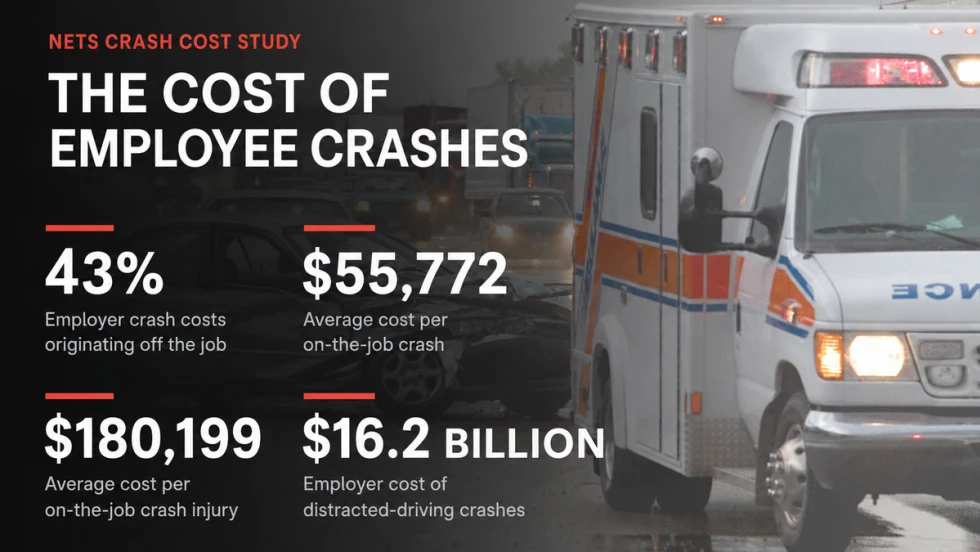
Off-the-Job Crashes Account for 43% of Employers’ $61.7 Billion Crash Burden
NETS quantifies costs dispersed across fleet, risk, HR, and other departments while providing new per-crash benchmarks for employers.
Read More →