




How the Demise of AT&T's 2G Impacts Fleets
AT&T is in the process of discontinuing its use of 2G technology. This will impact fleets' use of GPS and telematics technology. What Fleet managers can do to keep operations running smoothly is shared.


The sunsetting of AT&T’s 2G network may bring short-term headaches for fleet managers, but in the long term fleets should benefit from installation of more advanced hardware in fleet vehicles, more 3G and 4G LTE network use and the establishment for regular replacement cycles of newer technology. Photo via istock.com
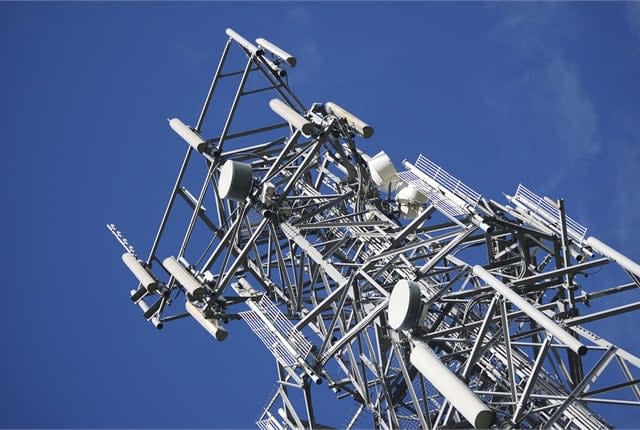
The sunsetting of AT&T’s 2G network may bring short-term headaches for fleet managers, but in the long term fleets should benefit from installation of more advanced hardware in fleet vehicles, more 3G and 4G LTE network use and the establishment for regular replacement cycles of newer technology. Photo via istock.com
AT&T’s announcement that it is shutting down its 2G network by the end of 2016 may cause headaches for fleet managers.
While AT&T’s decision to sunset its 2G network is sure to be disruptive, the good news is that fleet managers, thanks to their GPS and telematics providers, will most likely experience few major issues.
History Repeating Itself
AT&T’s announcement isn’t the first time a network has been sunset, according to Michael Jakab, vice president of sales, Wireless Network Group, for CalAmp.
“Every three to four years you see these steps in the evolution of this industry and machine to machine communication and data at higher speeds,” Jakab said. “It’s just that time again. It’s a natural phenomenon; it’s a cycle that occurs.”
However, what’s changing in the market is that more fleets and consumers in general are using these networks than in earlier times, so sunsetting a network has bigger effects.
For fleets, 2G has been a boon. Since most fleets don’t use a lot of bandwidth when tracking assets, it consequently makes the use of the inexpensive 2G technology a good choice for fleets.
“2G is extremely cheap, it’s been around for a long time, and I think the license fees are pretty much non-existent. And, a lot of the device manufacturers depending on the lifecycle of their product view this differently. Because the technology is so cheap, the labor costs getting it into the vehicle can cost more than the device for us, so we have to be sensitive about how long the devices run,” said Clive Cawse, VP of operations at Geotab.
Cawse said that the company’s strategy was to migrate to 3G as soon as possible.
“Unfortunately, you pay more with the new technologies because of licensing fees. In the view of wanting this device to be in the vehicle and work for five to 10 years, it was a necessary move for us,” he said.
Complicating the 2G sunsetting is that many fleets rely on AT&T’s 2G network to capture data.
Navigating the Pitfalls
While Dec. 31, 2016, is the terminal date for sunsetting AT&T’s 2G network, according to Ed Fenley, director of fleet applications product management at CalAmp, the company has been shutting down sections of the network ahead of this date.
“AT&T is shutting down towers in their most congested areas prior to 2016,” he said. “In some areas, they’re at capacity — they may be switching out from 2G to 3G in just those areas. If you’re driving in that area you may have no connectivity.”
However, AT&T has not been doing this in a vacuum, providing notice when it’s shutting down part of the network, so fleets aren’t being caught in non-coverage zones unaware.
“AT&T is providing notification prior to re-purposing their towers for LTE and, as a provider, we need to ensure this is communicated in a timely manner to the customer and the upgrade plan is executed in advance of a respective tower sunset,” said Elliot Bacheller, director of operations for GPS Insight.
So, the upshot is, until a fleet transitions to the more advanced 3G and 4G Long Term Evolution (LTE) technologies, it could be vulnerable to losing its connectivity and its ability to provide reporting.
“Telematics devices that operate solely on a 2G network will need to be replaced with upgraded hardware before the services shutdown,” advised Chris Ransom, director of sales engineering for Verizon Networkfleet.
It’s not just having lapses in coverage — fleet managers will need to replace all of the 2G technology currently in the fleet to keep up with the change.
The manufacturers have been sensitive to the needs of the customer in this regard.
“As a manufacturer and a supplier, we need to view the device in the long term. We need to look at this and say, ‘This needs to be around five to 10 years,’ and ask what technology is available that will allow us to supply services for those lengths of periods,” said Cawse of Geotab. “But, you’ve got to be sensitive to the strategies of each of the carriers because the situation in Europe is very different. In Europe the trend is to continue to support 2G, but to really focus on LTE for the applications that need more data.”
While it can be daunting navigating the change, fleets should look to their technology providers for guidance through the transition process.
“If a company has not already been contacted by its telematics service provider, it should check with them to see what options are available. This gives fleets the opportunity to upgrade to newer devices that take advantage of next generation network capabilities and new functionality,” Ransom said. “In some cases, only a portion of a fleet’s devices will need to be replaced.”
Benefitting from 3G & 4G LTE
While there are challenges to overcome in the transition to 3G and 4G LTE, there are numerous benefits that fleets will see with the new technology.
“Next-generation networks, whether 3G or 4G LTE, provide fleets with opportunities to take advantage of higher bandwidth, and new applications to improve their operations,” said Ransom of Verizon Networkfleet.
Like it or not, obsolescence is one of the realities of today’s highly technological world. While this can mean greater expenses for the fleet and its company, being required to adopt the latest technology has its benefits.
“Customers now have the ability not only to upgrade to new hardware but, in many cases, upgrade to a new solution altogether,” said Bacheller of GPS Insight. “There have been significant advancements in the industry over the course of the past five years and fleets are much more knowledgeable about what their true telematics needs are.”
Preparing for the Next Sunset
While any technological change can be inconvenient, there are things that fleet managers can do to manage technology’s ongoing evolution.
In short, fleet managers should prepare for the next sunset while transitioning to the newest technology now.
“Fleet managers should be prepared for a sunset to the extent that they should be able to rely on their telematics service provider to provide an upgrade path that is not disruptive to their day-to-day operations,” Bacheller said. “There will likely be some financial implications when upgrading to new hardware, dependent on the age of the legacy hardware, but having a cohesive plan in place is imperative to mitigating the impact of any sunset.”
The change also should be viewed in conjunction with the fleet’s lifecycle.
“There’s a natural replacement cycle for larger fleets. You want to deploy a technology, but at the same time you’ll be replacing vehicles, and you want to make sure that the replacement vehicles in which you’ll be using the technology are going to run over the period you require,” said Cawse of Geotab.
Staying Ahead of the Curve
With technology, it’s important to look ahead, and, when possible, stay ahead of the technological curve, so, when the next network change occurs, it goes unnoticed — as it will for any fleet or consumer who has a 3G or 4G LTE device.
“Fleet managers should look to partner with technology leaders that have a solid history of innovation and a record of strong customer support,” said Ransom of Verizon Networkfleet. “Look for a provider that has a nationwide network of certified installers and a 24/7 customer care operation to support your needs.”
It’s not just the technology, it’s also how it is supported.
“Fleet managers should take into consideration the scalability and reliability of the system, the post-sale support and training resources available throughout the term of any agreement, and ultimately the total cost of ownership of the system,” advised Bacheller of GPS Insight. “It is important to note that in today’s market there are a number of low-cost solutions; however, predicating a purchase solely on price often results in a very poor telematics experience.”
Working with providers that view this as a long-term solution is key as well.
“In terms of our exposure, because we’re an early adopter of 3G technology, we’ve had little exposure,” said Cawse of Geotab.
At the end of the day, when looking for a GPS or telematics solution, Jakab of CalAmp has a rather unusual piece of advice for fleet customers: “I think we should take the technology out of it, because in the fleet world you’re typically subscribing to a monthly service for an application that is enabled by a device in the vehicle,” he said. “The question fleet managers should ask is, what sort of guarantee do you have that this service will be available to me during the life of this contract and beyond?”
More Telematics
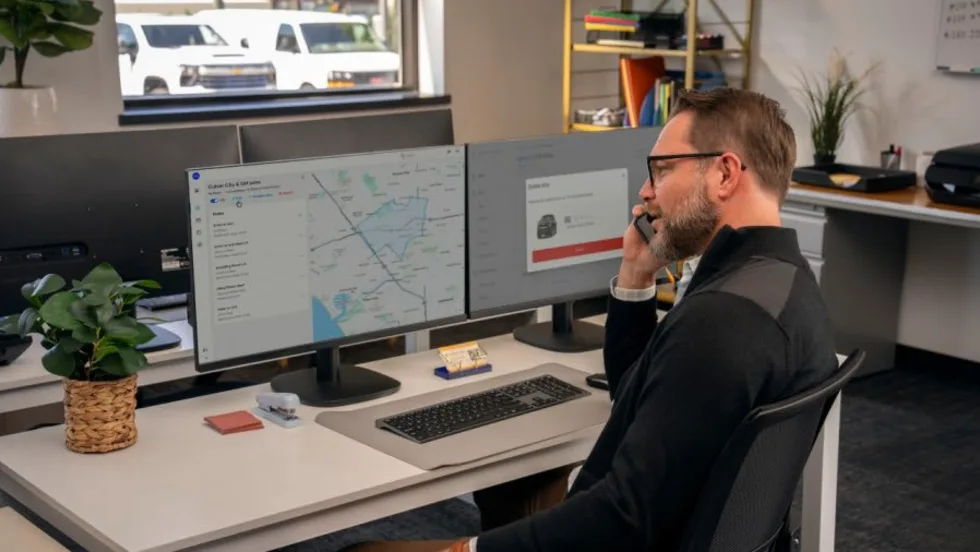
GM Launches OnStar Fleet Intelligence Platform With AI Assistant
The new platform brings vehicle data, order tracking, connected services and fleet analytics into one system, with an AI assistant that can answer fleet questions using natural-language prompts.
Read More →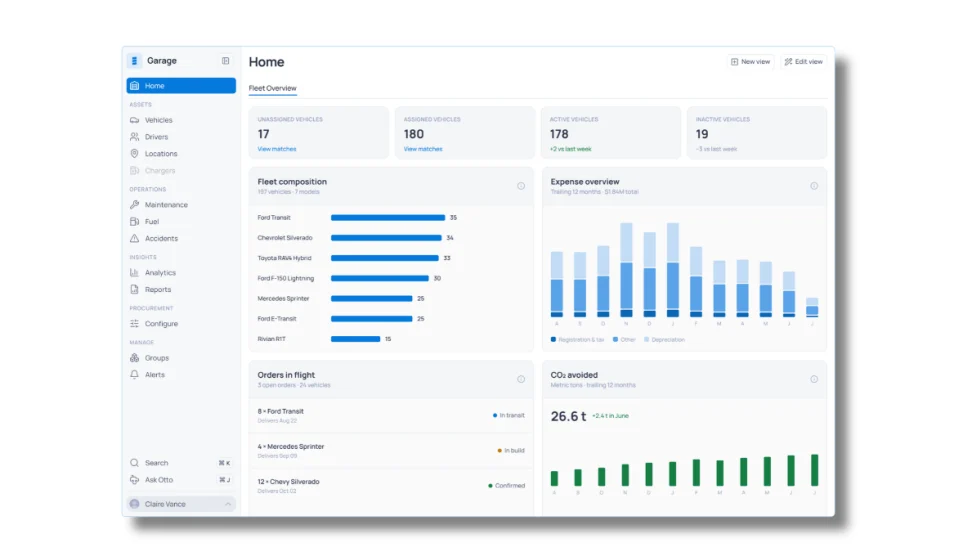
Inspiration Fleet Introduces Garage 2.0 Fleet Intelligence Platform
Fleet managers increasingly have access to data from vehicles, telematics, fuel, charging, and other systems, but those sources don't always communicate with one another. Inspiration Fleet's Garage 2.0 platform brings that information together while letting fleets keep working with different technology and service providers.
Read More →
Inside Inspiration Fleet’s New Platform for Connecting Fleet Data
Inspiration Fleet CTO Chris Getner explains how the new Garage 2.0 platform is designed to connect disparate fleet data and what that could mean for fleet managers in practice.
Read More →
Fleet Manager’s Ultimate Playbook: Navigating the New Standard in OEM Connectivity
Rising operating costs, driver safety concerns, and unplanned downtime are putting unprecedented pressure on modern fleets. Discover how fleet managers use embedded OEM connectivity and real-time vehicle data to cut TCO, prevent downtime, and protect drivers without aftermarket telematics hardware.
Read More →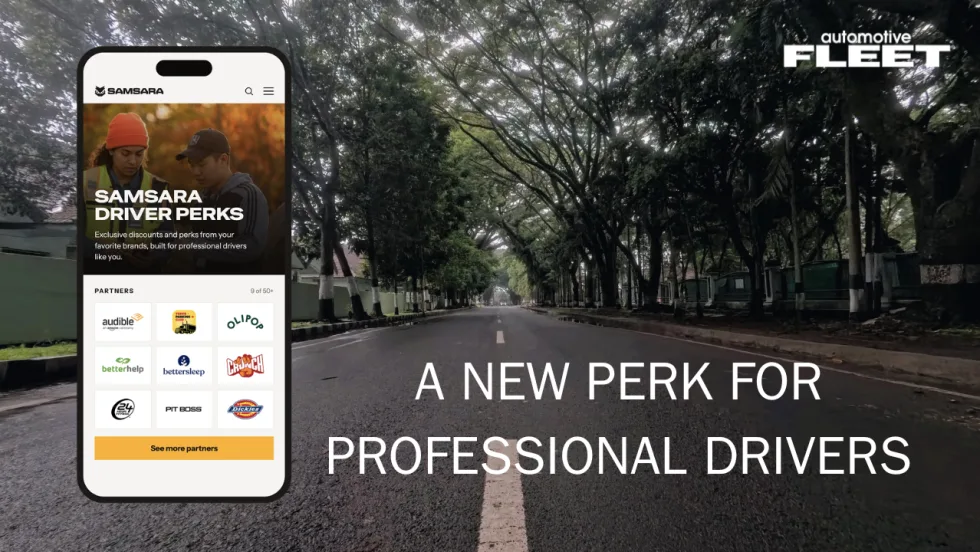
Samsara Driver Perks Adds New Benefit for Corporate Fleet Drivers
The rewards program gives eligible professional drivers access to discounts from more than 50 brands while giving fleets another way to support recruitment, retention, and the driver experience.
Read More →
Inside the Church of Jesus Christ of Latter-day Saints’ Two-Track Telematics Strategy
With 20,000 vehicles and two fundamentally different driver populations, the Church faced a fleet management problem that a single telematics program couldn't solve. How it responded offers a replicable framework for any fleet where one size doesn't fit every driver.
Read More →
How Conversational AI Can Make Fleet Tasks Easier for Drivers
While most generative AI tools help fleet managers interpret data at their desks, Connex2X is applying voice interaction to tasks behind the wheel.
Read More →
Why Fleets Are Creating Dedicated Fleet Analyst Positions
Are fleet analyst positions the new norm? Listen here to find out.
Read More →
Teletrac Navman Begins Next Chapter as Standalone Private Company
What's new with Teletrac Navman and its new owner?
Read More →
Why Fleets Are Creating Dedicated Fleet Analyst Positions
Telematics, AI, EVs, and connected technologies are generating more fleet data than traditional teams can effectively manage. Reed Jackson explains why dedicated fleet analytics roles are emerging to turn that information into better operational decisions.
Read More →