




2014 RAM 1500 Features New 3.0L V-6 EcoDiesel
The small displacement 3.0L EcoDiesel engine offers V-6 capability with lower CO2 emissions, while the 240-hp turbo-diesel mated to the 8-speed TorqueFlite automatic enhances fuel economy and range.

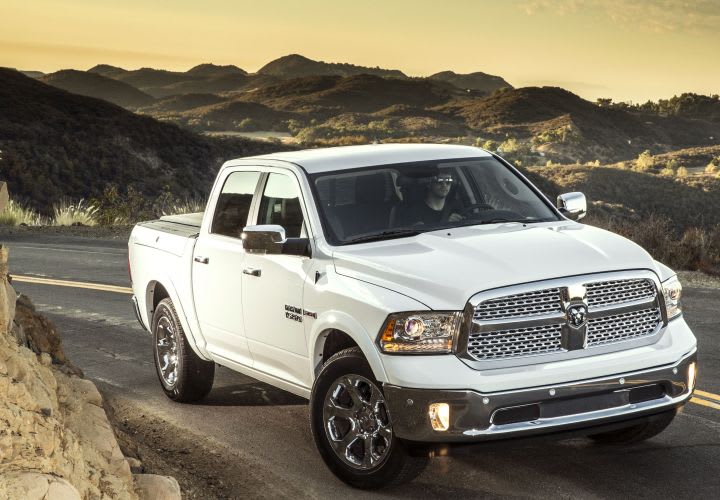
Photo courtesy of Ram.
Photo courtesy of Ram.
The 2014 Ram 1500 pickup can be equipped with a new, 3.0L EcoDiesel engine mated to the 8-speed TorqueFlite automatic transmission. The new, 3.0L 24-valve, dual-overhead-cam (DOHC) EcoDiesel is a turbocharged 60-degree V-6. It generates 240 hp at 3,600 rpm and produces 420 lb.-ft. of torque at 2,000 rpm.
The EcoDiesel V-6 incorporates Fiat's MultiJet II common-rail fuel-injection system, which features 29,000 psi of line pressure. High-dispersion nozzles and a new servo valve enable fuel-injection events, which occur with greater precision up to eight times per cylinder cycle. This ensures efficiency via clean, smooth combustion.
The EcoDiesel's 60-degree cylinder-bank angle and 1-2-3-4-5-6 firing order are optimized to manage inertia and firing loads, eliminating the need for a balance shaft. The engine's aluminum cylinder heads are heat-treated and feature individual bearing caps that help reduce friction and noise, vibration, and harshness (NVH).
The system also incorporates a new "pre-filter" on the transmission cross-rail and an engine fuel filter. The result is enhanced prevention of injector corrosion, an enabler of long-term durability, as well as protection from the vagaries of regional fuel quality.
The standard engine oil cooler, when the EcoDiesel is used with 5W30 synthetic oil, contributes to a 10,000-mile oil change interval.
The new turbo-diesel is designed and produced by VM Motori, a Chrysler Group diesel engine supplier since 1992.
The new EcoDiesel V-6 achieves 50-state emissions compliance for both tier II and BIN 5. A key enabler is the engine's cooled exhaust gas recirculation (EGR) system, which is controlled by electric valves instead of the conventional pneumatic variety. The system also contributes to rapid start-up. The new EcoDiesel is also compatible with B-20 biodiesel.
The new 3.0L V-6 EcoDiesel is among today's most advanced diesel engines. Its emissions are 60-percent less than those produced by diesel powertrains 25 years ago.
A state-of-the-art selective catalytic reduction (SCR) system also reduces emissions. It incorporates a unique diesel exhaust fluid (DEF) system that alerts the driver to low DEF levels, while also allowing the engine to maintain full power.
The Ram 1500 includes an insulated DEF tank with heated lines to mitigate the effects of cold-weather operation. It also features a passive cooling system that does not require engine coolant for the DEF injector. The DEF tank holds eight gallons of fluid. Duty cycle determines refills, but the average interval is about 10,000 miles.
More Operations

Here's When You Should Make an Exception to Fleet Policy
Fleet policies are designed to create consistency, but not every driver or situation fits neatly within standard rules.
Read More →
AI-Native or AI-Acquired: What Should Fleet Managers Look for in an AI Platform?
Six questions can help fleet managers look beyond AI marketing claims to evaluate integration, data access, and real-world operational performance.
Read More →
A buyer's guide to fleet management software in 2027
Buying fleet management software in 2027 means looking beyond features and price. As fleet operations, technology and expectations evolve, this guide explores what today’s fleet professionals should consider when choosing a system that can deliver value now and adapt to what comes next.
Read More →

What Will Shape the Next Era of Fleet Management?
EVs, AI, and autonomous vehicles are reshaping fleet management. Discover what’s ahead—and how fleet leaders can prepare for the next era.
Read More →
How Fleets Can Recruit and Train Veterans for Technician Roles
Here's how the technician shortage has affected uptime for fleets, and what to do about it.
Read More →
Avis Budget Group Deploys Neology Toll Management Technology Across Major Brands
Neology’s neoFleet platform will manage toll transactions and toll-authority operations for vehicles across Avis, Budget, Payless, Budget Truck and Zipcar.
Read More →
Fleet Personal-Use Charges Edge Higher in 2026
Nearly eight in 10 surveyed fleets allow personal use of company vehicles, while just over half of respondents report charging employees for the privilege.
Read More →
The Future of Fleet + What’s Changing Right Now | AF News Recap
Could developments overseas offer a preview of what’s coming for U.S. fleets? This week, we’re looking at the future of AI, autonomy, and electrification, plus Ford Pro’s new certified pre-owned program, smarter vehicle offboarding, and a new way for fleets to manage toll expenses.
Read More →
How to Handle Vehicle Offboarding
What do fleet managers need to do when a driver leaves?
Read More →
Fleet Manager’s Ultimate Playbook: Navigating the New Standard in OEM Connectivity
Rising operating costs, driver safety concerns, and unplanned downtime are putting unprecedented pressure on modern fleets. Discover how fleet managers use embedded OEM connectivity and real-time vehicle data to cut TCO, prevent downtime, and protect drivers without aftermarket telematics hardware.
Read More →